Subscribe!

Email:
Zip:

09/01/2010 - 6:10pm

The Lesson of Iraq

As published in the Huffington Post

President Obama, speaking from the Oval Office, told the nation (and the world) that it is time to "turn the page" now that U.S. combat operations have officially ended in Iraq. And while he talked about what we learned from the last "page," the President missed an important part of the Iraq war's lesson.  If we learned anything in Iraq, it's that our nation is most successful when we work in close cooperation with other nations as opposed to going at it alone.  Our greatest strength is when we convince nations to join together and play by a common set of rules that we are also willing to adhere to.  

President Obama correctly told us that:


"...one of the lessons of our effort in Iraq is that American influence around the world is not a function of military force alone. We must use all elements of our power -including our diplomacy, our economic strength, and the power of America's example -to secure our interests and stand by our allies."

This is true, and I'm proud to here our President say this. But it's not just about "our power." During World War II, the U.S. initiated the creation of the United Nations system. The organization was built on a foundation of mutual security in response to a shared threat.  In the Korean War, the U.S. participated with sixteen U.N. member states that provided troops under a United Nations Joint Command.

In early 2003, opposing the run up to the Iraq war, I wrote that while:

"...the evils of George W. Bush and Saddam Hussein are not in the same league ... what makes the two leaders equally problematic is that they both rely on national interest and national sovereignty to legitimize their use of military might and coercive force to achieve their aims.  Both threaten to act outside of international law, thereby decreasing human security while increasing the potential of global warfare. ... Unfortunately, the Bush Administration's new preemptive policy of acting against 'emerging threats before they are fully formed' undermines the basic principles of the United Nations and collective security. "

President Bush's invasion of Iraq did indeed fan the flames of "global warfare." In Iraq, Afghanistan, parts of Africa, and around the world, religious fundamentalism now spawns violence that threatens the stability of all nations. President Obama identified "our fight against al Qaeda "as the U.S.'s greatest security challenge. He also said:

"Throughout our history, America has been willing to bear the burden of promoting liberty and human dignity overseas, understanding its link to our own liberty and security. "

But we don't and shouldn't have to bear the burden alone. This is the true lesson of the Iraq war.  Looking forward, it's time to focus on how we can work to make the United Nations a more perfect tool to share this burden.  

In Iraq and Afghanistan the U.N. has done an admirable job of supplying humanitarian aid and organizing elections.  But there is an opportunity now to empower the organization with robust peacekeeping forces, including U.S. personnel, to assist Iraq and other nations as they strive to build peaceful societies.

The end of combat in Iraq does not mean the end to violence. Rather than engaging in a perhaps decades long deployment to backstop the Iraqis - as we are still doing in Germany and Japan after WWII and in Korea after that war - we should invest our energies into a UN system that can truly end the scourge of war.  The UN was created to fight fascism. It then blocked the spread of communism.  With U.S. support it could prevent fundamentalist-induced terrorism.

At the core of American ideals and international law is the belief that no group or nation should use violence to impose its will on others. We will have truly turned the page after Iraq if the United States' goal is a world where nations unite and work together to make this a reality.

Don Kraus

08/16/2010 - 5:19pm

The Unified Security Budget: Getting the Most Bang for Our National Security Buck

As published in the Huffington Post

Here's something you don't hear every day--a Secretary of Defense talking about reducing military spending. Yet Secretary Robert Gates has recently discussed the possibility of eliminating some weapons systems, command structures and other items which are no longer necessary for national security.

According to Miriam Pemberton, a principle author of a newly released report on our nation's security budget, Gates has proposed to "mount the most serious effort to restrain his own budget of any Defense Secretary since the post-Cold War period." Whether these plans are aspirational or will actually be achieved is another story.

While this is noteworthy, it brings up another question: where would the money go? If dollars previously spent on certain military projects are simply shifted to other Defense department programs, is the U.S. really going to be any safer as a result?

This is where the idea of a Unified Security Budget comes in which considers all such spending in one place. Secretary of State Hillary Clinton and Secretary Gates, in addition to the Chair of the Joint Chiefs of Staff, have all agreed that this idea makes sense.

The newly released 2010 report of the Task Force on a Unified Security Budget takes a combined look at all of our national security needs, from offensive military spending to preventative diplomacy. Following the recommendations of the Task Force as laid out in this report, we could shave $75 billion off of military spending this year alone, while making sure our money is being spent in a smarter way.

It's no secret that the U.S. spends a lot of money on defense. For the upcoming Fiscal Year 2011, the projected federal budget for national security is $852 billion, a number which includes defense, prevention, and all international affairs budget totals.

It also may not surprise many people to know that the vast majority of this money is targeted to the Defense Department for military spending. Out of this $852 billion total, a mere $65 billion is designated for the entire non-military International Affairs budget. Breaking things down further, only $3 billion is allotted for non-proliferation purposes. Clearly, something is out of whack here.

America needs a new way of assessing our national security spending. We have to start looking at national security funding as a whole, rather than viewing it piecemeal in the form of separate budgets for agencies such as the Defense and State departments. We need to take a longer view of where this money is going, and how our national security dollars can be spent in the most effective manner.

Secretary Clinton recently remarked that a Unified Security Budget would mean that "you can see the tradeoffs" between military and non-military security spending. She added that, "You cannot look at a Defense budget, a State Department budget, and a USAID budget without Defense overwhelming the combined efforts of the other two."

Indeed. A quick comparison of national security budget figures shows that spending on the military outnumbers spending on prevention-related activities by an astonishing 6 to 1 ratio. But this obvious gap isn't always so obvious when Congress and the Administration make their budgetary plans, because the current budget system separates funding for military and non-military national security spending into separate "silos," without comparing how much is spent and without being able to easily transfer any cost savings in one agency to another (i.e. from the Defense Department to the State Department).

It's hard, as a result, to see how the U.S. can get the best bang for its national security buck. A Unified Security Budget would solve this problem, and give Congress and the Administration a simplified tool to work off of when making their national security budget plans.

William Hartung, who served with me on the USB task force, asks these questions to put this into perspective:


What makes more sense? Spending billions on unproven Star Wars anti-missile systems or increasing funds needed to secure "loose nukes" and bomb-making materials to keep them out of the hands of terrorists?

What makes more sense? Building another C-17 transport plane that even the Pentagon doesn't want, or adding over 1,000 new Foreign Service Officers to our understaffed diplomatic corps?

What makes more sense? Spending billions on the dangerous and unneeded V-22 Osprey aircraft or doubling U.S. support for peacekeeping operations designed to keep conflicts from restarting in areas of tension?


This integrated approach to national security spending should be adopted, and the sooner the better. Smarter security spending will benefit everyone, but we need to be able to see clearly where all of our money is going before we can truly get the most bang for our security buck.

Don Kraus

08/12/2010 - 10:42am

The House, The Senate, and the World

As published in the Huffington Post:

Thinking about sitting out the November elections because President Obama and Congress have let you down?  Think again. The 2010 mid-term could prove to be the most pivotal election of our lifetime.

This is already the most cutthroat contest I have experienced during the last 15 years of working on federal elections. According to The Cook Political Report, there are now 73 highly competitive House races, compared to 51 in August of 2008.  66 of these 73 endangered seats are currently held by Democrats, compared to 20 out of 51 in 2008.  Senate Democrats are equally pressured.

Although my organization, Citizens for Global Solutions, endorses on both side of the aisle, these numbers do matter.  In our latest Congressional Report Card the average Democratic grade was an A- in the House and Senate while Republicans averaged a D in the House and a D+ in the Senate.  

While Republican wins in swing districts could result in a more moderate party, there is also a looming possibility of losing the internationalist majority in Congress that Citizens for Global Solutions has worked so long to establish. Tea Party endorsed Senate candidates like Sharron Angle in Nevada and Clint Didier in Washington both want to see the U.S. out of the U.N.  Kentucky Senate candidate Rand Paul insists that "funding of the U.N. as a whole becomes voluntary."  So does Representative Ileana Ros-Lehtinen, the ranking Republican on the House Foreign Affairs Committee, who sponsored legislation that would "shift the funding mechanism for the regular budget of the United Nations from an assessed to a voluntary basis."  Governments would vote with their wallets for their favorite U.N. line items; turning the U.N. into a Darwinian jungle.

2010 could decide if our nation will stay the course of responsible global engagement or slip back into a militant unilateralism. How the United States is governed matters not only to us, but to the world. All of the current international institutions that function today, from the United Nations to the International Criminal Court (ICC), were established with leadership from the United States.  Implementation of credible proposals to empower international organizations will not be achieved in the future without U.S. support.

In 2008, speaking before a jubilant crowd in Chicago the night after his election, President-elect Obama reached out to the world saying,

"to all those watching tonight from beyond our shores, from parliaments and palaces, to those who are huddled around radios in the forgotten corners of the world, our stories are singular, but our destiny is shared, and a new dawn of American leadership is at hand."

I was on a flight to The Hague that evening.  My fellow passengers shared great expectations: the U.S. would reengage globally in a responsible and multilateral way.  Obama would close Guantanamo, pull us out of Iraq, seriously address climate change, and begin to eliminate nuclear weapons. We would shift from being the world's "super power" to the world's "super partner."

The Obama administration has taken serious steps towards this vision.  They have paid off years of past due assessments to the United Nations, joined the Human Rights Council, negotiated and sought ratification of the New START treaty, engaged with the ICC, are removing all combat troops from Iraq, and more.  In a letter introducing the National Security Strategy President Obama laid out his world vision:

"The international order we seek is one that can resolve the challenges of our times ... stopping the spread of nuclear weapons and securing nuclear materials; combating a changing climate and sustaining global growth; helping countries feed themselves and care for their sick; resolving and preventing conflict, while also healing its wounds."

The President's desire for an "international order" is a signal to both support his administration's efforts and to push the envelope of what can be achieved. But will we have the opportunity to do so?  Or will the belief of uber-nationalists prevail, like those of the Eagle Forum's Phyllis Schlafly, who in her rant against the New START treaty said, "We live in a dangerous world in which bad guys respect strength and weapons, and disdain weakness and disarmament."

Citizens for Global Solutions is working hard for a positive outcome from the elections in November.  Global Solutions PAC is identifying and supporting candidates of any party or affiliation who share our internationalist values. We are reaching out to our members to volunteer, contribute and vote in November. In the end, it will be up to all of us.  No one ever said that change would be easy. It's time to get to work. 

Don Kraus

07/11/2010 - 6:24pm

Peace Movement AWOL on Aggression

I just published this oped on the Huffington Post:

Our nation is blessed with a conscience that demands an end to unjust wars. During the wars in Vietnam and Iraq, tens of thousands of protesters chanted in the streets, crashed the phone system of Congress, and creatively made their collective shout of "No More War" heard.

Unfortunately, the anti-war movement was AWOL last month during one of the greatest opportunities humanity has ever had to put an end to war. During the first two weeks of June, representatives from 84 nations and more than 600 civil society groups met in Kampala, Uganda and took an historic first step towards criminalizing aggression. Imagine the impact on future tyrants and misguided leaders if the reward for planning and carrying out an offensive war was a trip to the slammer...  Read More

Take Action

07/06/2010 - 1:06pm

Time to Make History With CEDAW

The bumper sticker on my wife’s car reads, “Well-behaved women seldom make history!” I believe proponents of CEDAW, the Women’s Treaty, have been minding their manners a bit too much.  CEDAW is the most important international mechanism for women’s equality, and provides a universal standard for women’s human rights. The treaty is a basic framework for ending violence against women, ensuring girls access to education, and promoting economic opportunity and political participation for women.

US ratification is an opportunity for our nation to be a global leader in standing up for the rights of women and girls in countries around the world.  The United States is the world’s only democracy and one of seven nations including Iran, Sudan, and Somalia that has not ratified the treaty. And until we do so, our country cannot credibly demand that others live up to their obligations under the treaty. ?

While both President Obama and Secretary of State Clinton support adoption, their rhetoric must be turned into actions.  For the last 30 years, the US has sat on the sidelines while CEDAW has been used around the world by to protect women and girls from discrimination.  Unfortunately, it looks as if the November mid-term elections could make it more difficult to secure the 67 votes needed in the Senate for passage.  The clock is ticking.  

Ratification is not about policy, it’s about politics.  The Senate Foreign Relations Committee has passed the treaty twice on a bipartisan basis.  There is clear support on both sides of the aisle for ratification now.  But there is only one way the White House and Senate leadership will only allow CEDAW its moment on the Senate floor this year.  They must hear loud and clear from you that failure to move CEDAW is a failure to support human rights for women. They need to know you believe it is worth fighting for.

If you are reading this, you are probably already hooked into the action alerts, call-ins, and other attention getting efforts. Taking these simple steps is crucial. Sharing information that you gather from your Senators is equally important. (So act now if you haven't already done so!)

But push it even further.  Don’t just call your Senators office.  Ask for the staff person who handles foreign affairs and let them know how important this is to you.  Contact campaign committees, and tell them that what happens to CEDAW this summer will impact how much you will contribute and volunteer. Send them $10,000 checks with “VOID UNTIL CEDAW PASSES” written over the front.   It’s time to misbehave, get loud, and make history!

Don Kraus is the CEO of Citizens for Global Solutions and co chairs the CEDAW Task Force of The Leadership Conference on Civil and Human Rights.

05/27/2010 - 12:23pm

A Global National Security Strategy

Today the Obama administration releases its first National Security Strategy (NSS).  The NSS is a document prepared periodically by the executive branch for Congress which outlines the major U.S. national security concerns and how the administration plans to deal with them.  It’s a strong improvement over the last NSS issued by the Bush administration in 2006. Much of the language in the NSS could have been taken from globalsolutions.org.  This is a strategy of an administration on the right track. It’s also a signal to civil society to both support the administration's efforts and to be willing to push the envelope of what is possible.

The NSS is a strategic document that sets direction at 30,000 feet. While it calls for “a just and sustainable international order that can foster collective action to confront common challenges” it doesn’t recommend tactical steps such as better training for U.S. ambassadors or greater recognition for Foreign Service officers who work in multilateral institutions.  It doesn’t discuss how the U.S. will improve its capacity to win votes in international bodies. However it does clear the way for these steps to happen.

Below are a number of relevant quotes from the NSS on nuclear weapons, a strengthened international order, the U.N, Peacekeeping, Genocide Prevention, and the International Criminal Court.  I’ve underlined particularly worthwhile passages.

In a perambulatory letter from President Obama he says:

 “We are clear-eyed about the challenge of mobilizing collective action, and the shortfalls of our international system. But America has not succeeded by stepping outside the currents of international cooperation. We have succeeded by steering those currents in the direction of liberty and justice – so that nations thrive by meeting their responsibilities and face consequences when they don’t….As influence extends to more countries and capitals, we will build new and deeper partnerships in every region, and strengthen international standards and institutions. This engagement is no end in itself. The international order we seek is one that can resolve the challenges of our times – countering violent extremism and insurgency; stopping the spread of nuclear weapons and securing nuclear materials; combating a changing climate and sustaining global growth; helping countries feed themselves and care for their sick; resolving and preventing conflict, while also healing its wounds.”

On pursuing a "World Without Nuclear Weapons":

"While this goal will not be reached during this Administration, its active pursuit and eventual achievement will increase global security, keep our commitment under the NPT, build our cooperation with Russia and other states, and increase our credibility to hold others accountable for their obligations. As long as any nuclear weapons exist, the United States will sustain a safe, secure, and effective nuclear arsenal, both to deter potential adversaries and to assure U.S. allies and other security partners that they can count on America’s security commitments. But we have signed and seek to ratify a landmark New START Treaty with Russia to substantially limit our deployed nuclear warheads and strategic delivery vehicles, while assuring a comprehensive monitoring regime. We are reducing the role of nuclear weapons in our national security approach, extending a negative security assurance not to use or threaten to use nuclear weapons against those nonnuclear nations that are in compliance with the NPT and their nuclear nonproliferation obligations, and investing in the modernization of a safe, secure, and effective stockpile without the production of new nuclear weapons. We will pursue ratification of the Comprehensive Test Ban Treaty. And we will seek a new treaty that verifiably ends the production of fissile materials intended for use in nuclear weapons."

The NSS calls for a strengthened international order saying:

“[W]e have an interest in a just and sustainable international order that can foster collective action to confront common challenges. This international order will support our efforts to advance security, prosperity, and universal values, but it is also an end that we seek in its own right. Because without such an international order, the forces of instability and disorder will undermine global security. And without effective mechanisms to forge international cooperation, challenges that recognize no borders – such as climate change, pandemic disease, and transnational crime – will persist and potentially spread....Indeed, our ability to advance peace, security, and opportunity will turn on our ability to strengthen both our national and our multinational capabilities. To solve problems, we will pursue modes of cooperation that reflect evolving distributions of power and responsibility. We need to assist existing institutions to perform effectively. When they come up short, we must seek meaningful changes and develop alternative mechanisms.

The NSS has a section on “Enhance Cooperation with and Strengthen the United Nations”.  It says:

“We are enhancing our coordination with the U.N. and its agencies. We need a U.N. capable of fulfilling its founding purpose – maintaining international peace and security, promoting global cooperation, and advancing human rights. To this end, we are paying our bills. We are intensifying efforts with partners on and outside the U.N. Security Council to ensure timely, robust, and credible Council action to address threats to peace and security. We favor Security Council reform that enhances the U.N.’s overall performance, credibility, and legitimacy. Across the broader U.N. system we support reforms that promote effective and efficient leadership and management of the U.N.’s international civil service, and we are working with U.N. personnel and member states to strengthen the U.N.’s leadership and operational capacity in peacekeeping, humanitarian relief, post-disaster recovery, development assistance, and the promotion of human rights. And we are supporting new U.N. frameworks and capacities for combating transnational threats like proliferation of weapons of mass destruction, infections disease, drug-trafficking, and counterterrorism.”

On “Peacekeeping and Armed Conflict”:

“The untold loss of human life, suffering, and property damage that results from armed conflict necessitates that all responsible nations work to prevent it. No single nation can or should shoulder the burden for managing or resolving the world's armed conflicts. To this end, we will place renewed emphasis on deterrence and prevention by mobilizing diplomatic action, and use development and security sector assistance to build the capacity of at-risk nations and reduce the appeal of violent extremism. But when international forces are needed to respond to threats and keep the peace, we will work with international partners to ensure they are ready, able, and willing. We will continue to build support in other countries to contribute to sustaining global peace and stability operations, through U.N. peacekeeping and regional organizations, such as NATO and the African Union. We will continue to broaden the pool of troop and police contributors, working to ensure that they are properly trained and equipped, that their mandates are matched to means, and that their missions are backed by the political action necessary to build and sustain peace.

It’s worth noting that absent from the NSS is any commitment to engage US personnel in blue-helmet peacekeeping missions.

There is great news on preventing genocide and mass atrocities:

“The United States and all member states of the U.N. have endorsed the concept of the "Responsibility to Protect.” In so doing, we have recognized that the primary responsibility for preventing genocide and mass atrocity rests with sovereign governments, but that this responsibility passes to the broader international community when sovereign governments themselves commit genocide or mass atrocities, or when they prove unable or unwilling to take necessary action to prevent or respond to such crimes inside their borders. The United States is committed to working with our allies, and to strengthening our own internal capabilities, in order to ensure that the United States and the international community are proactively engaged in a strategic effort to prevent mass atrocities and genocide. In the event that prevention fails, the United States will work both multilaterally and bilaterally to mobilize diplomatic, humanitarian, financial, and – in certain instances – military means to prevent and respond to genocide and mass atrocities.”

One item not mentioned in the NSS is a plan for the US military to develop a clear doctrine on civilian protection.  This would help to achieve the plans goals.

International Justice and the ICC:

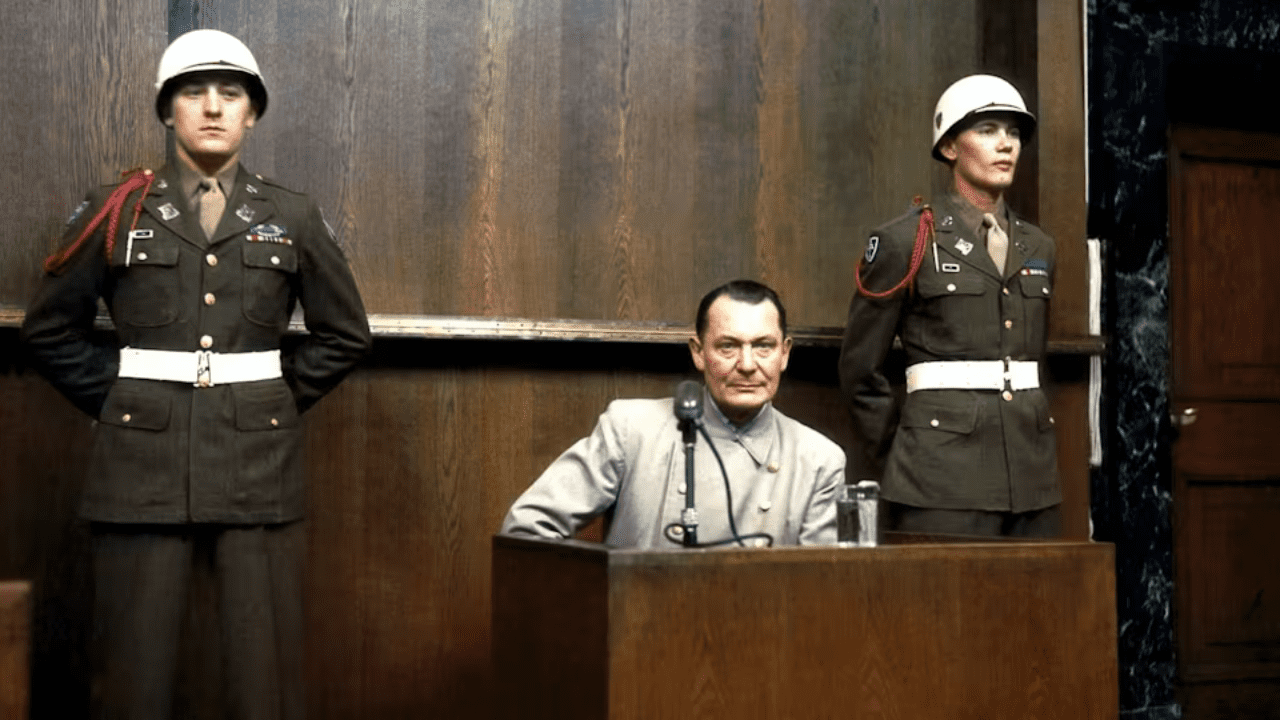
“From Nuremberg to Yugoslavia to Liberia, the United States has seen that the end of impunity and the promotion of justice are not just moral imperatives; they are stabilizing forces in international affairs. The United States is thus working to strengthen national justice systems and is maintaining our support for ad hoc international tribunals and hybrid courts. Those who intentionally target innocent civilians must be held accountable, and we will continue to support institutions and prosecutions that advance this important interest. Although the United States is not at present a party to the Rome Statute of the International Criminal Court (ICC), and will always protect U.S. personnel, we are engaging with State Parties to the Rome Statute on issues of concern and are supporting the ICC’s prosecution of those cases that advance U.S. interest and values, consistent with the requirements of U.S. law.”

Don Kraus

05/05/2010 - 3:44pm

Global Solutions is off to the races - You can help

2010 Congressional Report CardWant to know where your lawmakers stand on global issues?  As the 2010 midterm elections approach, Citizens for Global Solutions is rolling out our 2010 Congressional Report Card.  This report “grades” members of the Senate and House of Representatives on their record of support for CGS legislative priorities over the past several years, as well as highlighting additional work certain members of Congress have undertaken which has helped to advance the goals of CGS.  It is the only publication that rates Congress based on their global votes.


The 2010 Congressional Report Card focuses on ten Senate and eleven House rollcall votes which took place between 2007 and 2009 on issues which are of particular importance to CGS and its supporters.  These votes cover topics such as providing appropriate levels of funding for international and multilateral organizations; addressing climate change; prohibiting torture; and ensuring protection of human rights around the globe.  Each member of Congress was given a grade between an A+ and an F based on how frequently their votes aligned with CGS’s positions on these issues.  


Additionally, since not all the hard work of members of Congress is revealed solely through their records on roll call votes, CGS invited House and Senate offices to apply for “extra credit” by telling us about other work they have done on these and other issues that are CGS priorities.  This extra credit might come from making floor speeches, sponsoring legislation, or publishing op-eds on issues important to CGS.  Lawmakers must earn extra credit in order to receive the highest grade of A+.

2010 Candidate QuestionnaireCan you help out? CGS also send out a questionnaires that are used by Global Solutions PAC to evaluate candidates for endorsement.  It quearies candidates on a very wide variety of global issues. We are asking CGS members and anyone else interested to help out and send candidates in their state and district our questionnaire. Here's how:


   1. Check if the candidates for your area (Senate or House) have have already returned the Questionnaire.

   2. If they haven't, download the Candidate Questionnaire.

   3. Email or snail mail the Questionnaire to the candidates in your area. Please feel free to contact Melissa Kaplan, CGS Government Relations Fellow, at mkaplan [at] globalsolutions.org for help in finding candidates' addresses.

I hope you can help make these great tools even more useful by distributing them and using them.

Don Kraus

02/05/2010 - 12:21pm

No Immunity for National Leaders in the 'Shadow of the Court'

Last night I had the pleasure of participation in a presentation at the Council on Foreign Relations given by Luis Moreno-Ocampo, the Prosecutor of the International Criminal Court.  As conveyors’ of the Washington Working Group on the ICC we had helped him set up a few meetings on the Hill.  Our Program Coordinator, Abby Long helped out tremendously in this effort. Abby Long (left) Luis Moreno-Ocampo (right)

My friend Mark Goldberg at the UN Dispatch wrote an excellent piece on Ocampo’s key points.


I want to emphasize two points that Mark mentioned and one that he didn’t:

First, the true relevance of the Court is its global impact. Ocampo said that:

“Even before any ruling in the Lubanga case, the issue of child recruitment gained new momentum, triggered debates in remote countries like Colombia or Sri Lanka and child soldiers were released in Nepal. The Special representative of the UN Secretary-General on children in armed conflicts immediately factored in such potential and used us as a tool to campaign around the world, and secure even more releases.” This is an example of how the Court can help to prevent crimes.  While the ICC will only deal with a few cases, its “shadow” extends far beyond them and the 110 nations that are Parties to the Rome Statute.


Second, political leaders sought by the ICC, such as Sudanese President Al-Bashir, are increasingly being shunned by other leaders and nations.  According to Ocampo:


“President Al Bashir became a fugitive; he cannot travel to States Parties of the Statute. He looks for political protection in the African Union and in his party, the NCP. South Africa informed President Bashir that he was invited to the inauguration ceremony of President Zuma, but that he would be arrested upon entry into the country. Uganda, Nigeria and Venezuela did the same. President Lula from Brazil and President Kirchner from Argentina refused to approach President Bashir in an Arab-South America summit. President Sarkozy has taken the unprecedented decision to cancel a French-African summit rather than run the risk of meeting with him in a corridor. Turkey has ensured that he cancels his appearance to a meeting of the Organization of the Islamic Conference in Ankara. In the Guinea case, Morocco refused to keep on its territory President Dadis Camara. It did not want to harbor a possible ICC suspect. Burkina Faso’s President Blaise Compaore contacted the ICC to ascertain there was no arrest warrant before accepting to host Dadis Camara.”


Finally, during the question and answer session, Ocampo was asked a few questions regarding immunity for national leaders, particularly in terms of negotiating peace agreement.  His response was quite clear.  His job as a prosecutor is to uphold the law. National leaders can no longer act with impunity and hide behind their national sovereignty.  It’s about time.


If you like to find out more about the crimes committed by world’s worst criminals that are being tried by or wanted by the ICC, check out our new flash tool.


Don Kraus

01/01/2010 - 11:21pm

Global Family Day Greetings

Global Family Day Greetings from CEO Don Kraus and his family:

10/09/2009 - 4:26pm

Obama on the Nobel Prize "A Call To Action"

I was pleased by President Obama's 'aw-shucks' comments on winning the Nobel Peace Prize, saying:

"After I received the news, Malia walked in and said, "Daddy, you won the Nobel Peace Prize, and it is Bo's birthday!" And then Sasha added, "Plus, we have a three-day weekend coming up." So it's good to have kids to keep things in perspective."

But what really impressed me was how he framed his acceptance of it:

I will accept this award as a call to action -- a call for all nations to confront the common challenges of the 21st century. These challenges can't be met by any one leader or any one nation.... We cannot tolerate a world in which nuclear weapons spread to more nations and in which the terror of a nuclear holocaust endangers more people....We cannot accept the growing threat posed by climate change, which could forever damage the world that we pass on to our children -- sowing conflict and famine; destroying coastlines and emptying cities.

This is a call to action that needs to be answered.  Not only by nations, but by global citizens from across the world.  I believe President Obama understands the need for action. It's up to us to stand up together make this vision a reality.

418 7th Street SE, Washington, DC 20003-2796
Phone: (202) 546-3950 Fax: (202) 546-3749
Privacy Policy