This site makes extensive use of JavaScript, for the best browsing experience we recommend you enable JavaScript in your browser.
The Global Citizen: December 2011
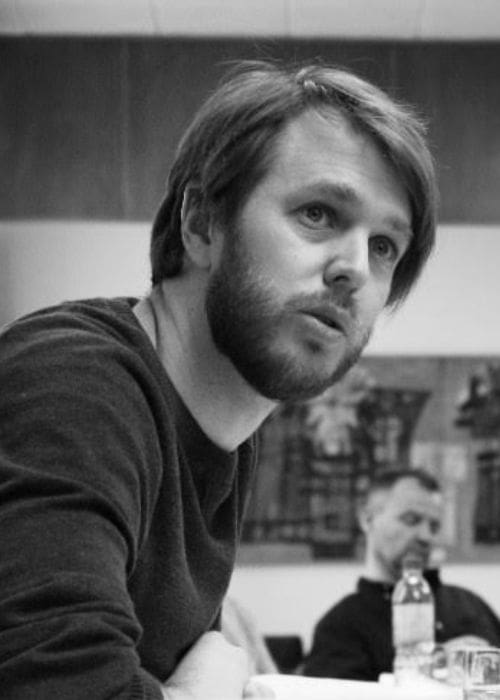
Citizens for Global Solutions Field Organizer in Indiana, Mike Oles, just had a letter to the editor published in the Indianapolis Star! It's a great piece that points out that Haiti's Cholera outbreak is not a reason to defund the U.N., but rather why U.N. Peacekeepers need to be better equipped.
Mike writes, "If there is a lesson to be learned from this avoidable disaster, it is the need for well-trained and well-funded U.N. peacekeepers." Well said Mike. U.N. Peacekeepers are vital to many countries around the world, and they can't do their job if they aren't supported by wealthy nations like the U.S.
Click here to read Mike's whole article, or click here to learn more about CGS's Peacekeeping Report.
Yesterday, President Obama released a first-ever National Action Plan on Women, Peace, and Security, which instructs agencies across the government to intergrate a gender persepctive in all matters relating to peace and security.
The plan's goal is to "empower half of the world's population as equal partners in preventing conflict and building peace in countries threatened and affected by war, violence, and insecurity." The NAP recognizes that long-term peace and stability cannot be maintained without the particpation of women.
Some of the plan's implementation steps mirror key recommendations found in the Partnership for Effective Peacekeeping's report, "U.S. Engagement in International Peacekeeping: From Aspiration to Implementation." For example, the NAP advocates for women to be considered for more senior level positions at the U.N. The peacekeeping report also identified a shortage of women in higher posts and called for this problem to be corrected.
The NAP calls for leveraging the participation of female U.S. military personnel to encourage and model gender intergration in other partner nations. The peacekeeping report takes this a step further and suggests that the U.S. engage with our own military and training institutions to increase the role of U.S. women in peacekeeping operations.
There seems to be a relationship between Bashir al-Assad's public statements on the desire of his government to cooperate with international conflict mediators and the escalation of violence and death reported in Syria. That was certainly the case yesterday, as the Arab League announced a deal with Assad's government to allow international human rights observers into Syria at least 100 deaths were reported. These events also coincided with the United Nations General Assembly voted overwhelmingly to condemn the violence in Syria.
The deal between the Arab League and Syria was signed Monday in Cairo by Faisal Mekdad, Syria's deputy Foreign Minister. If implemented, it will allow impartial observers into Syria to monitor its compliance with an agreement to stop violence between security forces and anti-government protestors. Previous refusal by Syria to comply with the deal led to the suspension of their Arab League membership and the imposition of diplomatic and economic sanctions. League officials have stated that observers could be deployed to Syria as early as Thursday.
In my job, it's not that often that I look at the results of the congressional appropriations process with satisfaction, especially in the current economic and foreign policy climate. However, Congress has surprised me this year in two welcome ways.
First, the House and Senate passed a large "omnibus" appropriations package, including funding for the State Department, before their Christmas recess without threat of a government shutdown (okay, it's two and a half months past their original deadline, but why quibble?). Second, the Fiscal Year 2012 budget mostly delivers pretty good results for the international affairs budget. It's a Christmas/Hanukkah/Kwanzaa miracle!
The last U.S. convoy rode out of Iraq yesterday in the early morning hours, marking the final moment of the Iraq War. The war was officially declared over last Thursday during a ceremony attended by U.S. Defense Secretary Leon Panetta at a terminal in the Baghdad airport. The statement and withdrawal were more than two weeks ahead of the end of year deadline for ending U.S. combat in Iraq. Panetta told troops, "You will leave with great pride, lasting pride, secure in knowing that your sacrifice has helped the Iraqi people begin a new chapter in history free from tyranny and full of hope for prosperity and peace."
More than 1 million U.S. troops have served in the almost 9 year war, of which 4,474 were killed and roughly 30,000 were wounded. The U.S. spent more than $800 billion on the war that cost more than 100,000 Iraqis their lives. The war does little to change day-to-day life of the Iraqis, as U.S. troops withdrew from most cities last year to focus on training Iraqi military forces.
I have just arrived back in D.C. after spending three days at the Assembly of States Parties meeting of the International Criminal Court (ICC) in New York City. For some highlights and my reflections on this extraordinary experience, read on....
Highlights
Day One: The Tenth ASP kicked off with speeches from UN High Commissioner for Human Rights Navi Pillay, the President of Botswana, and current ICC Prosecutor Luis Moreno-Ocampo, among others. Pillay reasserted the important role the Court has played over the past decade in deterring tyrants around the globe. Ocampo recounted the Court's work over his nearly nine-year tenure and noted that the "shadow of the Court" has helped to deter those who would commit atrocities around the globe. Finally, the President of Botswana gave an excellent speech in which he not only called on fellow African nations to support the ICC, but also pointed the finger at those members of the U.N. Security Council who have exercised their veto power unjustly due to "politics." (Russia and China should be reminded of this the next time there is a Security Council vote on Syria.)
By Tiffany Irene- Citizens for Global Solutions- Field Organizer of TN
Last week, Nashville residents commemorated International Human Rights Day, celebrating the anniversary of the United Nation’s ratification of the Universal Declaration of Human Rights by honoring community members who dedicate their lives to humanitarian causes and reflecting on engagement activities of local human rights groups in the past year.
Fifteen of Nashville’s international advocacy organizations, including the My Global Voice program spearheaded by Citizens for Global Solutions, provided educational materials to the over 150 attendees at the Downtown Nashville’s Library Auditorium, which included prominent community members and elected officials from all over Tennessee.
The celebration of Human Rights Day was built around an awards ceremony, which acknowledged the work of long-time human rights advocates in Nashville. Some of those recognized included Dr. Sheila Peters, a Fisk University professor who has spent decades in human rights advocacy and Mr. Jerry Lee, one of the original planners of Human Rights Day in Tennessee and a former AFL-CIO president. The event also honored "Rising Advocates," recognizing influential young adults in the community for their efforts in raising awareness of humanitarian issues. Attendees were also treated to a lively performance from the Fisk Jubilee Singers.
Navi Pillay, the U.N. High Commissioner for Human Rights, called for the Security Council to refer Syria to the International Criminal Court due to its crackdown on the anti-government uprising. She also estimated the death toll had reached 5,000 civilians, with tens of thousands more wounded, arrested, or forced to flee from their homes. This is an incredibly alarming increase from the U.N. estimate of 4,000 casualties just ten days ago, marking December as by far the most violent month of the uprising that began in March.
The remarks were made during a closed session of the Security Council. Pillay said, "It is based on the evidence and the widespread and systematic nature of the killings, the detentions and the acts of torture that I felt that these acts constituted crimes against humanity and I recommended that there should be a referral to the International Criminal Court."
Bashar Jaafari, the Syrian ambassador to the U.N., denounced Pillay's statement, saying she had "allowed herself to be misused in misleading the public opinion by providing information based on allegations." Russia, one of the nations blocking Security Council action on the issue, also expressed reluctance to comply with the demand of the High Commissioner. Russian ambassador Vitaly Churkin said that they are alarmed by the pursuit of regime change in Syria by many Security Council members.
Today, I attended the opening session of the Tenth Assembly of States Parties meeting of the International Criminal Court (ICC) in New York City. As I walked into the United Nations building this morning to collect my badge, I was excited to see what the day would bring at my first ASP meeting. It turned out to be quite an interesting and eventful morning. Some highlights:
--Ambassador Tiina Intelmann of Estonia was elected as President of the Assembly of States Parties, and presided over the day's session;
--The President of Botswana gave an outstanding speech urging African state parties to cooperate with the ICC, for the mutual benefit of the Court and Africa, and called out UN Security Council members who have vetoed important resolutions due to "politics;"
--UN High Commissioner for Human Rights Navi Pillay spoke about how the ICC has helped to deter tyrants, and that the Libya trials--wherever they are ultimately held--will be a victory for the Rome Statute;
--ICC Prosecutor Luis Moreno-Ocampo spoke about the Court's work since its inception in 2002, and how the "shadow of the Court" has served as a deterrent to those who would commit heinous crimes;
Negotiators in Durban, South Africa extended their annual conference on climate change 24 hours beyond the expected close of debate in an effort to find a last minute deal on carbon emissions. Discussions appeared to pay off as representatives from almost 200 countries announced a last-minute compromise yesterday morning. While not yet proposing any legally-binding targets to reduce carbon emissions, the Durban Platform lays out a plan to reach such an agreement by 2015.
The agreement also fleshed out several details from the unfinished talks in Cancun last year. Among these were rules for establishing a global climate fund, a strategy for combating deforestation, the structure of an international network of technology centers, and the guidelines for a system to increase transparency in tracking the carbon-emitting activities of nations.
Pages
Topics
- Arms Control (22)
- Become a Member (3)
- Become a Member (1)
- Capitol Hill (164)
- CGS Political Action Committee (PAC) (17)
- Chapters (4)
- Civilian Protection (133)
- Climate Change (94)
- Comprehensive Test-Ban Treaty (CTBT) (2)
- Congressional Report Card (7)
- Current Campaigns (8)
- Election News & Analysis (101)
- Fellows (2)
- Gender Based Violence (26)
- Genocide Prevention (113)
- Get Involved (68)
- Home (12)
- Human Rights (223)
- Human Rights Council (31)
- International Criminal Court (167)
- International Criminal Justice (51)
- Law & Justice (211)
- Law of the Sea Treaty (55)
- Nuclear Disarmament (81)
- Nuclear Non-Proliferation Treaty (NPT) (2)
- Other (33)
- PAC: 2010 Election Endorsements (3)
- Partners for Global Change (2)
- Peacekeeping (104)
- Prevent War (181)
- Rights of the Child Treaty (10)
- Strategic Arms Reduction Treaty (START) (19)
- Support Us (14)
- Take Action (24)
- Tax Deductible Giving (2)
- UN Funding (71)
- UN Reform & Revitalization (43)
- United Nations (321)
- usaforicc.org (1)
- WFI (5)
- Women's Rights Treaty (CEDAW) (47)
Archive
- May 2013 (5)
- April 2013 (10)
- March 2013 (6)
- February 2013 (16)
- January 2013 (12)
- December 2012 (4)
- November 2012 (11)
- October 2012 (11)
- September 2012 (7)
- August 2012 (3)
- July 2012 (17)
- June 2012 (23)