Subscribe!

Email:
Zip:

06/30/2009 - 1:28pm

A Window of Opportunity: The U.N. Convention on the Law of the Sea

Dr. John T. Oliver has published a new paper describing the history and benifits of the United Nations Convention on the Law of the Sea.  He goes into great detail regarding why now is the time for the U.S. to ratify this law.

Oliver begins by presenting the history of the Law of the Sea, beginning with it's first negotiations from 1973-1982. He also lays out the basic things that the convention covers such as rights and obligations of coastal states, scientific research, and protection of the marine environment. 157 states have signed the convention yet the US has not. At one point in 1994 the US came close to ratifying the Law of the Sea after President Reagan identified many provisions that needed to be changed. However the Senate has never had a full vote on the convention. 

Oliver then goes on to discuss the many ways that the Law of Sea benefits the U.S. One of the biggest is National Security. This law would provide resources necessary for fighting the global war on terrorism and protecting our military power overseas. As this is one of the most important issues for the United States it is surprising that this law has not been ratified. Oliver also discusses environmental and economic advantages as well as the war on drugs. The Law of the Sea would give the US territorial claims to the 200 nautical miles on its coast which would help the control of drug trafficking.

While Oliver goes into great detail about the benefits of this law he also debunks some misconceptions about it. For instance the idea that this law would restrict our sea based military operations, yet this law would actually make available more space for the Coast Guard to run drills and operations

The UNCLOS ensures safe international trade, and keeps the peace between many countries. As a political leader, the US needs to ratify this law in order to enhance their leadership in maritime affairs. The US cannot afford to be left out of important talks and decisions any longer.

Take Action to support this Issue!

06/29/2009 - 10:06am

House Passes Key Climate Legislation!

On June 26, 2009, the House succeeded in passing the Waxman-Markey Bill, which takes important steps towards addressing climate change. The bill narrowly passed with 219 ayes and 212 noes: we commend all the representatives who voted in favor of this key legislation, and urge the Senate to pass the bill before December 2009, when countries will be meeting in Copenhagen to discuss an international environmental agreement to succeed the Kyoto Protocol.

The Congressional Budget Analysis Office found that 1.7 million jobs will be created with the implementation of the legislation through the growth of clean energy jobs. Low income families will receive a $40 benefit from using more solar and wind energy in place of foreign oil. U.S. dependence on foreign oil will be cut, along with the hazardous effects of pollution- all for the cost of about one postage stamp a day for every family.

There are concerns about compromises made along the way to secure support for the bill. For instance, the Agriculture Committee has secured rights over the Environmental Protection Agency to oversee implementation among farmers, and pollution permits have been given for free to coal-burning utilities, oil refineries, automakers, and manufacturers struggling to compete with overseas production.

By imposing a higher price on carbon emissions, incentives are created to invest in green technology within the U.S. The bill is not strong enough to sufficiently thwart climate change, but it is an important step in the right direction, and a symbol of changing mindsets and modes of development. If even the current bill could not be passed, hopes for stronger measures tomorrow would be dampened significantly.

* ACT NOW in support of strengthened environmental protection policy!

To watch Obama speak on the passage of the bill, click here

For more information on the legislation, click here

To learn more about climate change, click here

06/25/2009 - 2:35pm

It’s time to ratify the Law of the Sea Treaty

Law of the Sea ad 6-24-09

Yesterday Pew Charitable Trusts ran this ad in the Washington Post and Politico, showing once again that the Law of the Sea convention has the largerst, broadest, extremely odd-bedfellow group of supporters of any issue moving forward inside the Beltway.  Where else can you see the American Petroleum Institute and the World Wildlife Fund sandwiching the likes of former Secretary of State Jim Baker, Lee Hamiliton, John Warner, the US Chamber of Commerce, Verizon, not to mention Citizens for Global Solutions. 

The ad gets right to the point:  our security can't wait.  Neither can our economy or our environment. It's great to see supporters coming together to speed ratification along. Pew is doing a great service and should be commended.  In addition their new site, RatifyLawOfTheSea.org is an excellent resource.

However, we are still waiting on word back from President Obama.  As I have said before, the Senate is not likely to adopt any major treaty without presidential leadership in raising the issue and pushing it to the floor.

President Obama, the ball's in your court.

Don Kraus

06/25/2009 - 12:31pm

CGS Signs Organization Sign-On Letter to Chairman Durbin in Support of his Crimes Against Humanity Act

A new piece of legislation has come to the attention of many globally minded organizations, Citizens for Global Solutions included. The Crimes Against Humanity Act would make sure that those accused of crimes against humanity could be prosecuted in the United States. The bill would fill a gap in human rights law and ensure that those who should be brought to justice cannot escape by coming to the US.

 The United States has long been a leader in advocating for human rights. However there is     no legislation which makes sure that the United States courts have jurisdiction to prosecute  those who have committed crimes against humanity. The bill defines this as widespread and   systematic attacks directed against a civilian population that involve murder, enslavement, torture, rape, arbitrary detention, extermination, hostage taking, or ethnic cleansing. These things have been going on in many different countries all over the world and it is important that the US be able to hold these people accountable for their crimes. While the US has passed legislation that prohibits those who have committed genocide or torture there is still a gap and this bill would fill it.

It is important that this legislation gets the support that it needs. For this reason CGS as well as many other organizations have written a letter to Chairman Durbin urging him to show his support. Richard J. Durbin is the Chairman of the Subcommittee on Human Rights and the Law. His support would help to make sure that this very important piece of legislature is passed.

06/24/2009 - 4:17pm

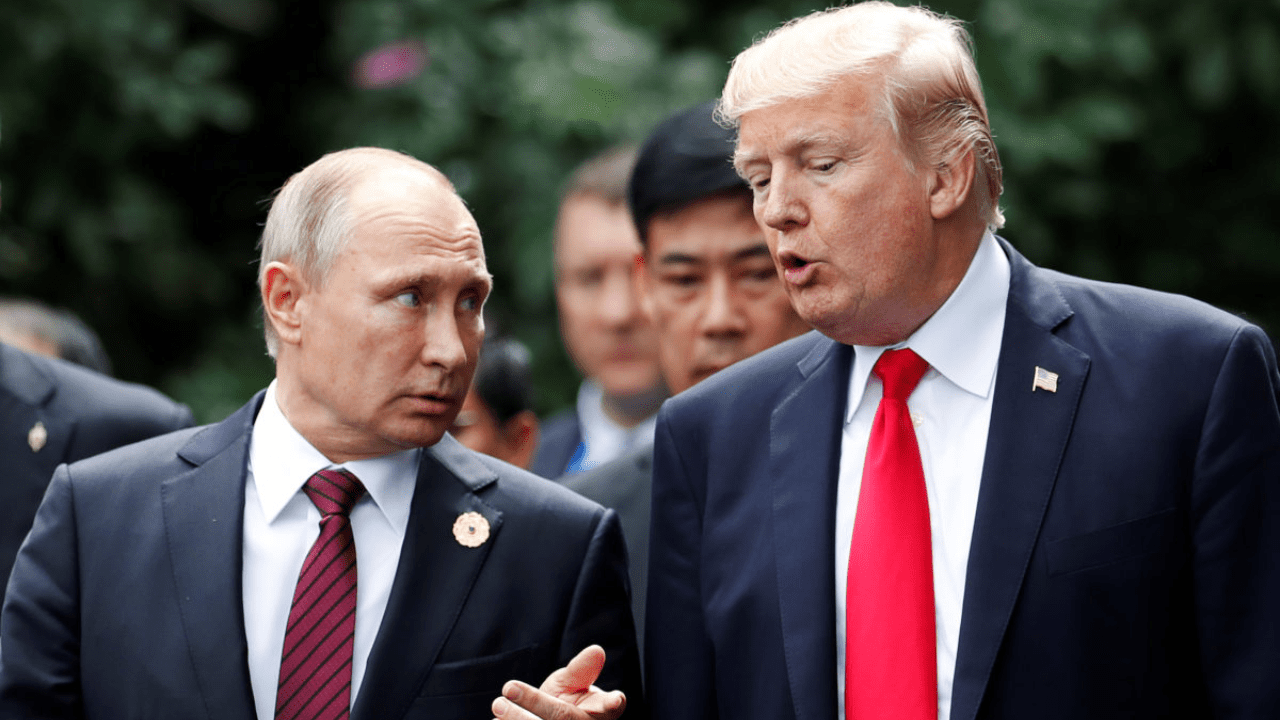
How to Deal with Moscow: Panel on Obama’s Upcoming Visit to Russia

The Hudson Institute hosted a panel on June 24th to discuss the stakes of Obama's planned visit to Russia in July. The panelists- David Kramer, David Satter, and Andrei Piontkovsky- warned of a different Russian culture that did not place human rights in the same light as the U.S did. In a perverse way, Russia seems to need to maintain enmity with the U.S. in order to justify the state's iron grip and suppressive policies. This is unfortunate, as the U.S. and Russia have coinciding strategic interests, including preventing Islamic extremism, promoting nuclear non-proliferation, and balancing China's growing power.

So, when Obama travels to Russia, the first aim should be to foster respectful dialogue between the countries. Even now, Russian leaders denounce the U.S. as an enemy on prime time television, accusing the U.S. of sponsoring terrorism in the Caucasus. Given the aggressPutinive steps taken by Russia in the past, it is also important to pose a firm and deterring stance before them. The panelists commended Obama for signaling a rejection of a "Russia first" policy, by including Ukraine and Georgia on his list of visits. The Russian visit assumes added significance, as talks have already begun to renew the START treaty. With nuclear non-proliferation high on the agenda, artfully dealing with Russia is a challenge and necessity.

Striking the appropriate balance by promoting dialogue without showing any sign of weakness is going to be a difficult job for Obama. His predecessor did not set an ideal example- Bush may have gone overboard after meeting Putin in 2001 when he said, "I looked the man in the eye. I found him to be very... trustworthy... I was able to get a sense of his soul." Such lofty ideas about Russia have not paid off in the past.

For more information, click here

06/24/2009 - 1:56pm

CGS Congratulates Harold Koh's Impending Nomination as Department of State Legal Adviser

On June 24, 2009, the Senate voted to advance Harold Koh's nomination for the position of Legal Adviser of the Department of State and move towards a final confirmation of his position. The Dean of Yale Law School and former Assistant Secretary of State for Democracy, Human Rights, and Labor was nominated to be the primary legal counselor to Secretary of State Hillary Clinton on March 23, 2009 by President Obama..

As the Gerard C. and Bernice Latrobe Smith Professor of International Law and former director of Yale Law School's Center for International Human Rights, Koh is a prominent advocate of human rights and authority on international law. He served as a delegate to the United Nations Human Rights Commission under the Clinton administration and has promoted a theory of "transnational jurisdiction," which looks to tenets of international law to inform and improve the domestic judicial process. He argues that "concepts like liberty, equality, and privacy are not exclusively American constitutional ideas but, rather, part and parcel of the global human rights movement."

Citizens for Global Solutions supports the decisions of Obama and the Senate in the proposal and advancement of Koh's nomination and congratulates him on the great honor and exciting opportunity of this position.

06/23/2009 - 4:40pm

Panel on Iran’s Elections: Implications of the Home-Grown Rise of the People

On June 23rd 2009, the Carnegie Endowment for International Peace hosted a panel with experts on Iran and the Middle East. Ambassador Nicholas Burns, Abbas Milani, and Karim Sadjadour spoke about the condition- some say revolution- in Iran with the disputed elections and mass protests. Foreign media has been forced out, and death toll figures rise daily. A brutal suppression of the demonstrations has begun, with videos and news of killings circulating the internet.

The panelists explained that despite the despotic government's persistent attempts to suppress rebellions, the Iranian people's desires have gained new momentum to affect change. Independent polls show that a majority of Iranians are discontent with the economic quandary that President Ahmadinejad has left them in, support the recognition of Israel, favor improved relations with the U.S., and seek the cessation of the nuclear weapons program in exchange for peProtests in Iranaceful nuclear technology. There is mounting evidence that, with popular views contradicting Ahmadinejad's policies, the recent polls were a stolen election. 

The panelists said that the Iranian ruling order had forever changed. The Ayatollah's authority as the supreme religious leader was flouted when he was openly defied and publicly called a liar. The current uprising distinguishes itself from previous ones as it includes members of all ages and walks of life. Further, fractions have emerged within the ruling regime, which is an important precondition for democratic transitions.


Ahmadinejad and his supporters have attempted to frame the situation as a conflict between the Iranian government and foreign powers. By making demonstrators seem like puppets of an "imperial power" (the U.S.), the government seeks to undermine the movement and keep it from spreading beyond cities. Obama's cautious and measured approach commendably navigates this trap set by Ahmadinejad. Obama condemned the suppression of expression and sympathized with the protesters, but stayed clear of inserting the U.S. in the middle of the conflict. The movement was truly born in Iran and is being sustained through the sacrifices and determination of the Iranian people. Obama's efforts to keep the U.S.' fingerprints off the uprising are strategic and laudable.

However, the way this will all play out also depends on the reaction of other countries. Turkey and Russia have already formally recognized Ahmadinejad's electoral victory in the face of incontestable evidence of fraud. The rest of Iran's neighbors, trade partners and other states have an important opportunity to speak out for the desires of the Iranian people.


For more information, visit: http://www.carnegieendowment.org/events/?fa=eventDetail&id=1360

06/23/2009 - 3:39pm

Obama Addresses Iran and Climate Legislation in Press Briefing

President Obama held a news conference in the Rose Garden on the afternoon of June 23, 2009, his first ever in this location.

He began by condemning the violent governmental response to protests in Iran, declaring that "...we deplore the violence against innocent civilians anywhere it takes place." He also commended "the courage and the dignity" of the Iranian people, saying the nature of the protests show that "no iron first is strong enough to shut off the world from bearing witness to peaceful protests of justice."

He stressed that "the Iranian people have a universal right to assembly and free speech" and advised that "if the Iranian government seeks the respect of the international community, it must respect those rights and heed the will of its own people." He added that "it is not too late for the Iranian government to recognize that there is a peaceful path that will lead to stability and legitimacy and prosperity for the Iranian people."

President Obama also discussed energy policy in his opening remarks. He referenced H.R. 2454 and noted the many benefits of adopting this legislation, including the development of incentives that "will finally make clean energy the profitable kind of energy." He stated his belief that the bill "will open the door to a better future for this nation, and that's why I urge members of Congress to come together and pass it."

To read the full transcript of the press release, click here.

06/23/2009 - 2:37pm

CGS Urges Secretary Clinton to Support Arms Trade Treaty

From July 13-17, 2009, the UN Office for Disarmament Affairs will host the second session of an Open Ended Working Group on an Arms Trade Treaty to establish an international, legally binding agreement on how conventional arms should be imported, exported, and transferred.  Citizens for Global Solutions, along with other organizations, have signed a letter to Secretary of State Hillary Clinton petitioning U.S. involvement in the development and enforcement of a strong, effective Arms Trade Treaty. While the previous administration was the sole opponent against the UN process on an Arms Trade Treaty, the Obama administration has expressed some openness to the project.

The upcoming Open Ended Working Group meeting will provide an excellent opportunity to address the issue of a largely unregulated international trade system. The lack of restrictions and supervision have fueled violent conflicts, facilitated serious violations of human rights, and helped armed insurgent groups around the world. However, if properly regulated, the global conventional arms trade could further the efforts of peace by providing weapons to states for legitimate national self-defense, peacekeeping, and law enforcement endeavors. As the world's largest exporter of arms, and as a nation with one of the most comprehensive arms export laws in the world, the United States could have a significant impact on the Arms Trade Treaty. The U.S. should not miss this opportunity to exercise its influence as a responsible, engaged partner in the treaty and as a respected advisor in global politics.

06/23/2009 - 10:04am

Next America

On June 22nd, the Center for Strategic and International Studies (CSIS) hosted a summit for Next America, an organization of young professionals who are just beginning their careers in the foreign policy arena. Discussion at the summit revolved primarily around the challenges that the new generation will be forced to confront as they advance into positions of leadership in foreign policy.

Keynote Speaker Derek Chollet of the State Department opened the summit by briefly talking about the new administration's efforts to combat the obstacles that the younger generation is just starting to deal with. Issues such as climate change, nuclear proliferation, and economic integration were at the top of the list. Most welcome among Mr. Chollet's talking points was his emphasis on President Obama's strong desire both to engage the world through organizations like the UN, and to work cooperatively with other nations.

Mr. Chollet was followed by a panel of six prominent members of Next America, who discussed their ideas for the future. The panel ranged from the very liberal, to the very conservative. Yet while the political viewpoints among the speakers may have varied, there was one idea they all had in common. The panel agreed that America must confront its challenges by working with the world, not against it. All seemed to view themselves not only as young Americans, but as citizens of the world.

418 7th Street SE, Washington, DC 20003-2796
Phone: (202) 546-3950 Fax: (202) 546-3749
Privacy Policy