Originally published on the CGS blog on February 4, 2013.
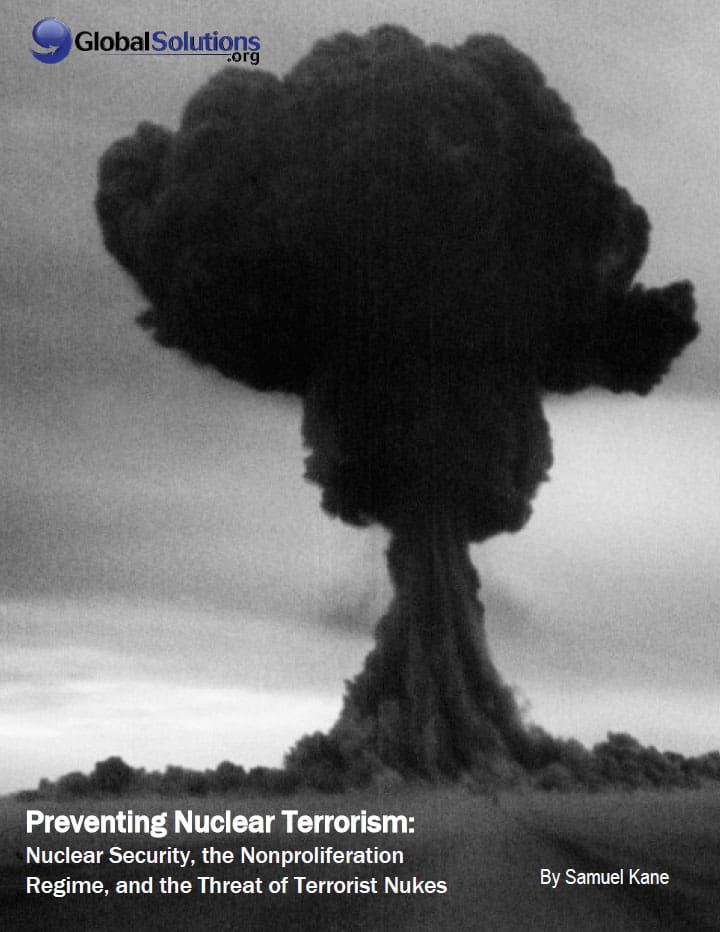
During the summer of 2012, when I was a research associate at GlobalSolutions.org, I began a research project that dealt with the issue of nuclear terrorism. It was a labor of strangelove. About eight months later, this project has resulted in “Preventing Nuclear Terrorism: Nuclear Security, the Nonproliferation Regime, and the Threat of Terrorist Nukes.” This research paper seeks to analyze this nightmarish threat. Among the questions that this paper will seek to answer are:
- From which states would a terrorist-controlled nuclear weapon be most likely to originate? Why are these states such unique threats?
- What has the US done to counter the proliferation threat posed by these countries?
- What international institutions are currently in place to prevent this kind of unauthorized nuclear proliferation?
- What additional steps can the US and the international community take to prevent nuclear materials from falling into terrorist hands?
It is sometimes tempting to dismiss the nuclear threat as a relic of the Cold War. That, after all, was the era of the A-Bomb and the H-Bomb, of “duck and cover” and MAD (mutually assured destruction). And yet, to adopt such a viewpoint is to ignore the reality that, in the post-Cold War world, the nuclear threat has, indeed, changed, but is far from disappearing entirely.
The Cold War nuclear threat was very much centered on states, and specifically on the possibility of two nuclear-armed states engaging in an all-out nuclear war. However, if a nuclear device explodes in a major city in the near future, it is very likely that a terrorist organization, rather than a national government, will be the direct culprit.
That is not to say, however, that such a nuclear attack would take place entirely without, at some level, the involvement of a state. After all, the development of nuclear weapons is a process that requires expertise and resources that most terrorist organizations simply do not have access to. However, if a terrorist organization sought to carry out an act of nuclear terror, the possibilities exists that it could steal a nuclear weapon or weapons-grade material from a nuclear-armed state or obtain these nuclear assets from complicit individuals inside that state’s nuclear establishment.
The threat of such illicit nuclear proliferation, and a subsequent act of nuclear terror, is much realer than you might believe, and is one that this paper seeks to explore. So, have a read, and sound off with your opinions in the comments section!