by CGS | Sep 21, 2024 | Past Event (External)
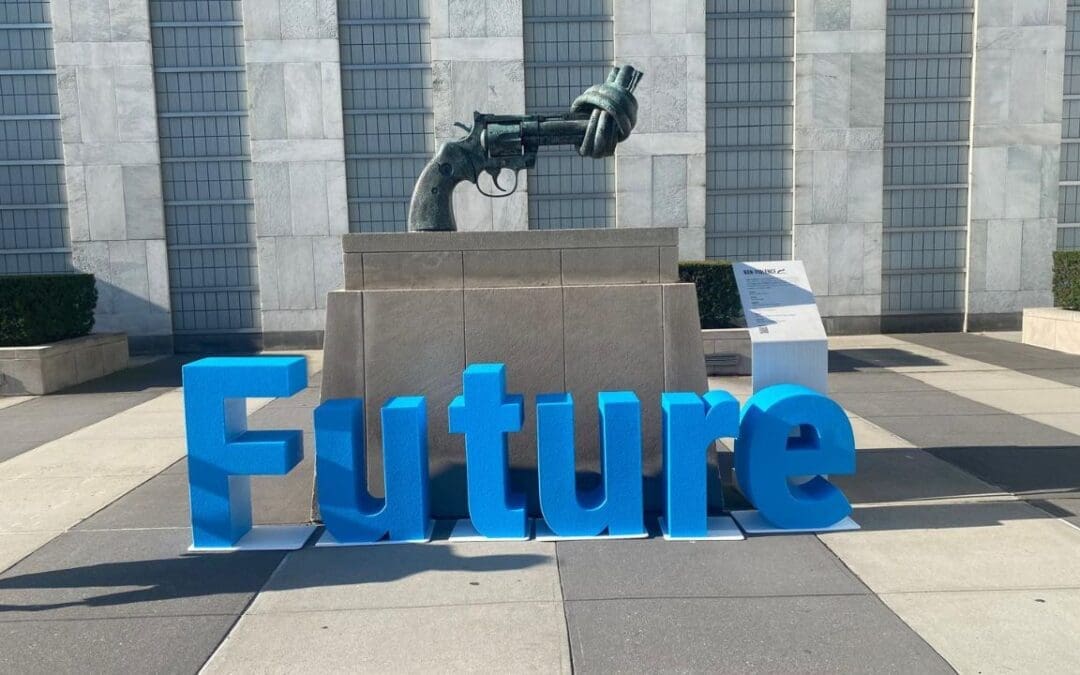
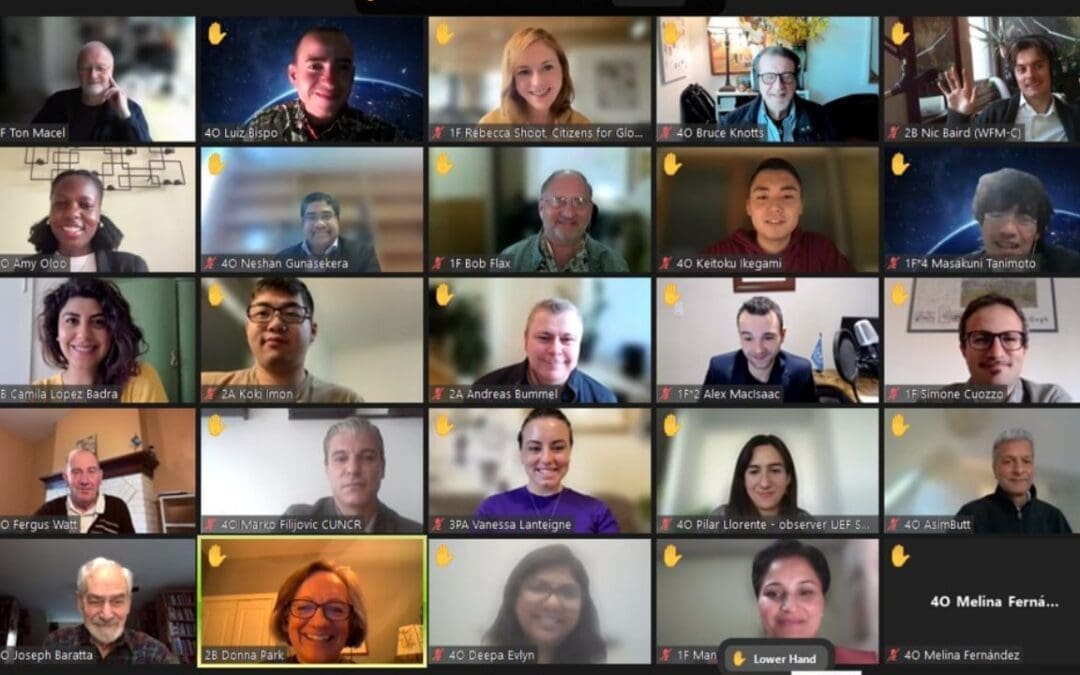
CGS co-sponsored this Side Event for the Summit of the Future Action Day hosted by the ImPACT Coalitions.
The UN’s Summit of the Future in New York adopted a PACT for the Future which includes a chapter on the transformation of global governance. This side event during the UN’s Action Days ahead of the Summit is a space to learn about and discuss proposals in this field put forward by a number of ImPACT Coalitions to build on the outcomes of the Summit and continue fulfilling a vision for renewed global governance in the coming years.
How to build on the seeds planted in the PACT to continue addressing the planetary emergency, inequitable distribution of power, lack of inclusion, continued violations of peace and disarmament goals, and gaps in accountability and the rule of law? Where is a need to go further? The event will addresses future pathways to bring about a more effective, accountable and inclusive global governance architecture.
Program outline
Introductory remarks
- Mark Malloch Brown, advisor, Bretton Woods at 80 initiative, former UN Deputy Secretary-General; former UK State Minister
Firestarters from ImPACT Coalitions featuring:*
- Global Citizens’ Assembly and a UN Parliamentary Assembly: Aishwarya Machani, Iswe Foundation;
- promoting international courts and tribunals for accountability under international law, Rebecca Shoot, Citizens for Global Solutions
- UN declaration of planetary emergency, Planetary Emergency Platform and the Creation of a Global Environment Agency, Maja Groff, Climate Governance Commission
- UN Charter review conference: Natalia Nahra, UN Charter Reform Coalition
Reactions
- Mary Robinson, Chair of The Elders, Lead Co-Chair of the Climate Governance Commission, and Former President of Ireland
- Meena Syed, Director for UN Policy, Norwegian Ministry of Foreign Affairs
Wrap-up and way forward
Moderated by Heba Aly
This Side Event was organized by: ImPACT Coalition on Inclusive Global Governance; UN Charter Reform Coalition; ImPACT Coalition on Just Institutions and the International Criminal Court; Earth Governance ImPACT Coalition; ImPACT Coalition on The International Anti-Corruption Court; Government of Norway; Coalition for the UN We Need; Global Governance Innovation Network.
- Global Citizens Assembly: Folly, Maiara, Aishwarya Machani, Andrea Ordóñez Llanos, and David Steven. 2024. Strengthening Citizen Participation in Global Governance. United Nations Foundation, Iswe Foundation, Plataforma CIPÓ, Blue Smoke, Southern Voice (download).
- UN Parliamentary Assembly: Brauer, Maja, and Andreas Bummel. 2020. A United Nations Parliamentary Assembly: A Policy Review of Democracy Without Borders. Berlin: Democracy Without Borders (download)
- a UN declaration of planetary emergency, Planetary Emergency Platform and the Creation of a Global Environment Agency, and other recommendations of the Climate Governance Commission; 2023 Report, Governing Our Planetary Emergency (download) and Tackling the Planetary Emergency: Supporting a Declaration of Planetary Emergency at the UN General Assembly and the Convening of a Planetary Emergency Platform (download), Published by MEGA on August 19, 2024
- Promoting international courts and tribunals: Legal Alternatives to War (LAW not War), a global campaign to increase the use and effectiveness of the International Court of Justice and to achieve universal acceptance of its jurisdiction.
- A UN Charter Review conference: Policy Brief from the UN Charter Reform Coalition
by CGS | Aug 27, 2024 | Press Release
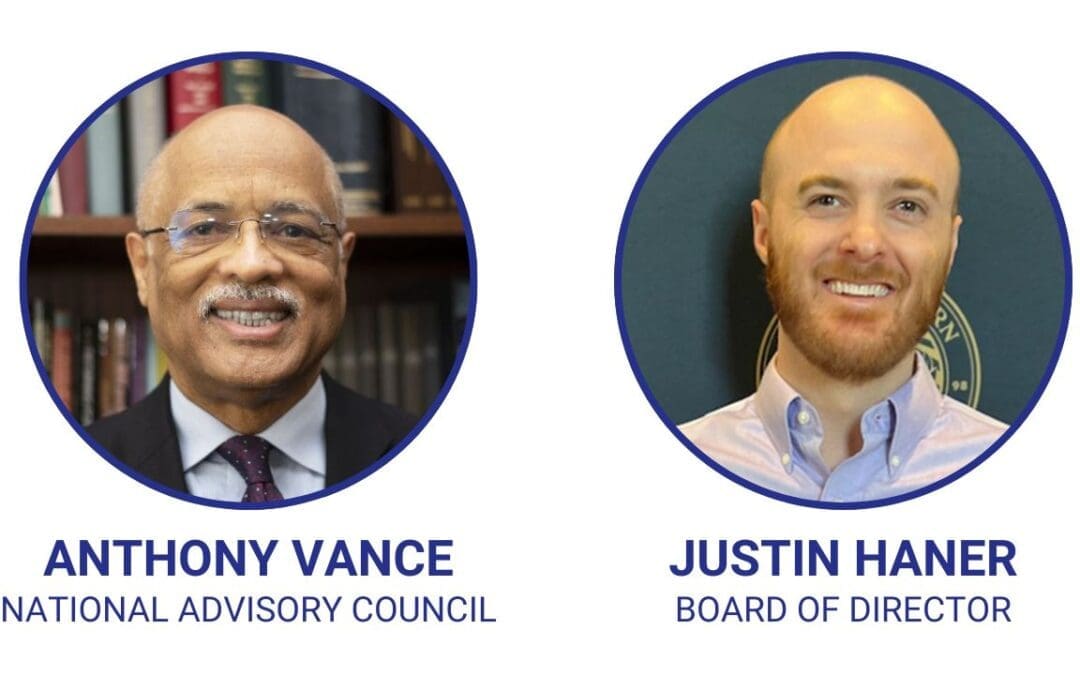
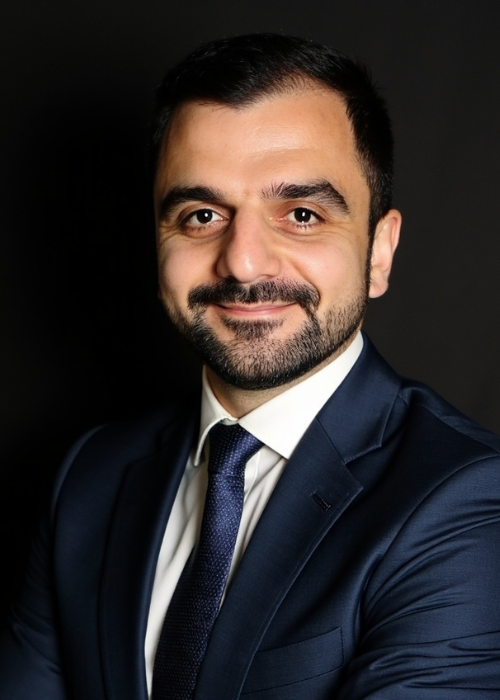
Washington, DC– Citizens for Global Solutions (CGS) is honored to announce Anthony Vance, Senior Representative, U.S. Bahá’í Office of Public Affairs joins our National Advisory Council (NAC).
Anthony oversees the development of the Bahá’ís of the United States Office of Public Affairs programs and strategic direction. He joined the office in 2010 after spending four years at the Baháʼí World Center in Haifa, Israel representing it to the diplomatic community, civil society, and parts of the host government. A lawyer by training, he spent 21 years in the U.S. Agency for International Development in legal and managerial positions in Washington, Côte d’Ivoire Kenya, Botswana, and Egypt. Mr. Vance holds a B.A. in Economics, an MBA, and a J.D. from Harvard University.
Larry David, Member, Executive Committee, CGS Education Fund Board of Directors said of Vance’s appointment, “The Baha’is and Citizens for Global Solutions have long-shared common goals relating to the need to replace an international system that allows for war with one which does not. The organizations are naturally allied. Anthony Vance’s joining the CGS Advisory Council underscores that informal alliance. CGS is fortunate to have an individual of Anthony Vance’s position and training advising its board and is strengthened by his decision.”
Dr. Justin Haner, Member of the Board of Directors
It is with great pleasure that Larry David also welcomes Justin to the Education Fund Board of Directors. Larry states, “Dr. Haner brings an academic perspective, deep preparation, and a thorough understanding of the history and scope of international law, its applications, and its shortcomings. We fellow board members are honored by Justin Haner’s choice to give volunteer service to support CGS and its focus on international peace and justice.”
Justin is a political scientist and research fellow at the Watson Institute for International and Public Affairs at Brown University. From traditional security concerns to artificial intelligence and cybersecurity, his scholarship focuses on the transformative power that international law and organizations can have on solving complex global and regional security issues. Committed to ensuring his work resonates beyond the classroom, he campaigns on the dire need to reform the United Nations, including as a co-drafter of the People’s Pact for the Summit of the Future and an active contributor to the Coalition for the UN We Need. Justin is also a committed public servant with twelve years of combined experience in the military and local government. As a former Captain in the US Army Infantry, he led a mechanized rapid reaction force just south of the Korean DMZ and was selected to serve as Executive Officer to the United Nations Command Honor Guard. He currently serves as an elected Representative for Town Meeting and appointed Capital Budget Committee board member in Walpole, MA, where he works on a variety of local issues from promoting racial and gender inclusivity, to reducing his town’s environmental impact.
About Citizens for Global Solutions
Citizens for Global Solutions is a non-governmental, non-profit, non-partisan membership-based organization that for more than 75 years has brought together a diverse collective of individuals and organizations with a common goal of a unified world predicated upon peace, human rights, and the rule of law. From championing ratification of the UN Charter upon our establishment in 1947 to supporting creation of the International Criminal Court (ICC) 25 years ago to advocating for global instruments to confront today’s enduring challenges of war and climate degradation, CGS recognizes that true progress is a generational enterprise. We invite like-minded individuals and organizations to join us in this mission.
Contact: outreach@globalsolutions.org
by CGS | Mar 26, 2024 | Press Release
Mobilizing Earth Governance Alliance (MEGA) is launched in Geneva on March 26, 2024 as a resounding answer to the challenges faced by Earth’s integrated ecosystems.
“We all share one planet. But today our common home and our common humanity are under existential threats from serious and inter-connected crises.” Mary Robinson, Chair of the Climate Governance Commission and Former President of Ireland, at the launch of MEGA.
The world faces a deepening planetary emergency—and is on a reckless path toward catastrophic ecosystem collapse —having already over-shot six of nine scientifically-identified Planetary Boundaries. Such profound and potentially cataclysmic challenges require new ways of thinking, collaborating, and innovating for change.
Enter the Mobilizing an Earth Governance Alliance (MEGA), launched on March 26 as a smart global coalition led by three civil society organizations – Citizens for Global Solutions (CGS), the Climate Governance Commission (CGC) and World Federalist Movement-Institute for Global Policy (WFM-IGP) – and cosponsored by 25 organizations around the world. (Watch the video of Mary Robinson launching MEGA).
The coalition advances proposals and campaigns for concrete environmental governance mechanisms, many of which have been thoroughly researched and analyzed in the Climate Governance Commission’s landmark report Governing our Planetary Emergency.
“Stronger and more effective global governance fit for purpose is required in order to facilitate the collective action that is required by States and other stakeholders to prevent an environmental catastrophe and to ensure healthy and vibrant ecosystems for current and future generations,” reflected Maja Groff, Convenor of the Climate Governance Commission.
“If the proposals of the Climate Governance Commission report and MEGA are fully implemented, then we can comprehensively solve the environment polycrisis,” added John Vlasto, Chair of WFM-IGP.
Examples of global governance proposals highlighted by MEGA include to establish a Global Environment Agency, an International Court for the Environment and an International Anti-Corruption Court, as well as to appoint a UN Special Envoy for Future Generations (along with legal representatives for future generations at regional, national and local levels), negotiate a Treaty on the Human Rights Responsibilities of Transnational Corporations (including the human right to a healthy environment), establish a Science-Policy-Action Network, declare a Planetary Emergency and establish a Planetary Emergency Platform.
Held in conjunction with the 148th Assembly of the Inter-Parliamentary Union, the timing and venue allowed for reflection on the importance of legislators in environmental governance due to their vital role in policymaking. “Everyone who’s been involved in parliamentary work I’m sure, will agree that it would be a mistake to underestimate what a small number of committed parliamentarians can make happen in their country,” said Nic Dunlop, Secretary-General of the Climate Parliament.
The launch event also recognized that true environmental governance solutions will require innovative cross-sectoral collaboration, including a focus on engagement of the private sector. “For global environmental governance solutions to be successful they need to provide the right incentive structure for the private sector to take decisive action,” explained Dr. Alexander Schmidt, Head of Science, Sustainability, and Climate Research at Stockholm-based carbon accounting provider Normative. “MEGA will work closely with businesses across the globe to understand their needs, capabilities, and limitations. It is through these dialogues that we can ensure a truly effective governance structure fit for purpose.”
The launch focused not only on preventing environmental catastrophe, but also on building a better future for all through enhanced stewardship of the Earth for current and future generations. ‘It is imperative that we revisit our shared values and connect its spirit to this new journey, including principles of international law, Earth trusteeship and wonderful efforts such as the Earth Charter which connects wisdom of indigenous knowledge and systems,” said Neshan Gunasekera, Member of the World Future Council and Chair of the Earth Trusteeship Initiative. “These call on all of us, present here and now, to build trust amongst each other, across generations, to ensure that we play our small part in preserving the integrity of our Earth’s systems.’
MEGA is established as a ‘big tent’, inclusive coalition of civil society organizations, legislators, academics/scientists, private sector actors and other stakeholders, working in cooperation with governments, and with a laser focus on strengthening global governance of the environment.
As CGS Executive Director Rebecca Shoot reflected: “For practically as long as there has been a global governance system as we know it, our organizations have advanced a shared vision of a better, more equitable, and inclusive world by harnessing the power of diverse coalitions. We are honored to join with allies from every region and sector now to apply this same strategic approach to perhaps the most critical challenge of all: saving our planetary home.”
Keep updated and engaged in MEGA by joining as a participating organization or by subscribing to the newsletter.
by CGS | Mar 16, 2024 | Press Release
Legal Alternatives to War: Increasing the universality and effectiveness of the International Court of Justice
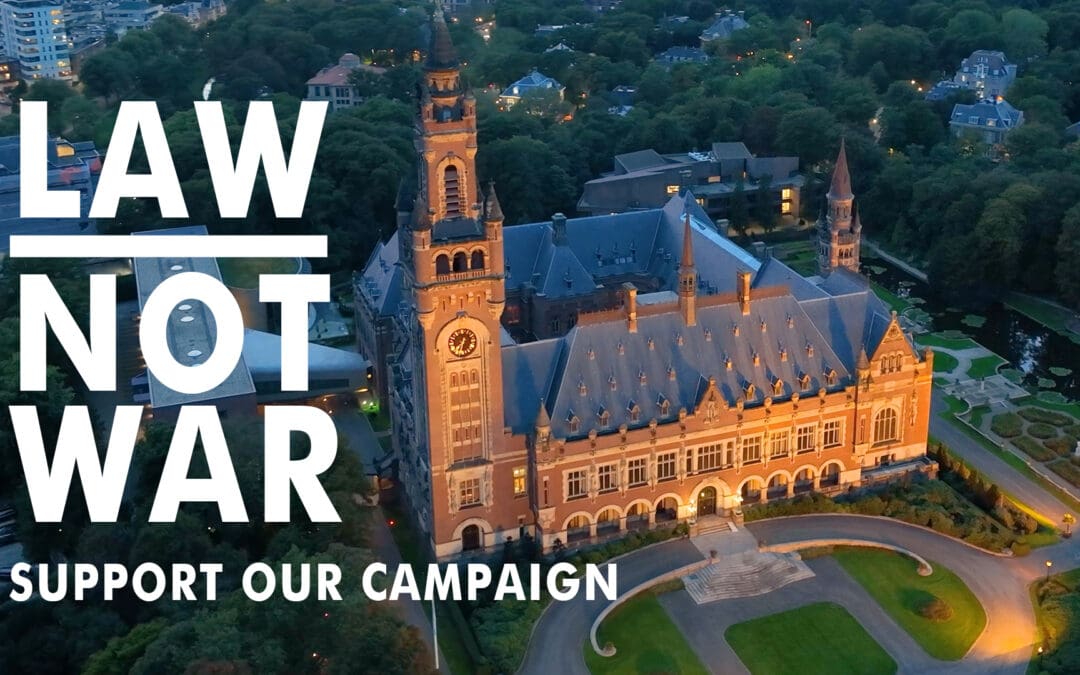
March 16, 2024. Resolve international conflicts in the courtroom, not the battlefield, the LAW not War crowdfunding campaign is live. We invite you to watch the promo video, make a donation and circulate to your networks.
“From the smallest village to the global stage, the rule of law is all that stands between peace and stability and a brutal struggle for power and resources. I note the importance of accepting the compulsory jurisdiction of the Court and call on all Member States to do so without any reservations.” Antonio Guterres, UN Secretary-General. Remarks to the UN Security Council Thematic Debate on the Rule of Law amongst Nations, January 12, 2023
“I prefer law to war under all circumstances.” Benjamin Ferencz (1920-2023), Prosecutor at the Nuremberg War Crimes Tribunals. International champion of international law who popularised the motto ‘Law not War.’
Project outline
LAW not War is a new global campaign to enhance the jurisdiction and use of the International Court of Justice (ICJ) in order to assist countries resolve international disputes peacefully rather than through recourse to the threat or use of force.
The principal objective of the campaign is to increase the number of States accepting the compulsory jurisdiction of the ICJ, with the aspiration to achieve universal acceptance of jurisdiction by 2045, the 100th anniversary of the United Nations.
In addition, the campaign works to enhance ICJ jurisdiction through:
- Promoting greater use by UN bodies of the option to request Advisory Opinions from the ICJ;
- Encouraging disputing States to make more frequent use of the option of taking cases to the ICJ by mutual agreement;
- Encouraging more frequent use of the compulsory ICJ jurisdiction provision in a number of international treaties, and promoting the inclusion of compulsory ICJ jurisdiction in additional treaties;
- Encouraging states to adopt constitutional amendments or legislative measures to affirm the UN Charter prohibition of war and the obligation to resolve international disputes peacefully including through recourse to the ICJ.
The campaign employs a mixture of education about the value and impact of ICJ jurisdiction, and advocacy to enhance such jurisdiction.
Authority, influence and impact of the ICJ
The ICJ has had considerable success at resolving international disputes, including some that involved the threat or use of force. Examples include:
- Nicaragua v United States, which helped end US aggression against Nicaragua and paved the way for the Central American Peace Accords;
- The Nuclear Tests case, which helped end nuclear testing in Pacific;
- Chad v Libya, which resolved their territorial dispute and ended their armed conflict,
- Costa Rica v Nicaragua, which resolved their territorial dispute over the Isla Portillos and ensured withdrawal of the Nicaraguan military forces.
The authority of the ICJ within the United Nations system, and the unique contribution the ICJ plays with respect to the application of the law, ensures that its decisions exert considerable influence and impact on the parties and other stakeholders in its cases.
An analysis of ICJ cases undertaken by Judge C.G. Weeramantry (former Vice-President of the ICJ), for example, indicated that approximately 90% of ICJ cases are implemented – either fully or mostly.
However, its role is limited by the fact that its jurisdiction is based on voluntary acceptance. As such, many disputes that could potentially be resolved with the help of the ICJ are not brought to the court because of refusal of one or more parties to accept its jurisdiction.
ICJ jurisdiction – general provisions
ICJ jurisdiction is conferred through a variety of processes including:
- Voluntary declarations by UN Member states – under Article 36 of the ICJ Statute – by which they unilaterally accept compulsory jurisdiction for any dispute between them and other states that have also made such declarations (74 countries have made such declarations);
- Mutual agreement by disputing states to take a specific legal issue to the court;
- Advisory Opinions which are requested to the Court by the UN Security Council, UN General Assembly (UNGA) or other UN organs and specialized agencies which have been granted authority by the UNGA to request such opinions;
- International treaties which provide for ICJ jurisdiction in disputes between States Parties relating to obligations under the treaty in question.
LAW not War is working to increase acceptance and use of ICJ jurisdiction through all four of these processes, but is placing a strong focus on enhancing the first process list above – increasing the number of voluntary declarations accepting ICJ jurisdiction for any international legal disputes.
ICJ jurisdiction – working with like-minded countries
The LAW not War campaign is building connection and cooperation with a like-minded group of countries that has produced a Handbook on accepting the jurisdiction of the International Court of Justice and released a Declaration on promoting the jurisdiction of the International Court of Justice which promotes the handbook and encourages states to accept jurisdiction of the Court both generally and in specific circumstances. 33 countries have now endorsed the declaration.
LAW not War and Common Security
The International Court of Justice is a key global governance mechanism for enhancing common security, i.e. peace and security for all. The LAW not War campaign therefore works as part of – or in cooperation with – other common security campaigns and initiatives including the UNFOLD ZERO Common Security platform, the WFM-IGP Abolish War through Common Security and the Law program and the Common Security v Nuclear Deterrence initiative.
LAW not War and the UN Summit of the Future
The UN Summit of the Future, scheduled for September 2024, provides an opportunity to highlight the role of the ICJ and build support for universal acceptance of its jurisdiction.
A large number of civil society organizations, facilitated by the Coalition for the UN We Need, have been consulting and cooperating on a Peoples Pact for the Future which includes 33 recommendations to the Summit that have considerable support around the world. One of these is the recommendation that “all UN Member States should be encouraged to accede, by no later than 2035, to the compulsory jurisdiction of the International Court of Justice to ensure the peaceful settlement of disputes.“
C4UN will organise a second Global Futures Forum in May 2024 to build political traction for the recommendations in the Peoples Pact for the Future.
Cosponsoring and participating organizations
Founding/cosponsoring organizations:
LAW not War is a joint campaign established and managed (cosponsored) by:
- Aotearoa Lawyers for Peace
- Basel Peace Office
- Citizens for Global Solutions
- Peace Action, Training and Research Institute of Romania
- UNFOLD ZERO
- World Federalist Movement-Institute for Global Policy
- World Future Council.
Participating organizations include:
- Act for Change / Agir pour le Changement (Congo)
- Actions Communautaires pour le Développement de la Femme (Congo)
- African Centre for Human Rights Education (Senegal)
- All Souls Nuclear Disarmament Task Force (USA)
- Asociación Española para el Derecho Internacional de los Derechos Humanos (Spain)
- Association for Promotion of Sustainable Development (India)
- Association of World Citizens (France/International)
- Baltimore Nonviolence Center(USA)
- Blue Banner (Mongolia)
- Center for Enlightenment and Development (Malawi)
- Center for Peace and Global Governance (USA)
- Clean Climate and Environment Campaign Initiative(Nigeria)
- Centre International de Droit Comparé de l’Environnement (France)
- Center for United Nations Constitutional Research (Serbia)
- Climate Governance Commission (Netherlands/International)
- Coalition for Peace Action (USA)
- Democracy Today (Armenia)
- Democracy Without Borders (Germany/International)
- FrameOut (Sri Lanka)
- G100 Security and Defence Wing (International)
- Gender Peace and Security Organization (UK)
- Global Compliance Research Project (Canada)
- Global Directions (Australia)
- Global Justice Intelligence Eyes, Inc. (USA)
- Global Peace Alliance BC Society (Canada)
- Global Security Institute (USA)
- Hawaii Institute for Human Rights (USA)
- Indian Institute for Peace Disarmament & Environmental Protection (India)
- Initiative pour le Désarmement Nucléaire (France)
- Integrity Initiatives International (USA)
- Interfaith Communities United for Justice and Peace (USA)
- International Community for Georgia Development and the Progress (Georgia)
- International Helping for the Young (Chad)
- L’Unione degli Scienziati Per Il Disarmo (Italy)
- Lawyers Committee on Nuclear Policy (USA)
- Legal Pact for the Future (USA)
- Malaysian Youth Diplomacy (Malaysia)
- Minnesota Peace Project (USA)
- Mundo sin gurerras y sin violencia (Chile/International)
- MY World Mexico (Mexico)
- National Coalition of Civil Society Organizations of Liberia (Liberia)
- National Council of Turkish Women (Turkey)
- National Forum on Human Rights (Yemen)
- NZ Centre for Global Studies (New Zealand)
- New Zealand Nuclear Free Peacemakers Association (New Zealand)
- Keen and Care Initiative (Nigeria)
- Nonviolence International (USA/International)
- Nukewatch (USA)
- Ohio Nuclear Free Network (USA)
- One Earth Future Foundation (USA)
- Österreichische Frauenföderation (Austria)
- Pakistan Peace Coalition (Pakistan)
- Parliamentarians for Nuclear Non-proliferation and Disarmament (International)
- Pax Christi Pacific Northwest (USA)
- Pax Christi Toronto (Canada)
- Pax Christi USA
- Peace Action WI (USA)
- Peace and Disarmament Collective Aotearoa (Aotearoa-New Zealand)
- Peace And Justice Alliance (Canada)
- Peace in Our Schools (Canada/Georgia)
- Perú por el Desarme (Peru)
- Platform for Peace and Humanity (Slovakia/Europe)
- Project Enduring Peace (USA)
- Quaker United Nations Office Geneva (Switzerland/International)
- Reacción Climática (Bolivia)
- Right Education Empowerment & Development Centre for Social Change – REED Centre (Nigeria)
- Rural Area Development Programme (Nepal)
- Science for Peace (Canada)
- Scientists for Global Responsibility (UK)
- Sri-Lanka Doctors for Peace and Development (Sri Lanka)
- Stimson Center (USA)
- Uganda Peace Foundation (Uganda)
- Union des Amis Socio Culturels d’Action en Developpement (Haiti)
- United Peace Keepers Federal Council (Thailand)
- United Nations Association, London and South East Region (UK)
- United Nations Association of New Zealand (New Zealand)
- United Nations Association of Chad (Chad)
- United Nations Association of Victoria (Australia)
- University International Student Chamber (Japan/International)
- Unione degli Scienziati Per Il Disarmo – Union of Scientists For Disarmament (Italy)
- Visionary Ethics Foundation/Fundacion Etica Visionaria (Spain)
- Women Empowerment Against Poverty of Nepal (Nepal)
- Women’s Federation for World Peace (Austria)
- Women’s International League for Peace and Freedom, US Section (USA)
- World Beyond War Aotearoa (Aotearoa/New Zealand)
- World Citizens Association (Australia)
- World Federalist Movement Canada (Canada)
- World Federation of United Nations Associations (WFUNA)
- World Service Authority/World Citizen Government (International)
- Youth Fusion – Abolition 2000 Youth Network (International)
Join this growing number of LAW not War participating organizations
by CGS | Nov 16, 2023 | Press Release
Press Release – November 16
CGS Board Chair, Executive Director, and Board Members participated in Recommendations from the 2023 Congress of the World Federalist Movement-Institute for Global Policy
Critical issues for humanity, such as the climate/environment crisis, a global erosion in human and civil rights, lack of progress on the United Nations Sustainable Development Goals (SDGs), and the rise of armed conflicts and authoritarian regimes, require better global governance according to member organizations of the World Federalist Movement – Institute for Global Policy (WFM-IGP). The organizations reaffirmed their shared commitment to advancing effective global governance on 11 and 12 November 2023 at the 29th WFM-IGP biennial Congress, attended by 70 delegates and observers from 29 countries.
“International law and global governance mechanisms must be strengthened in order to better manage the critical problems facing humanity,” explained WFM-IGP Congress Chair Donna Park, based in Cincinnati, Ohio, USA. She further observed: “World Federalism offers an effective model for a peaceful, secure, just, democratic, equitable and sustainable world. The policies and programs advanced over the weekend would help humanity build such a world.”
To advance international law, human rights and justice, the Congress resolved to support an international treaty to codify and provide accountability for Crimes Against Humanity and strengthen its recently launched Legal Alternatives to War (LAW not War) program to enhance the universality and effectiveness of the International Court of Justice. The Congress also resolved to continue its active support of the International Criminal Court (ICC) and promote the establishment of additional judicial institutions to meet global challenges not under ICC jurisdiction, including crimes against the environment, corruption, organized crime and persistent and unchecked violations of human rights, ensuring effective remedies for victims.
“The challenges we face today require global solutions, and world federalism provides the necessary framework for effective international cooperation,” says Rebecca A. Shoot, Co-Chair of the WFM-IGP Commission on International Justice, the Rule of Law and Human Rights, working out of Washington, DC, USA. “Respect for the rule of law, support for international judicial institutions, and protection of human rights must be the bedrock of this cooperation. By adopting concrete proposals to apply these principles in practice, WFM-IGP and its member and affiliated organizations take important steps to advance the vision and promise of the UN Charter for a world governed by law not war.”
To promote peace and human security, the Congress discussed common security approaches to address and resolve armed conflicts. In addition, the Congress called on States to phase out policies of nuclear deterrence; affirm the norm and practice of non-use of nuclear weapons; adopt policies of no-first-use of nuclear weapons; slash nuclear weapons budgets and re-allocate these resources to peace, climate protection and the SDGs; and commit to achieve the global elimination of nuclear weapons no later than 2045, the 100th anniversary of the UN. The Congress also advanced governance proposals to protect outer space for peaceful purposes and to ensure effective governance of Artificial Intelligence.
To enhance environmental and economic governance, the Congress supported the work of the Climate Governance Commission to help establish effective environmental governance mechanisms. Congress also affirmed the joint initiative of WFM, Citizens for Global Solutions and the Climate Governance Commission to launch the Mobilizing an Earth Governance Alliance (MEGA) Program to implement CGC 2023 report recommendations and complementary global environmental governance proposals, including pricing carbon, elaborating the concept of Earth Trusteeship, reforming the Bretton Woods institutions, and creating an empowered Global Environment Agency and UN Parliamentary Assembly.
“At root, it is not an environmental crisis,” says John Vlasto, WFM-IGP Executive Board Chair, based in London, UK. “Humanity has created a global governance crisis – resolve this and we can unite to live in harmony with each other and with nature.”
The Congress also explored a range of initiatives by WFM-IGP and its member and affiliated organizations to actuate these policies, including the Campaign for a UN Parliamentary Assembly, Campaign for a UN Emergency Peace Service, Common Security platform, Earth Trusteeship Initiative, Legal Alternatives to War (LAW not War) campaign, Move the Nuclear Weapons Money campaign, UNFOLD ZERO, 3+3 Coalition for a North-East Asia Nuclear Weapon Free Zone and 1 for 8 Billion project.
“The concrete proposals and exciting campaigns advanced by the World Federalist Movement provide feasible approaches to managing the world better,” says Alyn Ware, WFM-IGP Program Director, based in Prague, Czech Republic. “By strengthening current global governance mechanisms, we can resolve international conflicts more justly and humanely, prevent war and facilitate global cooperation to protect the environment and ensure a sustainable world for current and future generations.”
This Congress comes at a challenging time for humanity and our planet. Action to animate these words is more necessary than ever. “We have only one world and need to preserve it. For this, we need Parliament at the UN to address the democratic deficit at the UN, disastrous global climate crisis, prevent wars, bring regulations in the use of outer space and Artificial Intelligence,” stated Dr James Arputharaj, WFM-IGP Executive Board Member based in Bangalore, India.
To move more resolutely toward a world federation of nations, Congress urged commencing a process for a UN Charter Review Conference based on Article 109(3) of the Charter to strengthen the United Nations and establish a UN parliament. This process would recognize sovereignty of planetary citizens as co-decision makers alongside States, backed with universal and enforceable rule of law; replace the war system with peaceful conflict prevention and resolution; and honor the earth’s ecological boundaries.
Contact: Donna Park, WFM-IGP Congress Chair. Phone: +1 202 546 3950 Email: congress_chair@wfm-igp.org
*********************************************************************
About the World Federalist Movement- Institute for Global Policy
The World Federalist Movement/Institute for Global Policy, founded in 1947, is a non- profit, non-partisan civil society organization that promotes global governance to address peace and security, human rights, the environment and other transnational issues. The organization is governed by its Congress, comprised of 43 member organizations from across the globe that work to determine the broad policy direction of the organization. For inquiries, please contact Alyn Ware, Program Director at ware@wfm-igp.org.