This site makes extensive use of JavaScript, for the best browsing experience we recommend you enable JavaScript in your browser.
The Global Citizen: June 2011
I recently attended a hearing in the Senate Foreign Relations Committee regarding the situation in Libya and the War Powers Resolution. The hearing's main witness was Harold Koh, Legal Adviser at the U.S. Department of State, who said that President Obama did not need to seek Congressional approval for the conflict in Libya because it did not amount to "hostilities" as defined in the War Powers Resolution. Despite the obvious inter-branch power struggle that was evident throughout the hearing, I think it is important to look at the big picture when it comes to the situation in Libya.
At one point, Senator John Kerry, chairman of the Foreign Relations Committee, alluded to the most important facet regarding the NATO operation in Libya:
"It is my firm personal belief that America's values and interests compelled us to join other nations in establishing the no-fly zone over Libya. By keeping Gaddafi's most potent weapons out of the fight, I am positively convinced that we saved thousands of civilians from being massacred."
In their op-ed in today's Financial Times, former U.S. Secretary of State Madeline Albright and former Foreign Minister of Jordan Marwan Musher urged the United Nations Security Council to refer Syria's president, Bashar al-Assad to the International Criminal Court for crimes against humanity. They specified that Assad is responsible for using "lethal violence to repress peaceful demonstrations in support of democratic rule."
As part of Albright and Mausher's argument, they indicate that the ICC is the best international institution to deal with the situation in Syria in the hope that the threat of action by The Hague will deter Assad from continuing such abuses. They believe directing the ICC's attention to the human rights abuses in Syria "could cause the government in Damascus to think with greater depth about its interests and, as a result, possibly change course, sparing many lives." Further, by indicting President Assad, the international community will show its zero tolerance policy for mass atrocities which will hopefully prevent others from committing future abuses.
Albright and Mausher also discussed how international institutions need to evolve along with the democratization of Middle Eastern countries. The following actions, they believe, would help "modernize and restore confidence" in international institutions:
The Woodrow Wilson Center for International Scholars hosted an event yesterday on the rising star in multilateral organizations; BRICS. The conference included experts from all member states: Brazil, Russia, India, China, and its newest member, South Africa. There has been a lot of curiosity as to how these nations are going to work together when they seem to have so little in common. For instance, China, India and Russia all have nuclear weapons. Brazil and South Africa have a decent amount of "western culture" within their societies. China's economy is larger than all other member states combined. It is easy to see why the world is curious about this dynamic and disparate group.
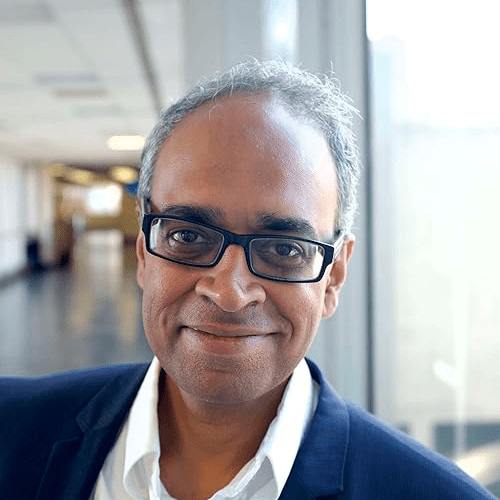
I was pleasantly surprised with India's expert, Inderjit Singh, a professor from the National War College. He was not only critical of India's low literacy rates, government corruption and human rights issues, but he was also very critical of China. He attacked the Chinese "model of modernization," which he claimed should be a model for no one considering the massive amounts of human rights violations they have committed in their process of achieving economic growth. Mr. Singh went on to say that although India does not approve of China's history, they will not condemn them and will continue to work with them.
One day after the International Criminal Court issued an arrest warrant for the Libyan leader Muammar Gaddafi, the court's prosecutor, Luis Moreno-Ocampo showed whole-hearted optimism that the incited war criminal and his regime will be ousted in the very near future. Ocampo appealed to the signatory states of the ICC to fully participate in Gaddafi's arrest when he stated, "If we have enough energy within the states, in two, three months its game over."
Ocampo further emphasized Libya's role as a member state of the United Nations in his remarks on Tuesday
In issuing an arrest warrant for Muammar Gaddafi, the International Criminal Court has demonstrated yet again that tyrants and human rights abusers around the world -- even if they are heads of state -- will not enjoy immunity from international law, and will be held responsible for their crimes, Citizens for Global Solutions said today.
Melissa Kaplan, Deputy Director of Government Relations at Citizens for Global Solutions and Coordinator of the Washington Working Group on the International Criminal Court (WICC) said,
"This ruling is an important first step towards securing peace and justice for victims in Libya and a critical development in the international justice movement."
A panel of three judges at the Pre-Trial Chamber of the International Criminal Court ruled yesterday that evidence presented by Chief Prosecutor Luis Moreno Ocampo showed reasonable grounds that Gaddafi, his son Saif Al-Islam Gaddafi, and his intelligence chief Abdullah Al-Senussi committed crimes against humanity in a violent government crackdown of pro-democracy demonstrations in Libya earlier this year. The judges issued the warrants to ensure that the three men appear before the ICC, to prevent further interference in the on-going investigation, and halt the commission of additional crimes.
Blog written by Alena Gerlek:
When my friend Lara invited me to work with her at Bonnaroo, I said yes before I even asked "Doing what?" After I got over my initial excitement and asked her to describe the work we'd be doing for Citizens for Global Solutions - canvassing, gathering emails, and talking to people at the festival about CGS' humans rights campaigns - I was a little intimidated. While I was familiar with some of the human rights issues that Lara had worked on through our four years at Wellesley College, my background is completely different. I studied biology in college and have since been working in conservation research at the New England Aquarium. But when I started to learn more about CGS and the primary campaigns that we'd be gathering support for at Bonnaroo, genocide prevention and UN funding, I grew more and more excited not just for the music, but also because I would be able to help CGS make a difference.
It was not unexpected, but nonetheless, today marks another milestone on the road toward international justice. For only the second time in the history of the International Criminal Court, the ICC has issued an arrest warrant for a sitting head of state. Arrest warrants were issued for Libyan leader Muammar Gaddafi, his son Saif Al-Islam Gaddafi and Abdullah Al-Sanousi, the Head of the Military Intelligence, for crimes against humanity after Prosecutor Luis Moreno-Ocampo's request was approved by the Court's Pre-Trial Chamber.
Prosecutor Ocampo had requested the warrants for Gaddafi and the others on May 16th. The situation in Libya, stemming from the violence towards civilians in that country that began last winter, was unanimously referred to the ICC by a vote of the United Nations Security Council (UNSC) in February. Prosecutor Ocampo opened an investigation into events in Libya in March.
On Friday, June 24, I attended the event Liberia: Through the Eyes of President Ellen Johnson Sirleaf, Africa's First Elected Female Head of State at the United States Institute of Peace. President Johnson Sirleaf's visit comes just three months before the Liberian general elections, in which she is running for another five-year term. Since being inaugurated on January 16, 2006, President Johnson Sirleaf has lead post-conflict Liberia through economic and political development focused on global partnerships and education.
To commence her presentation on Friday, President Johnson Sirleaf explained that her time in Washington has been spent meeting with leaders on Capitol Hill to thank them for the careful attention they have given Liberia's development during the eight years since the country's civil war ended. She also hopes her visit will encourage continued U.S. assistance to sub-Saharan African countries. Among the many reasons for the U.S. to continue supporting Liberia, President Johnson Sirleaf explained that she has used the funds to increase infrastructure such as building over 800 miles of roads and developing the economy into one of the twenty fastest growing in the world.
Last week Tunisia became the 116th party to the Rome Statute and the first North African country to join the International Criminal Court (ICC). Since Mohammed Bouazizi lit himself on fire and sparked a revolution that spread throughout the Arab world, Tunisia has undergone significant change, becoming a more democratic and transparent country. Tunisia's decision to join the ICC reaffirms the country's commitment to democracy and respect for basic human rights.
More importantly, Tunisia's decision to join the ICC will hopefully inspire other countries in the region to do the same. The Middle East/North African region is the most underrepresented region in terms of ICC membership. I hope Tunisia's decision to join the ICC will mean that other countries in the region decide to follow suit. Since the fall of President Ben Ali, Tunisia continues on the path towards democracy. Tunisia's choice to become a member of the ICC is an important step for increased accountability and justice in the region.
Today the United Nations (UN) International Criminal Tribunal for Rwanda (ICTR) sentenced all six defendants in the Butare Trial for crimes related to genocide. Three of the six are sentenced to life imprisonment, including Pauline Nyiramasuhuko, the former Rwandan Minister of Family Affairs and Women's Development. Nyiramasuhuko is the first woman to be convicted by the ICTR of genocide, and crimes against humanity, which include rape, among other charges.
Nyiramasuhuko's son, Arsène Shalom Ntahobali, and the other four defendants have similarly been convicted on account of their actions in the massacre of Tutsi and moderate Hutus in the Butare district of Rwanda during the 1994 genocide. All six defendants are from the Butare district in southern Rwanda. There they conspired to commit genocide, and participated in acts of genocide. Pauline Nyiramasuhuko is a prominent figure in this trial, as the first woman and female government official to be indicted by the ICTR. Nyiramasuhuko is recognized as a "tyrant" and "key player" in perpetuating the massacres and rapes of Butare district Tutsis.
Pages
Topics
- Arms Control (22)
- Become a Member (3)
- Become a Member (1)
- Capitol Hill (165)
- CGS Political Action Committee (PAC) (17)
- Chapters (4)
- Civilian Protection (133)
- Climate Change (94)
- Comprehensive Test-Ban Treaty (CTBT) (2)
- Congressional Report Card (7)
- Current Campaigns (8)
- Election News & Analysis (101)
- Fellows (2)
- Gender Based Violence (26)
- Genocide Prevention (113)
- Get Involved (70)
- Home (12)
- Human Rights (223)
- Human Rights Council (31)
- International Criminal Court (167)
- International Criminal Justice (51)
- Law & Justice (211)
- Law of the Sea Treaty (55)
- Nuclear Disarmament (81)
- Nuclear Non-Proliferation Treaty (NPT) (2)
- Other (33)
- PAC: 2010 Election Endorsements (3)
- Partners for Global Change (2)
- Peacekeeping (104)
- Prevent War (182)
- Rights of the Child Treaty (10)
- Strategic Arms Reduction Treaty (START) (19)
- Support Us (15)
- Take Action (24)
- Tax Deductible Giving (2)
- UN Funding (71)
- UN Reform & Revitalization (43)
- United Nations (321)
- usaforicc.org (1)
- WFI (5)
- Women's Rights Treaty (CEDAW) (47)
Archive
- May 2013 (8)
- April 2013 (10)
- March 2013 (6)
- February 2013 (16)
- January 2013 (12)
- December 2012 (4)
- November 2012 (11)
- October 2012 (11)
- September 2012 (7)
- August 2012 (3)
- July 2012 (17)
- June 2012 (23)