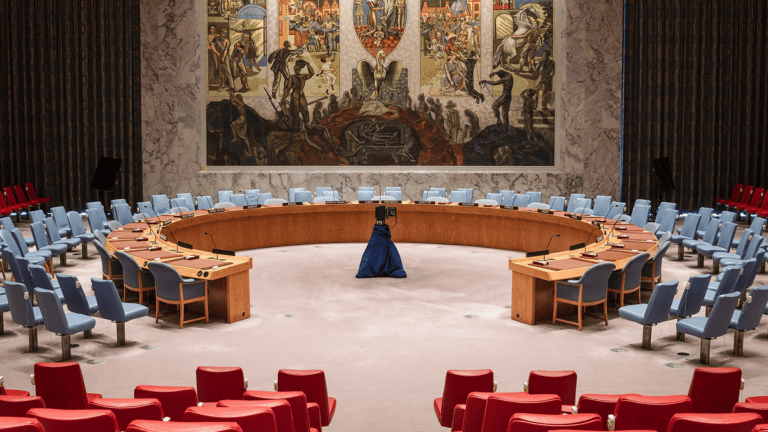

Regular attendees of the High Level Political Forum (or similar spaces) might well get the sense that the world is nearly beyond repair. Each report, each speech, begins with a recitation of the numerous tragedies and ills befalling humanity – the polycrisis as it has come to be known. Hearing it again and again, I often wonder whether this practice is meant to somehow establish the credentials of the speaker. I also wonder whether, when everyone is quite aware of the precipice on which we stand, it might be helpful to start from a different perspective.
I recently joined several prominent civil society actors and high ranking government officials at an informal gathering where our convenor, the Minister of Development from a large country, asked us all to start by sharing something from the global landscape that brought us hope. No one at that table was unaware of the realities facing the world. But, for a short time, we were able to share mutual victories and offer suggestions for how they could be repeated.
The exercise was impactful. One delegate turned to me after and remarked that these kinds of conversations could be helpful to anyone feeling the weight of the world on their shoulders. A conversation about hope, he seemed to suggest, is a source of hope itself.
Starting with such a posture can help us in many circumstances, without minimizing the very real challenges we face. This posture is not unusual in other dimensions of life: in athletics, it is important to envision what success looks like before the start of a competition. Patients in rehabilitation are encouraged to channel a can-do attitude. This is not soft science: it can have a measurable impact on outcomes.
Listening to 30 minutes of hopeful interventions built a sense of shared optimism among us in that room, which carried over as we began to address a variety of pressing problems. It also illustrated a deeper principle, and one that is relevant to the multilateral system; namely, that progress is achieved most sustainably by building on our strengths, not by criticizing our weaknesses.
Yes, of course, there is utility in identifying gaps and shortfalls. Learning requires this honesty. But we cannot draw on capacities we have not yet developed; we cannot deploy resources that do not yet exist. At the end of the day, we work with the tools we have, not the tools we lack.
The question the Minister of Development posed was broad, but the responses it elicited were specific and practical. Colleagues and partners did not reply with abstract hopes, but with specific reasons for hope, such as abilities gained, lessons learned, successes achieved, and positive trends already underway. Constructive contributions inspire because of the promise they hold—justified and rational—for further progress and advancement going forward.
Today, as the international community moves toward the Summit of the Future and the second half of the 2030 Agenda for Sustainable Development, we would do well to organize ourselves more and more according to the principle of building from one strength to the next. Without ignoring hard realities, our opening protocols can allow us to share and draw from successes being achieved around the world.
We all aim to build a better world. Through positive, constructive language and examples, we encourage progress by inspiring each other and learning what is working. This, in itself, accelerates bringing that hopeful world into being.
*This was originally published on the Bahai’ International Community’s website.