• Home
  • The Minute

07/31/08

Could Ongoing Zimbabwe Talks Signal a Regime Change?

Posted by Rumbi Maweni

By Rumbidzai Maweni  

Much has been made in the past week of the ongoing talks in South Africa by delegates of Zimbabwe’s feuding parties, Zanu-PF and MDC, to negotiate an end to the country's current political crisis. Talks are coming on the heels of what has been a turbulent three months following the controversial March 29th general elections. Although it has been widely reported that Morgan Tsvangirai of the Movement for Democratic Change (MDC) party decisively beat incumbent, President Robert Mugabe, a run-off election took place June 27 from which Tsvangirai was forced to withdraw and seek sanctuary at the Dutch Embassy in Harare after his supporters were beaten and killed in a wave of state-sponsored violence. More than 150 opposition supporters, since, have been killed at the hands of government-backed police.  

On July 21, Tsvangirai and Mugabe finally signed an accord that would begin talks in hopes of coming to an official resolution; the subsequent meeting in South Africa soon after was the first between the two rivals in ten years. Although the talks are being conducted in complete secrecy, according to The Independent, sources say that the delegates have committed themselves to trying a power-sharing government.

South African President Thabo Mbeki, who is mediating the talks at a secret location near Pretoria, has recently said that talks are going well defying earlier reports that the talks were deadlocked due to failure to agree upon key posts in the future government. Mbeki denied this report on Tuesday and Business Day reported earlier today that talks are set to resume August 3rd. The two-week deadline for completing the talks runs out on August 4th, but could be extended if need be.

Mugabe has been holding on to power with a death grip for the last few decades. Why he only now has agreed to talks may be best attributed to intense international pressure rather than a newfound willingness to be cooperative as his government starts to feel the effects of ever-widening sanctions by Western countries; the expansion of US sanctions signed by President Bush last Friday targets specific entities including government-owned and state-controlled businesses. Despite the South African government’s criticism that new sanctions imposed on Zimbabwe by America and the EU may impede talks, right now, the sanctions are the strongest force putting pressure on Mugabe’s government to concede ground as economic conditions in the country worsen. 

Mugabe currently resides over a country with a near-depleted economy, inflation officially soaring at 2.2 million percent (though several independent economists estimate that it is closer to 12.5 million percent), the world’s highest. Once the “bread basket of Africa”, the Zimbabwean dollar was worth more than the American dollar at the start of the country’s independence in 1980. But, over the course of Mugabe’s rule, it has since dropped to the point at which one pound is worth $200 billion Zimbabwean dollars. Zimbabwe’s economic collapse has resulted in food and foreign currency shortages as well as mass starvation. 

Despite ongoing talks, Mugabe’s spin-machine has gone on unabated. Yesterday, the Central Bank governor, Gideon Gono, announced that,  starting August 1st, the currency would be redenominated by removing 10 zeros so that essentially 10,000,000,000 dollars will become just one.  The change, however, is little more than a cosmetic improvement that will simply make shopping a little easier for the average Zimbabwean who will still need 25 of these new dollars to buy a single loaf of bread.   

"This is just to overcome the absurd difficulty of having to deal with all those zeros but it does not address the root cause of the problem," John Robertson, an economic consultant said on Tuesday. "The problem is of scarcity of foreign earnings and investment inflows." Mugabe’s government ordered a similar exercise to take place in 2006 (dubbed “Operation Sunrise”) which removed three zeros from the currency. Prices only spiked after the change.

Nonetheless, Mugabe has taken this opportunity to create the appearance that the government is somehow doing something to abate the economic crisis, perhaps in an attempt to buy back some of the popularity amongst Zimbabwe’s poorest that the March election proved he has clearly lost. The beleagured president even went as far as to appear on live television soon after the announcement to accuse Western “imperialist” sanctions as well as businesses profiteering for the worsening economic climate and threatened to call a “state of emergency” if conditions continue to decline hereafter.

"Entrepreneurs across the board: Don't drive us further. If you drive us even more we will impose emergency measures and we don't want to place our country in a situation of emergency rules, they can be tough rules," he warned.  Mugabe’s continued scare tactics and fear-mongering even in the midst of talks should surely raise doubts as to whether he is willing to concede any political ground. His skill as a political tactician should not be underestimated.

Although the talks should certainly be applauded for even taking place, it is difficult to see what possible resolution can be derived from them. Both parties claim that they won the March election. MDC is adamant that Tsvangirai lead the new government, having won the majority vote in March; Zanu-PF is unlikely to accept any agreement that ousts Mugabe from the presidency. Mugabe and his party are notorious for staving off opposition and could easily be buying time before their next maneuver.  

Needless to say, whoever inherits Zimbabwe in its current condition will have quite a job on their hands. The journey of repairing the country’s thoroughly ravaged economy, compensating for the last few decades of brain drain, as well as the demoralization of those that have remained will be long and arduous. It will take a very long time for Zimbabwe to regain what she has lost, but she has no hope of recovery whilst governed by a ruthless and undemocratic regime. 
07/31/08 04:03:07 pm • Leave a commentTrackback (0) PermalinkPermalink
Categories: 08 Elections

White House Staff Scream: "We are all in Uproar!"

Posted by Daria Kirilenko

Historians are of the opinion that President George W. Bush will go down in the books as possibly the worst president of the United States. Polls published by CNN suggest that Bush is also the most unpopular president in America's history. Americans gave Mr. Bush a 70% disapproval rating on how he is handling his job as the Nation's leader. This does not come as a surprise; with the federal budget deficit nearing $500 billion and national GDP growing at a rate of only 1.9% due mostly to increased exports created by the weak dollar and of course the administration's senseless crusade against terrorism in Iraq, the next president of the United States has his work cut out for him.

What is very curious is that there is a clear attempt on the side of Mr. Bush to better his image before his term in the White House expires. Coming from a man who boasted not too long ago of never reading newspapers and whose Vice President sneered “So?” when asked how he feels about Bush's 28% approval rating, he now appears almost desparate to improve his image in the few shorts months he has left in office. President Bush does not have a good history of foreign diplomacy because of his linear policy in the Middle East and neglect to adequately address the conflict with Afghanistan. Now Condalizza Rice seems to be in a frantic frenzy flying from North Korea to India negotiating non-proliferation deals.

Today Mr. Bush signed a bill he previously vetoed which will bring mortgage relief to 400,000 homeowners. He also seems keen to work at his image as a humanitarian with giving $48 dollars over the next five years to AIDS, tuberculosis and malaria treatment and prevention. "We are a compassionate nation," said Mr. Bush.

Mr. Bush has also approved guidelines aimed at overhauling America's intelligence-gathering community by bestowing the power of controlling the nation's 16 spy agencies on the Office of the Director of National Intelligence. Now the DNI instead of the CIA will lead talks with foreign intelligence agencies; it will also have more control over its spending and priorities.

All these swift measures taken by the White House strike one as being rather comical. Mr. Bush is like a student at school who has procrastinated all year long and is now hurriedly trying to pull up his grade from an F to a D- by completing all the extra credit assignments he possibly can as fast as he can. Best of luck to you, Mr. Bush!

07/31/08 01:18:03 pm • 1 commentTrackback (0) PermalinkPermalink
Categories: 08 Elections

07/30/08

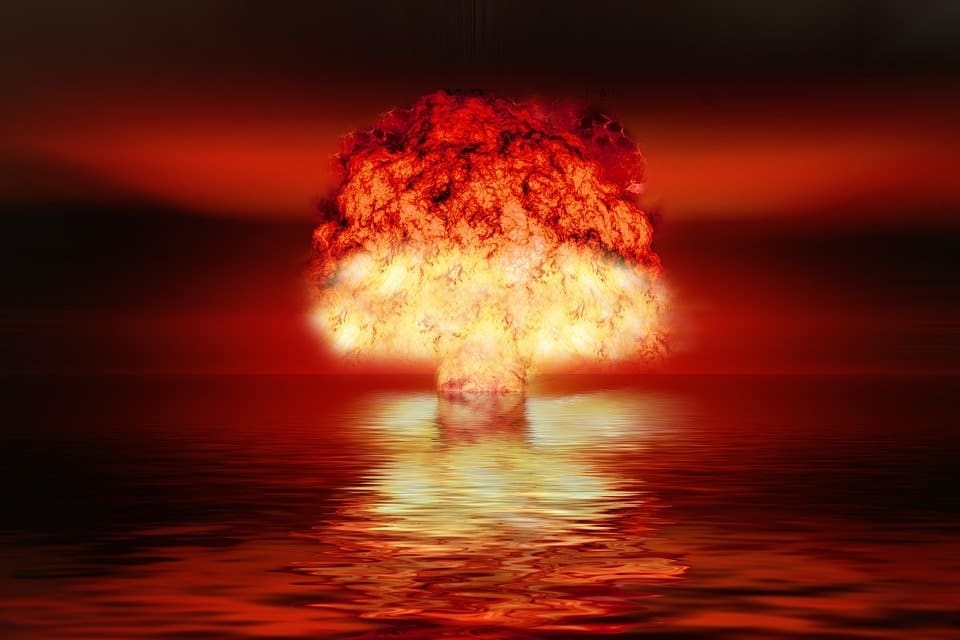
Nuclear Weapons; A Reflection

Posted by Daria Kirilenko

This summer I traveled to Japan after indefatigably working for two months to save up for a two way ticket and a JR train pass. During the three weeks of my stay I came across many new and interesting cultural quirks. For example the Japanese make a point slurp as loudly as they can when eating noodles as eating quietly may offend the cook or when going up the escalator they stand on the left side and pass on the right. Another is when a Japanese person wishes to express his or her gratitude, they lightly bow their head.

I also got a chance to become more acquainted with Japan's fascinating history which is given so little attention in both American and European public schools. In Tokyo I visited the Edo Museum which illustrated the highly sectarian society existing in Japan until the second half of the 19 century. In Kyoto I went to a local museum dedicated to the life of their national idol: Sakamoto Ryoma, the man who fought for the westernization of Japan, which allowed it to become a world power. A stop in one of the cities, however, left a heavy feeling. Though more than half a century has passed since the atomic bomb was dropped on Hiroshima by the United States, killing 140,000 people and razing 90 percent of the buildings, there remains a kind of melancholy, unpleasant aura amidst the hustle and bustle of the city.

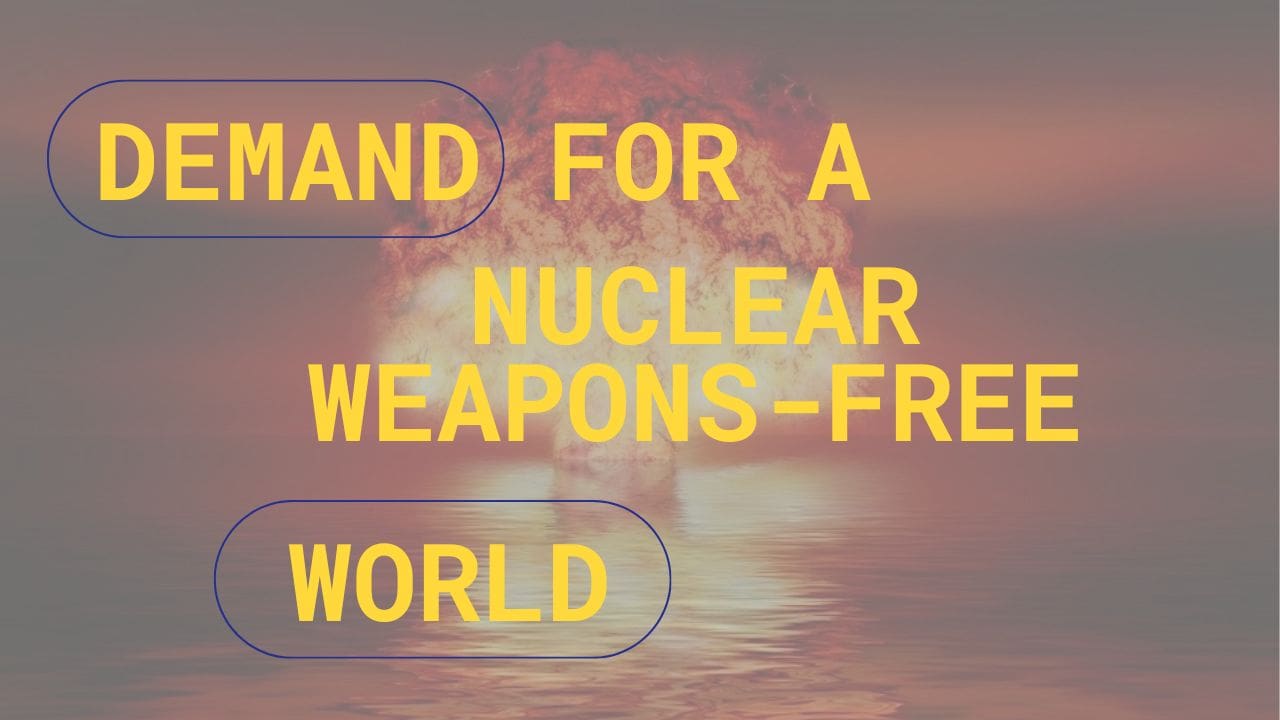
The Hiroshima Peace Memorial Museum has numerous artifacts which belonged to victims of the bombing. A small tin lunchbox with a deformed top filled with ashes instead of the food which had been placed there. A red half melted tricycle belonging to a little boy who died from radiation the same day the bomb fell. Clothing with holes in it, created by the heat from the explosion. After seeing the horror which was inflicted on these people it seems unfathomable that weapons which brought such devastation still exist in the world and are still being developed and possessed by the world's leading countries – United States, Russia, China, France, and the United Kingdom. A study jointly conducted by University of Colorado and Rutgers University found that in case of a nuclear war the detonation of "only 0.03 per cent of the explosive power in the world’s arsenals," would bring about the death of more than a billion people from radioactive fallout, increased UV radiation, climate change, and starvation. This reiterates how important it is for countries to come together and begin taking measures in reducing their supply of nuclear weapons. Both Russia and China recently made statements that they wish to take part in assembling a document banning the production of fissile materials used for other than non peaceful purposes and laying the ground for an active reduction in the world’s nuclear arms. This gives hope that other countries such as Iran will also begin to cooperate with the rest of the world and increase transparency of its nuclear programs. The conference on nuclear non-proliferation is scheduled for 2010.

07/30/08 05:55:12 pm • 1 commentTrackback (0) PermalinkPermalink
Categories: 08 Elections

Sudanese People Stand Up for Darfur in Diaspora

Posted by Rumbi Maweni

By Rumbidzai Maweni 

They say if you want to get to the truth of something, get it straight from the horse's mouth. If one wanted to get to the truth of the ongoing genocide in Darfur by its closest witnesses, one would have done well to attend the "Voices from Darfur: A Call to Action" event that took place on Saturday in DC. Hosted by Africa Action, the nation’s oldest advocacy organization working on African affairs, the event was held at the Sankofa Café in northwest DC, just across the road from Howard University. Co-sponsors of the event included: Sudanese American Young Adult Professionals (SAYAP), Sudan Hope Initiative, Rescue Nubia , and PanAfrican Youth Empowerment Network.

Kicking off with a free buffet of such Sudanese delicacies as fool medamas (flava beans), eggplant, and potatoes on pita, the program was a comprehensive approach to the crisis in Darfur, both placing it in its greater context of regional politics, cultural fragmentation, and ethnic disharmonies, as well celebrating the life and culture of Sudan and its people which too often has been forgotten in the midst of the ongoing conflict. The event itself featured poetry, music, personal testimonies, and discussion on the Darfur genocide and the ways in which the people of Sudan as well as sympathizers here in the US can work together to bring about aid and relief to the region. 

The event proved as educational as it was entertaining. Rescue Nubia placed special focus on educating the audience on the Nubian people, the name given to the ethnic group that inhabits part of southern Egypt, along the Nile, though most residing in northern Sudan. In ancient times “ Nubia ” was an independent kingdom and the Nubians were famous for their wealth as well as their advanced military and civilization. But the colonial project spread the peoples across nation-state lines and in recent times, Nubians have been the victims of ethnic-cleansing and forced relocation, scattering the peoples all over parts of northeast Africa. Nubians in both Egypt and Sudan are amongst the most marginalized and socio-economically disadvantaged groups and have been amongst the worst affected by the ongoing violence in Sudan. 

Harrowing accounts of wartime were given by two "Lost Boys" of Sudan. One, a former SPLA soldier, described his experiences being drafted into combat to fight his own people alongside the janjaweed, before escaping and fighting on the side of the Sudan People’s Liberation Movement (SPLM). Their keen grasp of the historical nature of Sudan's ethnic and cultural divisions allowed their testimonies to extend beyond the personal and give the audience a sense of the nuanced tensions that, going as far back as the first Sudanese Civil War (1955-1972), have made conflict resolution so elusive for the people of Sudan.

Many expressed frustration over the broken promises of the 2006 Darfur Peace Agreement as well as the agreement that officially ended the North-South civil war in January 2005 which, since then, has also been breached. But hope and constructive action were the prevalent themes of the evening, which found expression best through the creativity showcased. Interspersed between the conversations and testimonies were music, poetry, and art presentations celebrating the vibrant cultures of the Sudan and its multi-ethnic population. Poetry included that of a woman named Apouk, a young Darfuri who was brought up and educated in Khartoum, before emigrating to the US . A lithe, model-esque young woman who works extensively in various activist organizations, she gave stirring recitations that pleased the crowd. Music performances included several performances by Deejay C4, a local hip-hop group and member of the collective, Afrikan United DJs, an initiative that seeks to breakdown ethnic, tribal, and national barriers amongst African DJs worldwide. The evening also saw the re-launch of Africa Action's exhibition, “Children of Darfur: Picturing Genocide”- a collection of drawings by Darfuri children living in internally displaced persons (IDP) camps in Sudan. 

The most inspirational aspect of the evening was the collective recognition of the need for a shift in mindset that must take place if Sudan is ever going to achieve peace and security. This sentiment was expressed most presciently in a call to dialogue we can all take to heart:

 “Unity cannot just be an empty slogan,” said one poet towards the end of the program. “Even here in diaspora when a group of Sudanese people of one ethnic group get together for an event it can be difficult for other Sudanese people to attend. There is so much anger and pain that needs to be worked through and addressed. We need more events like this where we can all come together on the same ground. Politics has a major role to play; but, so too, does love, empathy, and discussion.”

For more information on Darfur-related events and how to get involved, visit: the Africa Action website as well as our Darfur Resource Center.
07/30/08 12:16:43 pm • Leave a commentTrackback (0) PermalinkPermalink
Categories: Africa

07/29/08

Killing American Priorities

Posted by Megan

S. 3294 – Advance America’s Priorities Act, the so-called “Coburn Omnibus” bill, containing 35 pieces of bipartisan legislation, was killed in the Senate yesterday after failing to receive enough cloture votes. The vote to consider the bill amounted 52 to 40, eight votes shy of the 60 required. Senate Majority Leader Harry Reid from Nevada had aligned together a laundry list of measures that Oklahoma Senator “Dr. No” Tom Coburn has attempted to hold or stop completely for the last year. Considered non-controversial and near unanimous support in the house, this bill has gained attention mainly due to the slow progress in the Senate during the 110th Congress, with a focus on Senator Coburn’s relentless obstruction. Reid’s spokesman Jim Manley said, “Things have gotten so bad that Republican senators have approached Sen. Reid to ask that their bills be included in the package." Explaining the bill and the political situation at hand, Senator Reid’s wrote to President Bush and fellow members of Congress:

“Mr. President, today I am joining with Senators Leahy, Lieberman, Feinstein, Inouye, Kennedy, Boxer, and Biden, to introduce an important bill, with provisions in a variety of areas - from advancing medical research in critical areas, to cracking down on child exploitation, to promoting important U.S. foreign policy goals, to helping improve America’s understanding about the oceans. What unites this diverse package of bills? One thing - unprecedented obstructionism. …Here are just a few examples of the legislation that this bill includes - and that Republicans are preventing from becoming law:

The Emmitt Till Unsolved Crimes bill: Would help heal old wounds and solve crimes that have continued to be unsolved and unpunished since the Civil Rights era.

The Runaway and Homeless Youth bill: Would provide grants for health care, education and workforce programs, and housing programs for runaways and homeless youth.

The Combating Child Exploitation bill: Would provide grants to train law enforcement to use technology to track individuals who trade child pornography. Establishes an Internet Crimes Against Children Task Force within the Office of Justice Programs.

The ALS Registry bill: Would create a centralized database to help doctors and scientists treat and hopefully find a cure for ALS/Lou Gehrig ’s Disease, which afflicts 5,600 Americans every year.

This is just the tip of the iceberg. These bills address important American priorities, have broad - virtually unanimous — bipartisan support, yet, all have fallen victim to just one or two Republicans. Senate Democrats are not willing to allow this obstruction of a few to block the will of the Congress and the American people any longer. Republicans will have a choice: Will they join the side of the American people, or continue to stand beside one or two colleagues intent on blocking progress? I hope Republicans will end their obstruction and work with Democrats this week to pass this crucial and long-overdue legislation. “

The major piece of legislation included in this bill that Citizens for Global Solutions considered vital, was the Biden/Lugar Civilian Response Corps, a provision that has recently been co-sponsored by Democratic Presidential hopeful Barack Obama. This bill would triple non-military aid to Pakistan, allowing developmental aid to start combating the War on Terror. Included in its provisions, the Civilian Response Corps would authorize $7.5 billion to Pakistan over the course of five years, to be used for building roads, schools, medical facilities, and domestic development. Further, according to Biden’s office, it calls for “greater accountability on security assistance,” which will demand the Pakistani government to take responsibility for Taliban and al-Qaeda forces within its borders. Senator Biden has called for a new foreign policy approach in Pakistan, where the United States builds a stronger relationship with the Pakistani people, rather than writing a blank check to President Musharraf without consideration of American concerns.

In response to the bill, Ambassador to the United States Husain Haqqani said the legislation’s enactment would help win Pakistanis’ trust as it signified America’s long-term commitment to the country’s uplift. Haqqani told reporters, “The bill commits US assistance for five years, and possibly for another five years for civilian purposes including health, education and strengthening of national institutions that will directly benefit the Pakistani people.”

There has been recent discussion that the changing arena for US Foreign Policy is through developmental assistance, which allows underdeveloped communities more opportunities, education, sustainable living, and outlets for advancement that make the appeal to terrorist organizations preventable. A recent report published by the Center for American Progress entitled, “Humanity as a Weapon of War” written by Reuben E. Brigety II, discusses the changing role of the US Military and the Department of Defense post 9/11, and how humanitarian aid for development will become a vital part of achieving long-term peacemaking goals.

The killing of the Omnibus bill was defended by Senate Minority Leader Mitch McConnell, who argues energy legislation that includes more domestic oil production was the "number one issue in the country.” Senator Coburn argues that the bill includes government programs that already exist, and has no financial accountability measures to assure taxpayer money is spent wisely. For the many opposing this bills demise, a part of the progress that could have manifested from this legislation would be the passage of the Biden/Lugar Civilian Response Corps. This development would aim not only to engage more responsibly in our diplomatic relationship with Pakistan, but also begins the first step to changing the foreign policy narrative in the United States. Among the many American Priorities this bill represented, the longing for a new course in US Foreign Policy is clearly demonstrated in the Civilian Response Corps. With the steadily changing discourse and strong bipartisan support, let us hope that under a new administration progressive peace legislation like this will not be so easily discredited.

07/29/08 03:29:38 pm • Leave a commentTrackback (0) PermalinkPermalink
Categories: U.S. Foreign Policy

Iranian President Rightfully Criticizes Security Council's Nuclear Non-Proliferation Policy

Posted by Daria Kirilenko
President Mahmoud Ahmadinejad spoke today on Iranian national television about the role of the United Nations in nuclear disarmament. Like with North Korea and India, the United States has attempted to persuade Iran to abandon its uranium enrichment program and to open its plants to international inspection. But unlike these countries Iran remained indifferent to the entreaties. In exchange for Iran's cooperation in suspending its uranium enrichment program, the United States promised to ease economic and diplomatic sanctions it has imposed on Iran for the past decade. Ahmadinejad proudly rejected the proposal responding that Iran is using its nuclear technology solely for energy generation and pointing out the bias existent in the United Nations. He said it is unfair for members of the Security Council to require Non Nuclear Weapon States to dismantle their nuclear programs when they themselves possess nuclear weapons. He also condemned attempts of the United Nations to curb nuclear energy production of smaller nations while closing its eyes to members of the Permanent Five's expansion of atomic arsenals.

Mahmoud Ahmadinejad brings up valid points. News have been circulating that the United Kingdom plans to spend approximately 3bil pounds on replacing its nuclear supply of warheads. Bound by Freedom of Information Act to release such information to the public, documents implying UK's decision to upgrade its warheads have been released, despite of the assurance of the British Government to the contrary. Such a massive upgrade will require at least 4 decades to complete and comes before a non-proliferation conference scheduled for 2010. Such a long commitment goes starkly out of line with foreign secretary Willam Hauge's recent statements calling countries to take urgent steps to reform and better enforce the Nuclear Non-Proliferation Treaty. The United States is taking center stage in bringing about suspension of nuclear programs in India and North Korea. The US however possesses the largest number of nuclear weapons: 9,960 nuclear warheads 5,735 of which are considered active, though the United States is bound by the Nuclear Non-Proliferation Treaty to move towards nuclear disarmament.

In some things President Ahmadinejad got it right: Permanent Five should stop dictating policy and begin developing a global plan on how to create a nuke-free world. This means the United States, Russia, China, France and the United Kingdom has to each begin dismantling its nuclear weapons.
07/29/08 01:44:19 pm • Leave a commentTrackback (0) PermalinkPermalink
Categories: Diplomacy

07/25/08

Obama Berlin Speech to be Praised, not Criticized

Posted by Madeleine Lesser

By Madeleine Lesser

Damned if he does, damned if he doesn't.  Barack Obama was criticized by the McCain campaign for not having visited the Middle East, which they believed displayed a lack of foreign policy intelligence and experience.  So, Obama and his campaign scheduled meetings in Jordan, Iraq, Afghanistan, Israel and Kuwait to show that he is directly informed and has had personal contact with American troops.  Such efforts, nonetheless, were not without further condemnation, when the McCain front squashed Obama's gains made, stating that it "took too long," and "it's now just a political move."  No matter what he does, it doesn't seem as though Obama could please McCain. 

Talk has heightened following Obama's speech in Berlin yesterday.  Despite McCain's judgments of Obama, many believe that Obama's trip to the Middle East was beneficial and frankly, just a smart move; but many also believe that his speech in Berlin was not as strategic. 

Obama spoke to a crowd of about 200,000 in the center of Berlin addressing the need, as world citizens, to put an end to terrorism.  Together, Americans and Europeans can "defeat terror and dry up the well of extremism that supports it."  Further, he stated that "people of Berlin, people of the world, this is our moment.  This is our time." Never once did Obama utter the words, "When I'm president," or "As president, I will..."  He spoke in Berlin as a citizen of the world, from one human to another, to rally hope and inspire.  Obama sought to unite all under the purposes of "common security and common humanity." 

Critics view this speech as one where Obama overstepped his boundaries by assuming the role of a world leader, or even as an American president.  Maybe they should have listened to Obama, and the very words he spoke, instead of conspiring on ways to condemn him.  In an effort to set the stage for his address, and to diffuse that type of judgment, the first sentence was, "I speak to you not as a candidate for president, but as a citizen." 

Of course, Barack Obama is the democratic presidential candidate - the whole world knows that, but, he was not speaking as a politician. The underlying notions and principles that Mr. Obama rallied - the needs to strengthen our relations with Europe, to work multilaterally to defeat terrorism, to end nuclear proliferation - were not so different from those that ordinary citizens and political activsts claim every day.  It is not news that we need to address all these issues, and one might deem it absolutely silly if someone proposed that only presidential candidates talk in such ways - the general population does, too.   

Maybe some find fault in the fact that Obama assumed a role that gained the attention of hundreds of thousands of people.  I can't really even see that argument either, though, because don't we want, as American citizens, to feel that our potential next president can and has attempted to reassert our role on the international stage, along with redeeming our reputation?  We are so negatively regarded around the world today, we should praise our candidate for having the confidence to speak abroad and try to mend our tainted image.   

Barack Obama has the courage to do what others don't - to challenge the norm, to say and do what he thinks is right, even if it is controversial and not the popular thing to do.  He had the audacity to rise up and gain international support - support that we so desperately need.  Those are characteristics that I want our next president to have, and if that means sometimes breaking down the walls of convention, so be it.

07/25/08 03:14:21 pm • 1 commentTrackback (0) PermalinkPermalink
Categories: 08 Elections, Foreign Policy, U.S. Foreign Policy, Europe

07/11/08

What's Wrong with Going Green?

Posted by Madeleine Lesser

By Madeleine Lesser

Correct me, please, if I'm wrong, but given the state of global disruption, shouldn't the American people, especially the presidential candidates, do everything they can to promote a sustainable environment?  The Democratic National Convention Host Committee has done just that - they have proposed guidelines to encourage organic food and products to be distributed at the Convention in August 2008.  Apparently, these conditions do not appeal to Washington Post contributor, David Montgomery.

Montgomery's "The Red, White and Eat Your Greens Party," published July 11, completely bashes the efforts put forth by the democrats.  He mocks (although he claims, sarcastically, not to) the "Lean 'N Green" guidelines, which include:

Lean

  • Half of the meal (or 50%) of the plate is made up of fruits and/or vegetables
  • A colorful meal - include at least three of the following five colors: red, green, yellow, blue/purple, and white (Garnishes not included)
  • No items are to be fried

Green

  • 70% or more of ingredients by pre-cooked weight are certified organic and/or grown or raised in Colorado
  • 70% or more of ingredients by pre-cooked weight are fresh and (not pre-processed) 

Furthermore, he goes on to make fun of the Host Committee's acceptance of conventional produce, along with the (preferred) organic produce: "Note the repetition of the word 'voluntary.'" Instead of exploiting the use of the word "voluntary," Montgomery should embrace that the Committee is aware that change will not happen over night, and taking smaller steps to a larger goal is the smartest way to achieve that end.  Would he rather the Committee make it "mandatory" and possibly cause immense difficulty planning the event if the resources just aren't available?  

The main goal of promoting organic foods is to educate and encourage a more environmentally sustainable community.  It is hard to understand where Montgomery, and those who support his rejection of the efforts made by the Host Committee, is coming from.  Just because instilling "radical" guidelines are not what we’re used to, and are possibly a bit uncomfortable, does not mean that they aren't valid.  Out-of-the ordinary propositions may seem "weird" or "odd" at first, but upon closer examination, may turn out to be significant and appropriate.  Attempting to make a healthier, more lasting environment really isn't so "odd," but apparently to some, it is.   

07/11/08 11:55:27 am • Leave a commentTrackback (0) PermalinkPermalink
Categories: 08 Elections

07/03/08

Global Warming, More like Global Disruption

Posted by Madeleine Lesser

By Madeleine Lesser

Global warming seems to be a reality that can be more accurately described as "global disruption."  John Holdren, professor at Harvard's Kennedy School of Government and Director of the Science, Technology and Public Policy Program at the Belfer Center for Science and International Affairs, claims that the effects of global warming are not merely a matter of temperature; although increased temperature is a the root of many of the problems.  He recognizes that the climate on the whole is affected, as can be seen by changing winds, ocean currents, storm patterns, melting glaciers, flooding, and droughts.  Clearly, the increase in global warming has led to global climate change entirely.

Increased global temperature exacerbates already existing and inevitable natural disasters.  For example, hurricanes have been, and probably always will be, a fact of life; but the reality is that increased temperatures and higher levels of carbon dioxide produce more intense hurricanes.  Overall, since the 1970s, hurricanes characterized by levels 4 and 5 have risen from 20% to 35% in the 1990s.  Furthermore, total precipitation has increased 7% over the past hundred years. 

Most of us have been plagued by the photos of polar bears that are dying as a result of melting ice caps.  Melting glaciers not only lead to the death of polar bears, penguins, and other mammals, but add to a rise in sea level.  There are two problems here: poor, innocent mammals are dying as a result of global warming that has been, in many regards, the fault of humanity; and a rise in sea level that will eventually displace and possibly take the lives of thousands, if not millions, of people. 

Moreover, the melting of the arctic permafrost in Canada, Alaska and Russia has negatively affected many ecosystems.  At first, the melting will create new lakes, but eventually those lakes will evaporate and release methane from peat bogs native in the permafrost. 

Conversely, an increase in temperature has led to an increase in evaporation in many areas.  Because the earth is considered a "closed system," the evaporation will lead to more rain, and more rain can cause greater erosion.  And, over time, a significant augmentation of erosion can lead to desertification.

What will it take for our government to make serious policy changes and actually attempt to fix the global climate change that we have exacerbated by carbon dioxide emissions from our cars, factories, homes, etc.; by deforestation; by the use of aerosols; and many, many others?  Yes, global warming is a natural cycle that has occurred in the past, but there is no denying that human activity has severely affected this natural phenomenon's characteristics.  There have been great efforts by companies to do their part to address these issues with the introduction of hybrid vehicles and fluorescent light bulbs, but more needs to be done at the root of government.  We need to take responsibility for our more than 25% contribution to carbon dioxide emissions by signing Kyoto and making reductions.  We need to allocate money to research and development of alternative fuel and energy - now, not tomorrow or the next day.  This problem is not going to fix itself - serious change must happen today because if we don't take action we'll surely regret it in the near future.

If we don't act, how can we expect, or ask, anyone else to?

07/03/08 11:33:07 am • Leave a commentTrackback (0) PermalinkPermalink
Categories: 08 Elections, Energy, Foreign Policy, U.S. Foreign Policy

07/01/08

Brookings Hosts Panel Discussion on Peace in Sudan

Posted by Megan

On June 27, the Brookings-Bern Project on Internal Displacement held a panel discussion the terms and progress of the Comprehensive Peace Agreement signed in 2005, which was meant to end the Second Sudanese Civil War. While many barriers still exist in its full implementation, including the recent violence in Abeyi and the local disputes over Sudan’s oil reserves, the panelists brought some interesting perspectives from their broad backgrounds.  

Two representatives from the Sudanese government were in attendance, including Dr. Mudawi Al Turabi, Parliament member on the Foreign Relations Committee, and Dr. Lam Akol, Former Minister of Foreign Affairs, SPLM National Liberation Council. Some of the insights provided by both representatives were surrounding the difficulties of implementing a peace agreement in an emerging democracy. Dr. Turabi noted that there are fourteen different parties in the Sudanese Parliament, and that power sharing is the objective of creating sustainable peace. In mentioning Darfur, Turabi said that all development has stopped, there has been relatively no investment due to the non-implementation of the CPA and conflicts in the Darfur region. Negotiations are difficult, he described, when you have so many warring factions. The main theme of the remarks regarding Darfur was that it has a ripple effect on development, aid, and political implementation of the CPA.  

Dr. Ajawin contributed to the dialogue on contextualizing the peace agreement, noting it took eleven years to negotiate from 1993-2004. He highlighted that the peace agreement is addressing a complicated problem, and that the people of Sudan need encouragement that unity is their best solution to a complex power struggle. The CPA is not open-ended, and has timelines for the political parties to have a referrendum on the Souths independence. However, Ajawin made it clear that the people of southern Sudan need assistance to have faith through the political process to achieve fair elections, effective democracy, and sustainable development. His final note was that the Interim period in the Sudan “must lead to self-determination.” 

Also in attendance were Lynn Fredriksson, Africa advocacy director for Amnesty International USA, and Pamela Fierst, a member of the Sudan policy group at the State Department. Pamela Fierst’s comments were initially positive, noting that while the CPA is slow-moving, “it is the most significant achievement in 25 years.” She noted that the electoral process must include all of Sudan, including the Darfur region, and that preparations for 2009 have not been fast enough. Fierst was firm that UN peacekeeping forces must be deployed now, without obstruction, and that future elections “must include Darfur or their voices will continue to be silenced.”  

On a more critical note, Lynn Fredricksson from Amnesty International outlined 8 critical but brief concerns involving the CPA:

- Human rights abuses in Darfur

- Censorship. The lack of freedom of expression/organization

- Lack of oversight of Police Forces. Arrests and detentions of persons without due process, some believed based on ethnicity.

- The ongoing refugee crisis, and the lack of ability of refugees to return to their homes. This concern included a lack of assured sustainability, schools, job training, health services, and the ongoing threat to women.

- American Service-Members Protection Act as an unrecognized agreement.

- Political and economic fragmentation in Darfur, and in South & Eastern regions of Sudan.

- Lack of transparency in oil revenues and wealth/power sharing. Demarcation of borders and the killing and displacement of 50,000 in the last month. Discussion of recent violence in Abeyi.

- Questions surrounding the International Communities role in implementing the CPA and in Darfur? What’s the role of assistance, should it require further peace progress and UN troop deployment? 

The overall tone during the question and answer portion was largely that of frustration, with many members of the audience originating from war-torn regions. Numerous coalitions and members of the press urged the Sudanese government representatives to address human rights abuses in Darfur, while others from Abeyi were alarmed by the lack of implementation of the June 8th Roadmap Agreement. From an outsider’s perspective, it appeared that even within groups discussing peace, accusations and blame weren’t removed from the sentiments expressed.  

While the government officials did admit that the Darfur region is “complicated,” they concluded that “without political peace agreements they will not have peace to keep” on the ground. Struggling to explain its complex reality, the officials were concerned about the level of aid resources specifically channeled to Darfur over other regions of the Sudan. Not unlike the oil revenues already contested, it appeared international funding and developmental aid was not exempt from political battles over resources. They believed this struggle was responsible for slow development in southern Sudan, and giving little hope to the people that the Peace Agreement was working in their best interest. What effect this will have on the projected 2009 elections, no one would say for sure. However, Dr. Turabi did pledge that the government is determined to have free and fair elections, and “would welcome international monitoring” to ensure this were so.

07/01/08 03:23:41 pm • Leave a commentTrackback (0) PermalinkPermalink
Categories: Africa

:: Next Page >>