by Allen Pietrobon | Jul 9, 2025 | Global Cooperation
In the aftermath of the U.S. government’s military strikes against Iran’s nuclear facilities, it is easy to assume that Iran and the United States will never come to diplomatic terms over Iran’s nuclear future. President Donald Trump reportedly decided to launch the strikes partly because he had become increasingly frustrated with Iran for not responding to the latest proposal for a nuclear deal.
Iran, for its part, claimed that it would never abandon its right to enrich uranium for domestic purposes. But at least they were still talking. Now, in response to the American military attacks, Iran’s top diplomat has said that the United States had “decided to blow up diplomacy,” and the next scheduled round of nuclear talks was canceled.
The prospect of Iran developing a nuclear weapon is a grave danger that, like other nuclear perils, needs to be taken seriously. But history has shown that even in moments of maximum danger, when the world seems perched on the edge of a wider war, diplomatic solutions are possible.
The parallels to another historical moment are telling. Before the Cuban Missile Crisis in October 1962, the U.S. government had been negotiating with the Soviet government for over six years to get a nuclear test ban treaty signed that would put major constraints on the testing and development of nuclear weapons.
When the Missile Crisis began, Soviet Premier Nikita Khrushchev called U.S. President John F. Kennedy’s announcement of a naval blockade (technically, an act of war) “outright banditry . . . the folly of degenerate imperialism.” He declared that “the Soviet Union cannot fail to reject the arbitrary demands of the United States.”
Similarly, Iranian Foreign Minister Abbas Araghchi has called the attacks on Iran “barbarous” and claimed that the U.S. government had acted in such a way as to make further nuclear talks “meaningless.”
And yet, back in 1962, the U.S. and Soviet Union, despite being just one mistake or miscalculation away from blundering into a global nuclear war, managed to work together to negotiate a diplomatic end to the crisis. Indeed, the year between the Cuban Missile Crisis in October 1962 and the ratification of the Limited Nuclear Test Ban Treaty in October 1963 witnessed one of the most unexpected reversals in international conflict during the entire Cold War.
The first overture came on December 19, 1962, when Khrushchev, breaking with years of hardline diplomacy, dispatched a letter to Kennedy offering to move forward with a treaty to ban the testing of nuclear weapons. It was the first direct contact between the two leaders in nearly two months.
Hoping to capitalize on this positive diplomatic opening, Kennedy chose an unorthodox route. Instead of turning to his professional diplomats, bound by protocol and official talking points, he chose to dispatch a private citizen, the prominent journalist Norman Cousins, editor of the Saturday Review, to personally meet with Khrushchev and help clear up the remaining obstacles to a settlement.
During this meeting, Khrushchev explained to Cousins that he was encountering fierce opposition from within his own government in his pursuit of the test ban and that what he needed from Kennedy was a sign that the U.S. government was serious about negotiating in good faith.
Back in the United States, Cousins convinced Kennedy that the moment was at hand for the most important single speech of his presidency — a speech in which, after years of tension, he should take the leap to extend an olive branch to the Soviets.
This speech, delivered on June 10, 1963, at the American University commencement, asked Americans to re-examine their negative attitudes towards the Soviet Union and toward peace in general. “Too many of us think [peace] is impossible,” Kennedy said. “But that is a dangerous, defeatist belief. It leads to the conclusion that war is inevitable.”
He urged Americans to “focus instead on a more practical, more attainable peace,” rather than on a “grand or magic formula to be adopted by one or two powers.” He asked the American people “not to see only a distorted and desperate view of the other side, not to see conflict as inevitable, accommodation as impossible, and communication as nothing more than an exchange of threats.”
Although this American University address is now regarded as one of Kennedy’s most famous speeches, at the time his critics attacked this peaceful diplomatic overture to the Soviet Union as “a soft line that will accomplish nothing” and “a dreadful mistake.” Kennedy could have bowed to the pressure of these critics, but instead he chose to break from the aggressive and intransigent rhetoric of the past and redefine the debate.
The speech provided the show of good faith that Khrushchev was waiting for. As a result, despite years of political deadlock, a treaty to ban the atmospheric testing of nuclear weapons was signed between the two nations less than two months later.
Today, we find ourselves at a similar impasse, opening the door to a wider military confrontation. Military strikes against Iran’s nuclear facilities have done nothing more than buy some time. The question is, what do we do with that time? If unilateral military attacks are going to erupt every time a government leader thinks an unfriendly country is developing nuclear weapons, we are entering a very dangerous future, indeed.
Fortunately, history has shown us that, in a moment defined by the overwhelming tensions that nuclear weapons create, sometimes the most powerful weapon of all is the strength of international dialogue and agreement.
by Lawrence Wittner | May 22, 2025 | Peace & Disarmament
Although the statement that “power grows out of the barrel of a gun” was made by Chinese communist leader Mao Zedong, it’s an idea that, in one form or another, has motivated a great many people, from the members of teenage street gangs to the statesmen of major nations.
The rising spiral of world military spending provides a striking example of how highly national governments value armed forces. In 2024, the nations of the world spent a record $2.72 trillion on expanding their vast military strength, an increase of 9.4 percent from the previous year. It was the tenth year of consecutive spending increases and the steepest annual rise in military expenditures since the end of the Cold War.
This enormous investment in military might is hardly a new phenomenon. Over the broad sweep of human history, nations have armed themselves―often at great cost―in preparation for war. And an endless stream of wars has followed, resulting in the deaths of perhaps a billion people, most of them civilians. During the 20th century alone, war’s human death toll numbered 231 million.
Even larger numbers of people have been injured in these wars, including many who have been crippled, blinded, hideously burned, or driven mad. In fact, the number of people who have been wounded in war is at least twice the number killed and has sometimes soared to 13 times that number.
War has produced other calamities, as well. The Russian military invasion of Ukraine, for example, has led to the displacement of a third of that nation’s population. In addition, war has caused immense material damage. Entire cities and, sometimes, nations have been reduced to rubble, while even victorious countries sometimes found themselves bankrupted by war’s immense financial costs. Often, wars have brought long-lasting environmental damage, leading to birth defects and other severe health consequences, as the people of Hiroshima, Nagasaki, Vietnam, and the Middle East can attest.
Even when national military forces were not engaged in waging foreign wars, they often produced very undesirable results. The annals of history are filled with incidents of military officers who have used their armies to stage coups and establish brutal dictatorships in their own countries. Furthermore, the possession of military might has often emboldened national leaders to intimidate weaker nations or to embark upon imperial conquest. It’s no accident that nations with the most powerful military forces (“the great powers”) are particularly prone to war-making.
Moreover, prioritizing the military has deprived other sectors of society of substantial resources. Money that could have gone into programs for education, healthcare, food stamps, and other social programs has been channeled instead into unprecedented levels of spending to enhance military might.
It’s a sorry record for what passes as world civilization―one that will surely grow far worse, or perhaps terminate human existence, with the onset of a nuclear war.
Of course, advocates of military power argue that, in a dangerous world, there is a necessity for deterring a military attack upon their nations. And that is surely a valid concern.
But does military might really meet the need for national security? In addition to the problems spawned by massive military forces, it’s not clear that these forces are doing a good job of deterring foreign attack. After all, every year government officials say that their countries are facing greater danger than ever before. And they are right about this. The world is becoming a more dangerous place. A major reason is that the military might sought by one nation for its national security is regarded by other nations as endangering their national security. The result is an arms race and, frequently, war.
Fortunately, though, there are alternatives to the endless process of military buildups and wars.
The most promising among them is the establishment of international security. This could be accomplished through the development of international treaties and the strengthening of international institutions.
Treaties, of course, can establish rules for international behavior by nations while, at the same time, resolving key problems among them (for example, the location of national boundaries) and setting policies that are of benefit to all (for example, reducing greenhouse gases in the atmosphere). Through arms control and disarmament agreements they can also address military dangers. For example, in place of the arms race, they could sponsor a peace race, in which each nation would reduce its military spending by 10 per cent per year. Or nations could sign and ratify (as many have already done) the Treaty on the Prohibition of Nuclear Weapons, which would end the menace of nuclear annihilation.
International institutions can also play a significant role in reducing international conflict and, thus, the resort to military action. The United Nations, established in 1945, is tasked with maintaining international peace and security, while the International Court of Justice was established to settle legal disputes among nations and the International Criminal Court to investigate and, where justified, try individuals for genocide, war crimes, crimes against humanity, and the crime of aggression.
Unfortunately, these international organizations are not fully able to accomplish their important tasks―largely because many nations prefer to rely upon their own military might and because some nations (particularly the United States, Russia, and Israel) are enraged that these organizations have criticized their conduct in world affairs. Even so, international organizations have enormous potential and, if strengthened, could play a vital role in creating a less violent world.
Rather than continuing to pour the wealth of nations into the failing system of national military power, how about bolstering these global instruments for attaining international security and peace?
by Lawrence Wittner | Apr 7, 2025 | Peace & Disarmament
Amid growing international chaos, it should come as no surprise that nuclear dangers are increasing.
The latest indication is a rising interest among U.S. allies in enhancing their nuclear weapons capability. For many decades, remarkably few of them had been willing to build nuclear weapons―a result of popular opposition to nuclear weapons and nuclear war, progress on nuclear arms control and disarmament, and a belief that they remained secure under the U.S. nuclear umbrella. But, as revealed by a recent article in London’s Financial Times, Donald Trump’s public scorn for NATO allies and embrace of Vladimir Putin have raised fears of U.S. unreliability, thereby tipping the balance toward developing an expanded nuclear weapons capability.
This growing interest in nuclear weapons is especially noticeable in Europe, where Trump’s berating of NATO and Putin’s threats of nuclear attack are particularly unsettling. Although Friedrich Merz, Germany’s chancellor-in-waiting, dismissed any notion of Germany developing its own nuclear weapons, he has stated that it must explore “whether nuclear sharing, or at least nuclear security from the U.K. and France, could also apply to us.” Furthermore, several German think tank experts have floated the idea of building the infrastructure that, if necessary, could produce German nuclear weapons.
In Poland, too, a nuclear weapons capacity has become increasingly appealing. Prime Minister Donald Tusk has recently raised the idea of pursuing nuclear weapons or, at least, seeking an agreement for sharing France’s nuclear arsenal. A board director of PGZ, Poland’s state-controlled military manufacturer, remarked: “There are suddenly a lot of words and different opinions about what to do, but they all show Poland believes in stronger nuclear deterrence against Russia.”
In South Korea, North Korea’s nuclear weapons program and its growing military relationship with Russia, combined with Trump’s unreliability, have contributed to growing support for the nation’s acquiring its own nuclear weapons. Although neither of the two major parties has announced this policy, Cho Tae-yul, the foreign minister, informed parliament that acquiring nuclear weapons was “not off the table,” for “we must prepare for all scenarios.”
Similarly, the idea of developing nuclear weapons is drawing increasing scrutiny in Japan. Sharing South Korea’s fear of a North Korean attack and Trump’s unreliability, Japanese leaders also worry about China’s growing assertiveness. If a North Korean or Chinese nuclear strike occurred, Japan would have only five minutes of warning time. Moreover, thanks to its nuclear power plants, Japan already holds enough plutonium to build several thousand nuclear bombs.
In addition, of course, a nuclear arms race is well underway among the nuclear weapons-producing nations: the United States, Russia, China, Britain, France, Israel, India, Pakistan, and North Korea. All of them are either expanding their nuclear arsenals, building a new generation of nuclear weapons, or both. Most of the nuclear arms control and disarmament agreements of the past have been abandoned, while the remaining agreements are on life support. The New Start Treaty between Russia and the United States, the two nations possessing almost 90% of the world’s 12,331 nuclear weapons, is scheduled to expire in February 2026, and there are no negotiations underway to replace it. Meanwhile, in recent years, the top officials of three nuclear-armed nations―Vladimir Putin, Donald Trump, and Kim Jong Un―have issued numerous statements threatening nuclear war.
Against this backdrop, this January the editors of the Bulletin of the Atomic Scientists reset their “Doomsday Clock,” established in 1946, at 89 seconds to midnight, the closest ever to human extinction. The following month, U.N. Secretary-General António Guterres, deploring the unraveling of international security arrangements, warned that nuclear weapons provided a “one-way road to annihilation.”
These escalating nuclear dangers suggest that, if nuclear weapons, whether possessed by an alliance or by individual nations, are unable to safeguard humanity from total destruction, then a different approach to survival in the nuclear age is needed: one grounded in international security.
With this in mind, the official representatives of most of the world’s nations, gathering in 2017 under U.N. auspices, met and crafted the Treaty on the Prohibition of Nuclear Weapons. Endorsed by a vote of 122 to 1 (with one abstention), it banned the use, threatened use, development, manufacture, acquisition, possession, stockpiling, stationing, and installation of nuclear weapons. The treaty entered into force in January 2021, and has been signed, thus far, by 94 nations. Opinion polls and declarations by hundreds of cities in a variety of nations indicate that it has substantial public support.
Although the Treaty on the Prohibition of Nuclear Weapons provides a useful framework for creating a nuclear weapons-free world, it has not, as yet, rolled back the nuclear menace. The reason is that its provisions are only binding on the nations that have signed it. And the nine nuclear weapons-producing nations, joined by the nations under their nuclear umbrella, refuse to do so―at least so far. Convinced that, in a world of independent and often hostile nations, their security rests upon possession of nuclear weapons, they remain unwilling to abolish them.
Even so, their resistance to the treaty might be overcome by a further step toward international security: the strengthening of international organizations. At present, the United Nations lacks the power to effectively enforce its primary mission of maintaining international peace and security. But that power could be expanded by providing the global organization with an independent source of income, restricting the role of the veto in the Security Council, and expanding the role of the General Assembly. International security would also be enhanced by increasing the jurisdiction of the International Court of Justice and of the International Criminal Court.
Both Citizens for Global Solutions (CGS) and the World Federalist Movement-Institute for Global Policy have teamed up with many other concerned civil society organizations to champion “Common Security” as an alternative to nuclear deterrence. In a joint statement to the 2023 Preparatory Committee for the 11th Non-Proliferation Treaty (NPT) Review Conference, they argued that the primary reason a significant number of nations continued to rely on nuclear weapons was “because nuclear deterrence is perceived by them as providing security.” But adopting a Common Security approach―one that took into account not only one’s own security needs, but the security needs of other nations, including adversaries―could provide a sound basis for abandoning nuclear weapons, they maintained. During the meeting in late April and early May of the 2025 Preparatory Committee for the NPT Review Conference, CGS will be holding a side event on “Common Security and Nuclear Deterrence in a Turbulent World,” as well as another on “The International Court of Justice and the Climate-Nuclear Nexus.”
Strengthening international security might seem impractical at this time of overheated nationalist claims and the global chaos they produce. Even so, times of crisis sometimes produce historic breakthroughs, and the prospect of nuclear annihilation might have that effect.
by Citizens for Global Solutions | Apr 3, 2025 | United Nations
Sixteen years after the fateful day the United Nations (U.N.) charter was promulgated in San Francisco, President John F. Kennedy memorably intoned on a return to that city that the U.N. “remains mankind’s best hope to conquer war, poverty, and disease.” Across subsequent decades this aspiration has been shared by U.S. presidents from Reagan, who believed that U.N. could help “bring about a new day,” to George H.W. Bush, who recognized the U.N. system as “poised to historic vision of its founders—a world in which nations recognize the shared responsibility for freedom and justice.” Today, the U.S. posture seems to reduce the U.N. and its various agencies and departments to poker chips or lots at auction.
The late President Carter emphasized that “[t]he United Nations is the best available institution to support the values and aspirations that the United States shares with other peace-loving nations.” Of course, “best available” does not mean unflawed. The U.N. is a human-made institution and, therefore, fallible. It is incumbent on all those who support effective global governance, human rights, and the rule of law to underscore areas for improvement, while adapting to new polycrises and fresh challenges.
None of this is easy. But, as the leader of an organization that has supported the U.N. project almost since its inception, I am proud that our members have championed reform efforts while hewing to the vision that guided the U.N.’s founding.
What is easier is to reduce the U.N. to a stock to be traded, a poker chip to be gambled, or a lot to be auctioned to the highest bidder. The current U.S. administration uses its time in the General Assembly Hall to disavow goals related to sustainable development, withdraw from human rights commitments, and oppose such basic principles as “peaceful cooperation” and “judicial well-being.” Alarmingly, pundits have jumped on the bandwagon to reduce the project of humankind to a bad real estate deal.
This year, the U.N. will commemorate its 80th anniversary—slightly ahead of the average U.S. life expectancy projected for 2025 of 79.4 years. Anyone who has visited the Geneva premises lately, where an ongoing liquidity crisis has occasioned desperate measures, like heating cuts, has reason to fear for this octogenarian’s health.
Perhaps the venal attitude is best typified by an opportunistic “independent, non-affiliated initiative,” DOGE-UN, which claims to be a “non-profit organization incorporated in New York State.” According to its website, “It analyzes each institution and the broader geopolitical marketplace on whether to ‘hold, buy or sell’ their stakes in international organizations.” The outfit is indeed incorporated in New York as a business. It is not listed on the New York State Attorney General’s Office public registry of charitable and non-profit organizations. Research indicates it is not affiliated with the federal Department of Government Efficiency (DOGE).
Whatever the tax status of this start-up, the approach it advances of “hold, buy, or sell” fails to recognize that global cooperation is not a zero-sum game. Viruses do not carry passports. Climate disasters do not wait behind velvet ropes. Nuclear reactors are not impressed by border demarcations.
Finally, if altruism fails to inspire global cooperation, perhaps self-interest can. “America first” style critics of the U.N. frequently fail to note that the United States is the largest recipient of U.N. contracts – far outstripping our dues. In the words of Peter Yeo, President of the Better World Campaign, “U.S. companies do well and do good by taking part in the U.N.’s lifesaving work.”
On the U.N.’s Oak anniversary, we must not take its strength and endurance for granted. Please consider making your voice heard by contacting your legislators and urging support for the U.N. and its agencies.
As you do, you may remind them that what transpired in San Francisco 80 years ago was not a poker game but a promise to humankind and our planet.
by Lawrence Wittner | Mar 26, 2025 | Global Justice, Peace & Disarmament
Although the nations of the world have pledged to respect a system of international law and global responsibility, the recent behavior of several countries provides a sharp challenge to this arrangement.
For over three years, the Russian government has conducted a brutal military invasion, occupation, and annexation of Ukraine―the largest and most devastating military operation in Europe since World War II. Defying Russia’s international obligations―including a peace treaty it signed with Ukraine, a ruling by the International Court of Justice demanding Russia halt its military operations in Ukraine, the UN Charter, and repeated UN General Assembly condemnations of Russian behavior by an overwhelming majority of the world’s nations―the Putin regime has stubbornly persisted with Russia’s imperialist aggression against its smaller, weaker neighbor.
The consequences have been horrific. Russian and Ukrainian military forces are estimated to have suffered a total of roughly a million deaths or injuries. Moreover, the war has taken a severe toll on Ukraine’s civilian population, with some 42,000 civilians killed or injured and over 10 million more fleeing the country or internally displaced. In July 2024, it was estimated that, thanks to the Russian military’s indiscriminate bombing and shelling of civilian infrastructure, Russia had damaged more than 1,600 Ukrainian medical centers and destroyed over 200 hospitals. In the first year-and-a-half of the war, Human Rights Watch reported, the Russian invasion “devastated schools and kindergartens throughout the country,” with “over 3,790 educational facilities . . . damaged or destroyed.” A more recent study by this leading human rights organization noted that, in areas of Ukraine that Russian forces occupy, they have “committed war crimes and crimes against humanity. These include torture and killings of civilians, sexual violence, enforced disappearances, and forcible transfers and unlawful deportations of Ukrainians” to Russia.
For its part, the Israeli government has long been at odds with the United Nations over Israel’s mistreatment of Palestinians and, particularly, its refusal to end its military occupation of the Palestinian territory it conquered during the 1967 Mideast war. Committed to building a Greater Israel, rightwing Israeli government officials have seized Palestinian land in the occupied West Bank and flooded it with about 700,000 heavily-subsidized Israeli settlers. In turn, the UN General Assembly, by an overwhelming vote, has called upon Israel to comply with international law and withdraw its military forces, cease new settlement activity, and evacuate its settlers from the West Bank.
The simmering Israeli-Palestinian conflict erupted once again in October 2023, when, in response to an Hamas terrorist attack, Benyamin Netanyahu, Israel’s prime minister, launched a full-scale military invasion of Gaza with a colossal humanitarian impact. An estimated 46,788 Palestinians have been killed, most of them civilians, and 110,453 have been injured. According to the United Nations, 1.9 million people (90 percent of the population) have been internally displaced thanks to the Israeli bombing campaign, 69 percent of all structures have been destroyed (including 50 percent of hospitals, with the rest just partially functional), and about 1,060 medical workers have been killed. Thanks to the Israeli government’s blockade of food and water supplies, an estimated 91 percent of the population have faced severe levels of hunger.
Although only recently restored to the White House, Donald Trump has already embarked on an ambitious program of scrapping U.S. international commitments and proceeding, instead, with U.S. empire-building. Ordering U.S. sanctions on the International Criminal Court, as well as a U.S. pullout from two key UN agencies (the World Health Organization and the Human Rights Council), he has also chosen a U.S. ambassador to the UN, Representative Elise Stefanik, who has promised to bring the world organization into line with Trump’s “America First” priorities. Moreover, the American president has abruptly terminated nearly all USAID programs, putting millions of people around the world at risk of starvation, disease, and death. In sharp contrast to the severe cuts in domestic social spending that Trump is implementing, he has called for increased military spending, potentially raising the annual U.S. military expenditure from $842 billion to over $1 trillion. This enhanced military power should prove useful, for since returning to office he has championed seizing the Panama Canal and Greenland, taking over Gaza, and annexing Canada as the 51st American state.
In all three cases, the reckless pursuit of narrowly-defined national interests has taken precedence over the shared interests of the world community.
Nor is this an accident, for Putin, Netanyahu, and Trump are caught up in overheated nationalist dreams quite out of touch with global reality. Today, as human survival is threatened by climate catastrophe, a renewed nuclear arms race, disease pandemics, and widespread poverty―crises that cry out for global solutions―these government officials and their rightwing counterparts in other lands are driven by nationalist fantasies. Putin is enamored with Russian imperial glory, Netanyahu is obsessed with visions of Greater Israel, and Trump is intoxicated with America First. And, in their respective fantasies, each of them takes on heroic stature as the Supreme Leader.
Unfortunately, we have seen this phenomenon, along with its catastrophic consequences, many times before.
Fortunately, however, multitudes of people realize that things need not be this way. Indeed, Putin, Netanyahu, and Trump are out of line with the views of many national leaders and social movements that have recognized, and continue to recognize, that the reckless pursuit of narrow national interests is a recipe for disaster. To avoid this disaster, our far-sighted predecessors created the United Nations, the International Court of Justice, the International Criminal Court, and other international institutions. That is also why these institutions must be strengthened, for without the enforcement of world law, national irresponsibility will thrive.
Indeed, if humanity is to survive in coming decades, it is imperative that reckless competition and conflict among nations give way to cooperation and collective action. War must be replaced by peace, privilege by equality, and the rule of force with the force of law.
Above all, no nation can go it alone, for we are all part of one world and must act accordingly.
by Donna Park | Mar 11, 2025 | World Federation
I used to be proud of being a citizen of the United States of America. My parents were part of what has been called the “Greatest Generation.” My dad served in England in the Army Air Corps during World War II, and I was raised to be proud of the many Americans who gave their lives in defense of democracy.
I also was proud that the United States played a major role at the United Nations (U.N.). At the U.N., the U.S. government joined with other nations to help poorer countries combat hunger and disease. That was also part of supporting democracy and, more broadly, supporting human rights.
I know that the U.S. government hasn’t always lived up to its ideals. It has overthrown democratically elected governments and replaced them with authoritarians who promised to be pro-American. But, in many cases, it did the right thing, helping nations and people who were less fortunate. At its best, the United States had a strong moral compass.
The Trump administration has made it clear that the U.S. government is no longer interested in doing the right thing. Now it is only concerned about “America First,” and it is also a very narrow view of what is good for America.
According to an article by Margaret Besheer, who has long covered the U.N. for the Voice of America, the U.S. government made it clear during a vote at the U.N. General Assembly that it will no longer reliably support the U.N. global sustainable development goals (SDGs). The SDGs, adopted by all U.N. Member States in 2015, are an urgent call for action by all countries working together to end poverty, improve health and education, reduce inequality, and spur economic growth while tackling climate change.
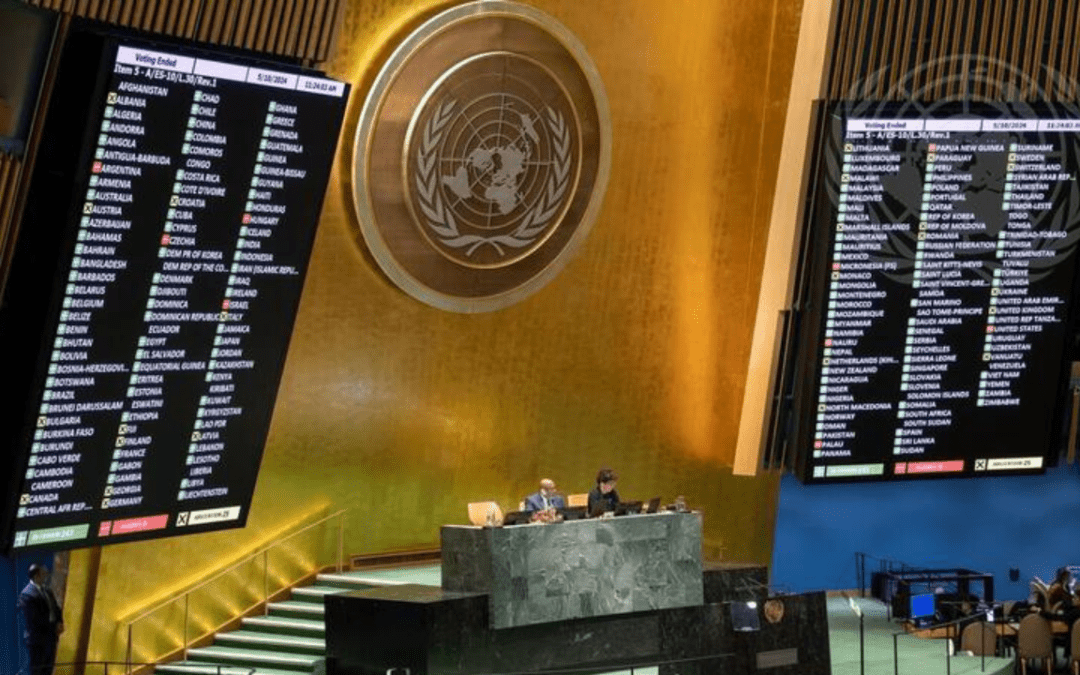
On March 4, the U.S. government voted against a resolution titled “International Day of Peaceful Coexistence” that reaffirmed the 2030 Agenda for Sustainable Development. U.S. representative Edward Heartney explained that the Presidential election was a vote by Americans to refocus on U.S. interests stating: “Simply put, the globalist endeavors like the 2030 Agenda and the SDGs lost at the ballot box.” The U.S. vote didn’t change the outcome, for the resolution passed 162 to 3, with the US voting “No” along with Israel and Argentina.
But that isn’t all the U.S. government opposed at the U.N.. Besheer goes on to say: “’The General Assembly creates ‘International Days’ to raise awareness of important global issues and promote peace and tolerance. On Tuesday, delegates voted to create an ‘International Day of Hope,’ as well as an ‘International Day for Judicial Well-Being.’”
Washington stood alone, the sole no vote on both. The United States was also the only country to vote against a resolution “Education for Democracy,” which affirms “the right of everyone to education” and highlights “the importance of equal opportunities for young people, including women.” We stand alone in the world, voting against hope, judicial well-being, and education for democracy.
Although the General Assembly doesn’t have the ability to create international law, it does have a moral authority, based on its representation of virtually all nations of the world. By contrast, thanks to the new U.S. administration, the United States will no longer help create the world’s moral compass.
And to make matters worse, we might be withdrawing from the World Health Organization (WHO), the U.N. Human Rights Council (UNHRC), the U.N. Educational Scientific and Cultural Organization (UNESCO), and more international organizations based on recent Executive Orders.
We live on a small planet that is facing multiple global crises including war, pandemics, hunger, poverty, human rights abuses, climate chaos, and the threat of nuclear destruction. The United States is not immune to these global crises.
Citizens for Global Solutions advocates that the best way to protect America and the world is to improve the way the world is governed―not turn our back on the world and our allies, not throw away our moral compass. CGS works to transform the U.N. from a loose confederation of nations to a democratic federation of nations based on the rule of law, much the way the United States transitioned to a federation when we created our constitution.
CGS had envisioned that the United States would be a leader in this transformation. But, given recent events, it now looks increasingly like we are going to need to rely on others with a stronger moral compass to lead the way.
by Jerry Tetalman | Mar 7, 2025 | Peace & Disarmament
The true challenge of our time is to bring rules, law, and democracy to the chaos of international relations. If we want to overcome the existential threats of nuclear weapons and abolish war, we will need a world governing body that is more democratic and empowered to act than the current United Nations.
The organized murder of one group of humans by another group of humans is called war. We live in a world where the vilest of crimes, which are punished with severe consequences within most societies, are somehow acceptable when committed as part of war. War has been an integral part of human history and, in the nuclear age, is the most imminent threat to our continued existence. As modern, civilized people, most of us find war abhorrent, but few of us call for the abolition of war or understand why war still exists in the contemporary world.
War exists because human society has been organized around the concept of the in-group and the out-group. The in-group could be a tribe, city, nation, or group of nations. The out-group may be tolerated, but in many instances, it is considered the enemy. The question of our time is, can we create a new story where humanity is the in-group? Can we civilize a lawless world by creating a basic system of enforceable global law?
Wars between countries continue because countries exist in relative anarchy at the international level. We have international law based on treaties that help maintain order, but this system is not an actual law, as it is voluntary. Valid law has consequences and enforcement mechanisms if one breaks the law. At the international level, we still live and die by the law of the jungle, which is “might makes right.”
The countries of the European Union have found peace after thousands of years of warfare and two world wars by trading away a piece of sovereignty to form a collective. They now resolve disputes in the European Union’s parliament and courts. The world’s countries can find peace by building an international union of nations and creating a similar system of courts and a global parliament.
The United Nations has a membership of almost all the countries on earth, and this in itself is an impressive accomplishment in that it creates an inclusive forum for discussion of international problems. Unfortunately, the UN lacks democratic standards and is flawed by its outdated design, and thus ineffective in addressing the major global security issues of our day. International security issues are dealt with in the UN by the Security Council and, in particular, the five permanent members who were the victors of World War II: the United States, the United Kingdom, France, the Russian Federation, and the People’s Republic of China. They each have a veto, allowing a single country to block the action called for by the majority. The General Assembly can pass resolutions, but they constitute no more than recommendations. The United Nations also suffers from a democratic deficit, as each member country has one vote regardless of population.
We are at a critical moment in human history. International laws exist, but they are often not enforceable. Force and military might still rule the world in terms of global affairs.
Fortunately, a US organization, Citizens for Global Solutions – like the World Federalist Movement, which brings together organizations with a similar orientation around the globe — works to create a world ruled by law rather than force to build the legal institutions necessary for peace and to abolish war. Citizens for Global Solutions is working to enhance the jurisdiction and use of the International Court of Justice to resolve disputes without violence in a campaign called Law, not War.
The challenge of our time is to abolish war and create the global institutions of law necessary to resolve disputes through legal, rather than lethal means.
by Lawrence Wittner | Mar 6, 2025 | Global Cooperation
The recent whirlwind of the incoming United States (U.S.) administration’s foreign policy measures―many reversing those of the previous administration―illustrates the fact that Americans have sharply different opinions about their relationship to other nations.
The current president’s approach―which he has labeled “America First”―is clear enough. He has blocked U.S. humanitarian assistance abroad by shutting down the U.S. Agency for International Development, twice pulled the United States out of the Paris climate agreement, and scrapped numerous nuclear arms control and disarmament accords (including the Iran nuclear agreement, the Open Skies Treaty, and the INF Treaty). Taking a hard line against the foreign-born for their alleged criminality and “poisoning the blood” of Americans, he has suspended refugee asylum in the United States and begun the process of arresting and deporting 11 million migrants.
This vision of America’s role in the world relies upon a vast U.S. military buildup and tariff wars to coerce other nations into line with his aims. Indeed, he has even blatantly championed old-fashioned imperialist expansion by calling for annexing Greenland, Canada, the Panama Canal, and Gaza―the latter to be purged of its Palestinian population. Not surprisingly, his administration has shown particular contempt for international organizations, promising a crackdown on the United Nations and sanctioning the International Criminal Court and its supporters. Recently, he has withdrawn the United States from the World Health Organization and the UN Human Rights Council.
Although it’s doubtful that this mixture of strident nationalism and xenophobia benefits Americans, it does have deep roots in American history. In the nineteenth century, the fledgling U.S. government acquired vast new continental territories thanks to wars and treaties at the expense of indigenous peoples. The largest of these land-grabs included the Mexican War and countless Indian wars. Overseas expansion surged during the late nineteenth and early twentieth century, when the U.S. government colonized and annexed the Philippines, Hawaii, and Puerto Rico and, also, militarily intervened in Mexico, the Caribbean nations, South America, and China. Although the rapidly-growing United States remained open to immigrants during its first century, restrictions on Asian immigrants began in the late nineteenth century. And a discriminatory National Origins Quota System―designed to drastically reduce immigration from Eastern and Southern Europe―was put into place in the early twentieth century.
In the aftermath of World War I, what became known as “isolationism” swept through the United States, ultimately leading the U.S. government to reject membership in the League of Nations and the World Court, as well as to adopt a policy of “appeasement” of the fascist nations, then busy conquering portions of Europe, Africa, and Asia. Even after the Japanese attack on Pearl Harbor brought the U.S. government into World War II and produced growing respect for international law, the U.S. government, during the Cold War years, insisted upon maintaining the world’s mightiest military establishment. Pursuing what was termed “the national interest,” it also engaged in numerous unilateral ventures, including toppling foreign government and waging brutal, vastly destructive wars (such as the one in Vietnam).
But this is only part of the story, for there was always another America―one recognizing that it was just and necessary to move nations beyond national selfishness to global cooperation. This tendency might be called “Global Community.”
After all, the U.S. government did play a major role in initiating the League of Nations and, ultimately, in moving beyond isolationism (and its leading advocate, the America First Committee) and defeating the fascist powers. It also played a very significant part in establishing the United Nations, appropriately headquartered in America’s largest city. Just as, in the years before World War II, the American government terminated its occupation regimes in Caribbean nations, so, after the war, it ended its postwar occupation regimes in European and Asian nations. To aid in postwar European recovery, it created the Marshall Plan, a massive economic aid program that played a key role in reviving war-torn Western Europe. After the establishment of the United Nations, the U.S. government became its leading funder, promoting the international organization’s worldwide international security, humanitarian, and health programs.
Nor was this all. In the postwar years, the U.S. government supported the termination of colonial regimes by the European colonial powers that had ruled much of Africa and Asia, thereby dramatically increasing the number of independent nations. Meanwhile, it swept away the previous U.S. discriminatory immigration system, resulting in a more multicultural society. Although the U.S. government continued to engage in great power confrontation during the Cold War, it eventually accepted that conflict’s peaceful termination through international agreements. These included very significant nuclear arms control and disarmament treaties―treaties that did not give primacy to America or any other country. Some years later, the Obama administration followed up by pressing, albeit unsuccessfully, for the creation of a nuclear weapons-free world. Furthermore, determined to tackle the growing global climate crisis, it signed the Paris climate accord.
How did it happen that these two quite different approaches to the world developed in the policies of the same nation?
The answer appears to lie in the fact that America’s relationship to the world has always been contested terrain. From the Know Nothings, to the Ku Klux Klan, to the current nativist movement, the United States has always contained plenty of people hostile to foreigners and celebrating a mythical “Americanism.” And there have also been plenty of people―from the League of Universal Brotherhood, to the United Nations Association, to Citizens for Global Solutions―who have argued that we’re all in this together.
At present, the America Firsters are clearly in control of the U.S. government. But, of course, the future is never predictable. Indeed, it’s quite possible that there will be a revival of the impetus to build a global community—one that can address the world’s problems and even, perhaps, overcome them.
That would be a great day for both America and the world.
by Citizens for Global Solutions | Feb 26, 2025 | Mondial Journal
by Lawrence Wittner | Feb 12, 2025 | Peace & Disarmament
Late January of this year will mark the first anniversary of the entry into force of the UN Treaty on the Prohibition of Nuclear Weapons. This momentous international agreement, the result of a lengthy struggle by the International Campaign to Abolish Nuclear Weapons (ICAN) and by many non-nuclear nations, bans developing, testing, producing, acquiring, possessing, stockpiling, and threatening to use nuclear weapons. Adopted by an overwhelming vote of the official representatives of the world’s nations at a UN conference in July 2017, the treaty was subsequently signed by 86 nations. It received the required 50 national ratifications by late October 2020, and, on January 22, 2021, became international law.
Right from the start, the world’s nine nuclear powers—the United States, Russia, China, Britain, France, Israel, India, Pakistan, and North Korea—expressed their opposition to such a treaty. They pressed other nations to boycott the crucial 2017 UN conference and refused to attend it when it occurred. Indeed, three of them (the United States, Britain, and France) issued a statement declaring that they would never ratify the treaty. Not surprisingly, then, none of the nuclear powers has signed the agreement or indicated any sympathy for it.
Treaty Momentum During 2021
Even so, the Treaty on the Prohibition of Nuclear Weapons has acquired considerable momentum over the past year. During that time, an additional nine nations ratified it, thus becoming parties to the treaty. And dozens more, having signed it, are expected to ratify it in the near future. Furthermore, the governments of two NATO nations, Norway and Germany, have broken free from the U.S. government’s oppositional stance to the treaty and agreed to attend the first meeting of the countries that are parties to it.
In nations where public opinion on the treaty has been examined, the international agreement enjoys considerable support. YouGov opinion polls in five NATO countries in Europe show overwhelming backing and very little opposition, with the same true in Iceland, another NATO participant. Polling has also revealed large majorities in favor of the treaty in Japan, Canada, and Australia.
In the United States, where most of the mainstream communications media have not deigned to mention the treaty, it remains a well-kept secret. Even so, although a 2019 YouGov poll about it drew a large “Don’t Know” response, treaty support still outweighed opposition by 49 to 32 percent. Moreover, when the U.S. Conference of Mayors, representing 1,400 U.S. cities, met in August 2021, the gathering unanimously approved a resolution praising the Treaty on the Prohibition of Nuclear Weapons.
Meanwhile, a variety of institutions, recognizing that nuclear weapons are now illegal under international law, have begun to change their investment policies. In September 2021, Lansforsakringar, a Swedish insurance company with assets of over $46 billion, cited the treaty as a major reason to avoid investing in companies producing nuclear weapons. In December, the New York City Council adopted a resolution telling the city comptroller to remove investments from the city’s $250 billion pension fund from companies producing or maintaining these weapons of mass destruction. According to ICAN, 127 financial institutions stopped investing in nuclear weapons companies during 2021.
The Nuclear Powers Accelerate Their Arms Race
Despite this impressive display of respect for the landmark agreement, the nine nuclear powers have not only continued to oppose it, but have accelerated their nuclear arms race. Having cast off the constraints of most nuclear arms control and disarmament agreements of the past, they are all busy either developing or deploying new nuclear weapons systems or have announced their intention to do so.
In this process of nuclear “modernization,” as it is politely termed, they are building newly-designed nuclear weapons of increasing accuracy and efficiency. These include hypersonic missiles, which travel at five times the speed of sound and are better able than their predecessors to evade missile defenses. Reportedly, hypersonic missiles have already been developed by Russia and China. The United States is currently scrambling to build them, as well, with the usual corporate weapons contractors eager to oblige.
When it comes to “modernization” of its entire nuclear weapons complex, the U.S. government probably has the lead. During the Obama administration, it embarked on a massive project designed to refurbish U.S. nuclear production facilities, enhance existing nuclear weapons, and build new ones. This enormous nuclear venture accelerated during the Trump administration and continues today, with a total cost estimated to ultimately top $1.5 trillion.
Although there remain some gestures toward nuclear arms control—such as the agreement between U.S. president Joe Biden and Russian president Vladimir Putin to extend the New Start Treaty—the nuclear powers are now giving a much higher priority to the nuclear arms race.
The current build-up of their nuclear arsenals is particularly dangerous at this time of rising conflict among them. The U.S. and Russian governments almost certainly don’t want a nuclear war over Ukraine, but they could easily slip into one. The same is true in the case of the heightening confrontation between the Chinese and U.S. governments over Taiwan and the islands in the South China Sea. And what will happen when nuclear-armed India and nuclear-armed Pakistan fight yet another war, or when nuclear-armed national leaders like Kim Jong-un and a possibly re-elected Donald Trump start trading insults again about their countries’ nuclear might?
What Will the Future Bring?
At present, this standoff between the nuclear nations, enamored with winning their global power struggles, and the non-nuclear nations, aghast at the terrible danger of nuclear war, seems likely to persist, resulting in the continuation of the world’s long nuclear nightmare.
In this context, the most promising course of action for people interested in human survival might well lie in a popular mobilization to compel the nuclear nations to accept the Treaty on the Prohibition of Nuclear Weapons and, more broadly, to accept a restrained role in a cooperatively-governed world.
Photo Credit: ICAN | Darren Ornitz