Mondial Article (Summer 2026)
Israeli-Palestinian Federalism: Concept and Feasibility
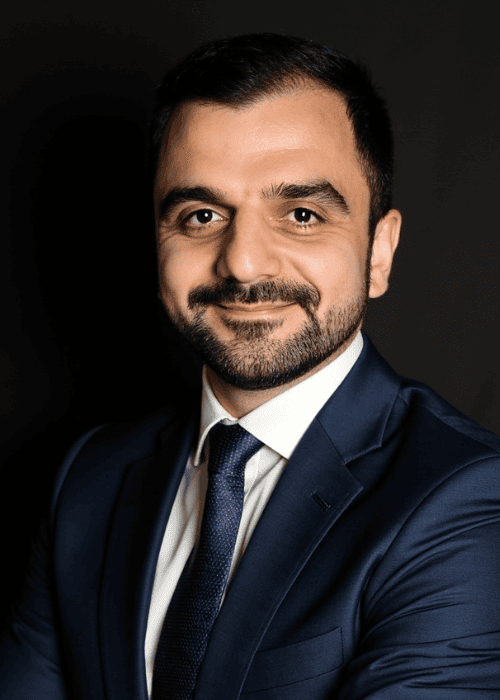
Mario Schejtman
Founder and Executive Director of Challenge, and co-founder of the Federal Forum.
Ahmad L.
Palestinian coordinator for the Federal Forum and based in Ramallah-West Bank. His full name is being witheld for privacy reasons.
Introduction
The Israeli-Palestinian conflict has persisted intractably for some 150 years. Over the conflict’s course, only two means of ending it have garnered widespread support: campaigns for victory of one side over the other, or a Two-State Solution territorial compromise to establish two nation-states side-by-side. Neither of these paths has proven conducive to solving the conflict.
Largely forgotten is an alternative solution which was considered in 1947 by the UN Special Committee on Palestine: a federal state of Jewish and Arab cantons. Federal systems have been successfully employed in many countries to embrace diversity within unity, including the USA, the EU, and India. Other examples such as Switzerland and Belgium can be meaningfully compared to the land of Israel-Palestine in terms of physical size, population, complexity, and linguistic diversity.
It is time to consider the possibility of a federal solution for the Holy Land. As members of the Federal Forum, a program launched by Challenge, an Israeli NGO, we are part of a community of local activists, scholars, professionals, and practitioners interested in developing proposals for federal solutions to the Israeli-Palestinian conflict. The following is our analysis on what Israeli-Palestinian Federalism could look like, and how it could be achieved.
Adapting Federalism to Israel-Palestine
The first challenge in crafting an Israeli-Palestinian federal solution to suit the 21st century is to define its core goals – what would it improve, and what should it look like?
We imagine its goals to be quite similar to that of other federal movements in history – an attempt to solve an issue of distinct national, cultural, and religious communities that share common resources, land, economy, or are otherwise interdependent. The Israeli-Palestinian context does, however, possess unique elements, including history, religion, geography, and international interests, which require any solution to be extensively tailored.
One is that the Israeli Jewish and Palestinian Arab peoples have very little common history or connection prior to the last century of conflict – before the advent of Zionism. This makes forging a common culture, history, or vision highly difficult. In fact, the struggle for self-determination plays a strong role in the defining identities of both Israeli Jews and Palestinian Arabs. For this reason, a one-state unitary solution, or any solution that requires national aspirations to be put aside, is both doomed to failure and harmful to both peoples.
Another distinction is the role of religion in our conflict, and its intersection with nationalism. While we acknowledge that religion plays a large role in many other conflicts and nation-building challenges (Belgium, Ireland, Congo, etc), the special influences of religion in Israel-Palestine should be noted and adopted into any potential solution. One significant aspect of religion is its effect on national identity and vision, therefore the narrative for any solution must be expressed not only in pragmatic or secular-national terms, but also in the language of Judaism, Islam, Christianity, and other local faiths. Solutions must address the particular interests and needs of their believers, and how these religions influence concepts of nationhood, peoplehood, sovereignty, and international relations. Another significant aspect of religion is the critical role of sovereignty over, and access to, holy sites in Palestine-Israel. Key examples include the Haram Al-Sharif Holy Esplanade/Temple Mount in Jerusalem and the Cave of the Patriarchs/Ibrahimi Mosque in Hebron, among others. A third relevant aspect is the role religion plays in defining national subgroups (e.g. ultra-Orthodox and Religious Zionist Jews, Arab Christians), and third groups (such as Samaritans and Druze).
A third distinction is the region’s unique geographic and environmental context. Access to water, arable land, and the coast are large considerations and sources of conflict. Movement and security are also considerations – many Israeli communities strongly prefer territorial and transportation connection to other communities of their national group, and would refuse the possibility of enclave status, opting instead to oppose the solution. This is further complicated by the varied geography of the region – the hilly west bank, populated by fort-like villages; the flat coastal plains with high population density; the southern desert, etc. Any division of territory, whether through federation or confederation, will have to take these various considerations into account to create coherent and viable internal regions.
A final distinction is international interest in the parties of the conflict. Both Israeli and Palestinian causes have garnered international sympathy and support. The regional conflict has prompted involvement from various nations, including local powers such as Egypt, Turkey, Saudi Arabia, and Iran, as well as global superpowers such as the United States of America. Any solution would have to take all stakeholders into account.
How do we make sense of these various considerations? We began our analysis by deciding on our core principles – our criteria for what a successful federal solution would look like. We feel reassured by a growing realization among activists and academic scholars in the Israeli-Palestinian conflict resolution field that an innovative, alternative solution must be developed, and that many of them have reached the same conclusions that we have. Our constitutive principles are:
- The whole land, between the Jordan river and the Mediterranean Sea, is inhabited by diverse cultural communities, including two main national groups, the Israeli Jewish and Palestinian Arab peoples.
- Both nations hold a deep and unbreakable connection to the whole land. Both see it as their ancestral historical, cultural, religious, and national homeland.
- Both national groups should be able to implement their right of self-determination within one shared historical, religious, and cultural homeland.
- Both nations are increasingly interconnected and intertwined economically, in terms of infrastructure and ecosystems.
- A federal solution to the Israeli-Palestinian conflict would enable both national groups to enjoy self-determination, autonomy, and cooperation, with the benefit of interdependent economies.
- Both nations include diverse ethnic, cultural and religious communities. In a federal framework, these diverse communities throughout the land can enrich each other and can benefit from cooperation, while preserving their distinct identities.
- Federalism will recognize and protect minority cultures and minority rights, providing equal opportunities and security for all.
- We are searching for a creative paradigm to design a win-win solution for the benefit of all, that finds a balance between our needs for autonomy, cooperation, connection, and shared responsibility for the land.
- In order to sustain the resulting Federal framework, we seek to acknowledge both peoples’ struggles and build a shared future founded on trust, justice, and reconciliation.
- Federalism is the optimal system of government for a just, sustainable, equitable and democratic resolution to the Israeli-Palestinian conflict.
Assessing a Model Federalism
Our next challenge towards a viable, appropriate federal solution involves identifying role models: what existing paradigms of federalism can best fit our unique needs? And perhaps more importantly, what paradigms should we avoid? We engaged this question by examining the two primary federalist models: confederations and federations.
Confederations hold particular appeal to those in the political debate who equate the fulfillment of the right of national self-determination with the establishment of mostly homogeneous nation-states. They propose two distinct states that have some sort of power-sharing or united mechanism for decisions on issues which concern both states. The most prominent successful confederation is the European Union, which transformed a war-torn continent into a prosperous and peaceful über-state.
Confederations are appealing to us for a number of reasons. They preserve the nation-state model (in the classical understanding), making them dovetail nicely with the aspirations of Zionism and the Palestinian national movement. Also, they decouple the concepts of citizenship and residency, offering a means to accommodate groups that would be harmed, ideologically or physically, through a land partition. Some of these groups are key stakeholders and are likely to resist a solution that strictly divides the land by borders.
However, the confederation model has some potential weaknesses. Confederations throughout history have often proven to be fragile (e.g. the “Brexit” decision of the UK to leave the European Union, the short-lived United Arab Republic, and Serbia-Montenegro). Critics of a confederate solution argue that this model keeps in place most of the shortcomings of the two-state solution which alienate certain sectors of both societies. For example, Israeli settlers in the West Bank may fear for their safety when the Israeli army is no longer there.
Finally, a confederation of two sovereign states maintains a competitive dynamic, which might lead to it falling prey to the same Achilles’ heel that has plagued the unitary state and the two independent state models. In fact, having “rival” two-states while requiring joint decision-making could potentially exacerbate the mutual mistrust and grievance that degenerates nation-to-nation cooperation into a political or military struggle or at least lead to paralysis and stalemate and mutual recrimination and blaming.
As members of the Federal Forum, we value exploring all models. We see federation models as more fitting for our region, and a confederation as a steppingstone to arrive at a federation. By federations, we mean systems of small, semi-autonomous districts (states/provinces/cantons) united by an overarching federal government. According to our analysis, Switzerland and Belgium are highly successful, though not perfect, models of a federalist solution applied to multicultural, multi-lingual areas. We also view federal countries such as Canada and India as largely able to manage internal identity, culture, and language tensions. Although the United States is the most recognized federal state, it offers a less relevant case-study for the Israeli-Palestinian context. This is because the original 13 colonies shared a strong national and cultural similarity, and the US generally experiences division along ideological and socioeconomic lines rather than deeply entrenched national or religious identities.
Federations appeal to our regional context because they offer the flexibility to engineer a tailor-made, unique model for the region’s particular challenges. Such a solution would account for security, respect for identities and holy/cultural sites, reduction of economic and political inequalities, migration policies, and other key issues. It would also need to provide a grassroots effort to reduce fear, mistrust, and resentment.
Furthermore, the federation model is the best suited thus far to simultaneously provide for both people’s pursuit of national character and attachment to the “whole, undivided land,” since it could support the establishment of small, semi-autonomous districts (states/provinces) that can have distinct national or cultural characteristics, demarcated on population clusters. This replaces the zero-sum dynamics which have prevailed in mainstream solutions and opens up new possibilities through negotiation of levels of devolution between federal and regional governments, providing more robust self-determination to a wider variety of groups.
Moreover, adding a regional level of government provides an additional level for expression of national identities and their internal sub-groups: one can imagine a secular-Zionist province of Tel Aviv, Haredi enclaves, and Bedouin, Druze, or Christian polities. However, the overarching federal state would provide the land and its citizens with geographic continuity, cooperation, freedom of movement, and democratic representation in an entity that can arbitrate authoritatively between the states and decide on universal laws.
A final advantage of the federation model is its incentivization of each sub-state or region to improve the socio-economic status of its residents by establishing its own unique character and added value. Many initiatives in this mold already exist in Israel-Palestine, such as industrial parks created as shared enterprises between Israeli regional councils and neighboring Palestinian or Israeli-Bedouin cities. Decentralization is already on the mind of local governments – Israel’s Ministry of Interior published an influential report in 2020 advocating for Israeli regionalization. It is not such a far stretch to fold the emerging regionalization process into a larger Palestine-Israel reorganization.
Forging a Path to Federalism
Our final challenge is seeking a viable federal solution, one that would be achievable given the current state of the conflict and political realities. In this, separate analyses of the Palestinian and Israeli contexts are required.
For Palestinians, the first relevant question would be whether such a federalist vision is compatible with the aspirations of the Palestinian people and interests of their political leadership. Many of our Palestinian members believe so, at least in terms of the dominant and most globally legitimate Palestinian political entity, the Palestinian Authority (PA), and its largest party, Fatah.
The Palestinian Authority has consistently articulated its commitment to the goal of an independent Palestinian state and naturally assesses political proposals according to how they contribute to this objective. Federalism can therefore be framed not as an alternative end-state, but as a pragmatic transitional framework—a realistic intermediate stage toward independence under current political constraints. In this reading, a federal model would not negate existing transitional arrangements, but rather offer an additional pathway for consolidating rights, governance capacity, and territorial coherence alongside other established interim frameworks, including those that emerged from the Oslo process.
In this analysis, federalism would be a more appealing enhancement for Palestinians, as it has a set vision, rationale, and paradigm, unlike the wholly-negotiated and quite convoluted Oslo Accords. Additionally, these agreements were quite asymmetric as a solution, leaving the PA dependent on Israeli support and subject to Israeli security interests, while Israel does not have the same dependence on the PA. Finally, a federal solution would offer a crucial improvement over the Oslo Accords to the Palestinian people, including freedom of movement and access to all of historical Palestine. In other words, federalism is a more predictable halfway point to independence, which can offer greater immediate benefits to the Palestinian people than the current ailing stalemate situation. For those who genuinely seek a federal solution over total independence, having a federal solution adopted temporarily is the best means to build support for it permanently.
In a wider sense, however, many of our Palestinian members feel federalism is not contradictory to the historic vision of Palestinian nationhood held by parties such as Fatah. Ideologically, this is because Palestinian political thought has always valued membership in a wider global government or community as a part of statehood. Politically, it is because a federal model would still fulfill the Palestinian aspiration of sovereignty and the right of national self-determination. It would also likely unify the divided Palestinian territories of the West Bank and Gaza, as well as other parts of the fragmented Palestinian nation, as a single state within a larger federal model – a crucial aspect of Palestinian national interests.
For Israelis, a similar question exists: can a federal solution be accepted by Israel’s Zionist mainstream, and is it more compelling than the current status quo? Many of our Israeli Jewish members believe that a compelling argument for a federal solution can be made.
Historically, Zionism (the founding and current ideology of the state of Israel) was not necessarily opposed to solutions beyond the standard nation-state approach. Prior to the state’s establishment, core Zionist theorists such as Ben Gurion and Jabotinsky drafted federal models, and a “bi-national” movement called “Brit Shalom” reached prominence.
The Israeli public today, however, is loath to consider alternatives to the status quo. Conflict transformation is rarely a campaign focus, or even mentioned, by mainstream political parties. Instead, their stated vision typically remains a variation of the Oslo Accords, provided that the other parties meet various security demands and needs. This position effectively translates into support for the status quo. The status quo remains popular primarily because Israeli society is deeply affected by security concerns. Therefore, any concessions of military control are perceived as potentially increasing the risk of security lapses, which could, in turn, lead to increased violence and potential atrocities, a concern tragically substantiated by the events of October 7th, 2023, and the subsequent war.
If an alternative, interdependent solution is not accepted in practice by Israel’s Zionist mainstream (though it is accepted in theory by many), what path can a federalist movement take towards success? One potential answer lies in the fact that Israeli society is currently experiencing great upheaval. The horrific October 7th massacre shattered mainstream Israel’s feeling of relative security, while posters litter its cities accusing its politicians of blame. This is merging into other societal conflicts – between Israel’s secular and religious Jews, liberals and conservatives, and supporters of the incumbent and opposition parties. Such upheaval and crisis, however upsetting, offers new possibilities and opportunities for transformative ideas such as federalism.
Our Umbrella Organization, and Our Colleagues’ Proposals
The possibility of a federal solution to the Israeli-Palestinian conflict was revived in Daniel Elazar’s 1991 book ‘Two Peoples, One Land’. Seeking to progress the federal solution further, in 2020 Challenge, an NGO, launched a program called the “Federal Forum.” This initiative aims to provide those seeking a federal solution in Israel-Palestine with support and collaborative synergy, building awareness about federal solutions, and promoting practical steps towards federal solutions. Recently, as its vision begins to mature, the Federal Forum has also welcomed into its community several new groups focused on Federal advocacy and awareness.
We, the authors of this paper, are organizers of the forum, and are proud to have gathered into it over a dozen models, which are being discussed and developed jointly by its members, including Israeli, Palestinian, and international activists, scholars, professionals and practitioners.
These proposed solutions vary widely. Some are modeled as federations, others as confederations, and some combine elements of both. Some have developed detailed geographical maps, constitutions, and legislative arrangements, while others focus on important shared symbolism such as Abraham or the Holy Land.
To read more about the several plans under the Federal Forum umbrella, you can visit the Federal Forum website.

Mondial is published by the Citizens for Global Solutions (CGS) and World Federalist Movement — Canada (WFM-Canada), non-profit, non-partisan, and non-governmental Member Organizations of the World Federalist Movement-Institute for Government Policy (WFM-IGP). Mondial seeks to provide a forum for diverse voices and opinions on topics related to democratic world federation. The views expressed by contributing authors herein do not necessarily reflect the organizational positions of CGS or WFM-Canada, or those of the Masthead membership.