
Originally published on the CGS blog on September 2, 2011.
A guest blog post by Joe Schwartzberg:
The following op-ed is largely inspired two provocative and highly recommended essays. One, “Will Obama Denounce MLK as Memorial [Is] Dedicated?” by David Swanson, is excerpted and modified from his book, War Is a Lie (http://www.warisalie.org) and was transmitted to me by CGS Board member Dick Bernard. The other, “To the Shores of Tripoli,” by a left wing, generally dovish Israeli journalist, Uri Avnery, was sent by John Sutter, a long-time President of the San Francisco-based Democratic World Federalists.
Early in his essay, cited above, Swanson quotes the following remarkable passage from President Obama’s Nobel Peace Prize acceptance speech.
“There will be times when nations — acting individually or in concert — will find the use of force not only necessary but morally justified. I make this statement mindful of what Martin Luther King Jr. said in this same ceremony years ago: ‘Violence never brings permanent peace. It solves no social problem: it merely creates new and more complicated ones.’… But as a head of state sworn to protect and defend my nation, I cannot be guided by [King’s and Gandhi’s] examples alone. I face the world as it is, and cannot stand idle in the face of threats to the American people. For make no mistake: Evil does exist in the world. A non-violent movement could not have halted Hitler’s armies. Negotiations cannot convince al Qaeda’s leaders to lay down their arms. To say that force may sometimes be necessary is not a call to cynicism — it is a recognition of history…. So yes, the instruments of war do have a role to play in preserving the peace.”
In opposition to the President, Swanson argues as follows:
“Obama claims that his only choices are war or nothing. But the reason people know the names Gandhi (who was never given a Nobel Peace Prize) and King is that they suggested other options and proved that those other approaches could work. This fundamental disagreement cannot be smoothed over. Either war is the only option or it is not — in which case we must consider the alternatives.
“Couldn’t we have halted Hitler’s armies without a world war? To claim otherwise is ridiculous. We could have halted Hitler’s armies by not concluding World War I with an effort seemingly aimed at breeding as much resentment as possible in Germany (punishing a whole people rather than individuals), requiring that Germany admit sole responsibility, taking away its territory, and demanding enormous reparations payments… or by putting our energies seriously into a League of Nations and International Court as opposed to the victor-justice of dividing the spoils, or by …[several more possible options, including “massive nonviolent resistance” are here added].”
Avnery’s position is quite different. He says:
“When I expressed my support for the international intervention, I was expecting to be attacked by some well-meaning people. I was not disappointed. How could I? How could I support the American imperialists and the abominable NATO? Didn’t I realize it was all about oil?….
“While the rebels were… fighting their way into… [Qaddafi’s] compound, …Hugo Chavez was praising him as a true model of upright humanity, a man who dared to stand up to the American aggressors.
“Well, sorry, count me out. I have this irrational abhorrence of bloody dictators, of genocidal mass murderers, of leaders who wage war on their own people….
“Whatever one may think about the USA and/or NATO, if they disarm… a Qaddafi they have my blessing.
“All those who decry NATO’s inter-vention must answer a simple question: who else would have done the job?
“21st century humanity cannot tolerate acts of genocide and mass murder, wherever they occur. It cannot look on while dictators butcher their own peoples. The doctrine of ‘non-interference in the internal affairs of sovereign states’ belongs to the past.
“I have mentioned in the past that I advocate some form of world governance…. This would include a democratically elected world executive that would have military forces at its disposal and that could intervene, if a world parliament so decides.” (Emphasis added,)
“This may be the music of the future, or, some may say, a pipe dream. Now, we live in a very imperfect world and must make do with the instruments we have. NATO, alas, is one of them.”
So, who is more correct: Swanson or Avnery? Swanson may well be correct in supposing that World War II could have been avoided if only the victors in World War I and others able to influence world affairs had acted in the ways he indicates. But they didn’t. And it would be expect- ing too much of human societies to act consistently with the good will and worldwide vigilance and understanding needed to avert all future wars. Avnery got that right. What would have been necessary to prevent China’s takeover of Tibet? Russia’s brutality in Chechnya? India’s and Pakistan’s violent repression of secessionists in their respective por-tions of Kashmir? The 1st and 2nd Inti-fadas and their suppression in Israel / Palestine? The depredations of the Lord’s Resistance Army in Uganda? How much goodness and wisdom is there to go around?
In light of considerations such as these, the United Nations unanimously endorsed at its 2005 summit meeting a potentially transformative concept, “The Responsibility to Protect” (R2P). The concept embodies two basic principles:
A) State sovereignty implies responsibility and the primary responsibility for the protection of its people lies with the state itself.
B) Where a population is suffering serious harm, as a result of internal war, insurgency, repression or state failure, and the state in question is unwilling or unable to halt or avert it, the principle of non-intervention yields to the inter-national responsibility to protect.
It would not follow, however, that any outside political act (say NATO or the US) could take it upon itself to judge that a given state had failed to live up to its sovereign responsibility to its own citizens and take military action to correct the wrong. Rather, such action would have to be authorized by the UN Security Council; or, in the event that the SC failed to act, by the General Assembly under the “Uniting for Peace” procedure; or by an appropriate regional or sub-regional organization in accordance with the UN Charter (subject to later SC approval).
Although duly sanctioned military intervention would be possible under an R2P regime, it was to be regarded as applicable only when some threshold had been passed in respect to large scale loss of life or large scale ethnic cleansing; and, even then, only as a “last resort” after all other ameliorative options had failed. Additional “precautionary principles” included: “right intention” (i.e., the need to prevent human suffering, rather than to achieve some other political goal); “proportional means” (i.e., insuring that the scale, duration and intensity of the intervention would be limited to what was necessary to achieve the desired human objective); and the existence of “reasonable prospects” for success, with “the consequences of action not being worse than those of inaction.”
Predictably, initial reactions within the UN to the R2P proposal were mixed. Many nations, especially in the global South, saw in R2P a means by which to justify neo-colonial adventurism and hegemonic policies. The fact that the United States found it necessary to use the pretext of “humanitarian intervention” as one of its phony justifications for invading Iraq in 2003 could not but fuel widespread skepticism. Thus, it seems likely that, were it not for warm support from UN Secretary-General Kofi Annan, as well as from his High-level Panel on Threats, Challenges and Change, the R2P principle would not have been accepted. The key sticking point was the report’s reformulation of the meaning of sovereignty. Annan put the matter this way:
“[S]tate sovereignty, in its most basic sense, is being redefined…. States are now widely understood to be instruments in the service of their peoples, and not vice-versa. At the same time individual sovereignty-by which I mean the fundamental freedom of each individual, enshrined in the Charter of the UN and subsequent international treaties-has been enhanced by a renewed and spreading consciousness of individual rights. When we read the Charter today, we are more than ever conscious that it aims to protect individual human beings, not to protect those who abuse them.”
Lauded though it was when adopted in 2005, the R2P principle has yet to be un-ambiguously followed. The most obvious failure was in respect to the protracted genocide in Darfur. When push came to shove, the nations that might have made a difference failed to pledge the needed support for effective UN intervention.
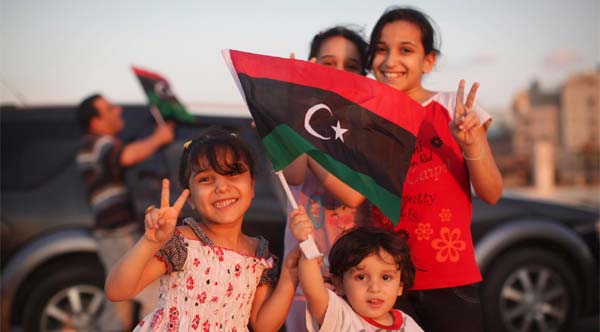
And it looked as if the same might happen in Libya. Under the circum-stances, the best that the UN could come up with was authorizing a NATO-enforced no-fly zone. But would this alone have prevented the massacre of rebels in Benghazi that Qaddafi declared he would unleash? I think not.
What then was Obama to do? There is only so much one can accomplish from the air. Were the choice mine, I’d have placed a small elite NATO force on the ground to separate rebels and loyalists, declaring that it would fire no shots except in self-defense, in which case reinforcements would be introduced as needed. I’d have pledged that the NATO force would be withdrawn as soon as another internationally authorized and capable force (possibly from the Arab League) could be set in place and, in no case, would remain beyond two years. I’d have then sought retroactive Security Council approval for the action taken and would have urged the Council to demand binding arbitration between the rebels and the Qaddafi regime. Gaining international acceptance of our pledge, given our past record of interventions, would not be easy; but, absent a better solution, most nations would presumably come aboard.
Taking a longer-range perspective, I would also push hard for the creation of a standing, internationally recruited, all-volunteer, elite peace force under direct UN command. I explain and justify this approach in a forthcoming book.
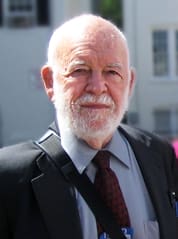 Joe Schwartzberg is the President of the Minnesota Chapter of GlobalSolutions.org and a professor emeritus at the University of Minnesota who has developed the idea of “weighted voting” for representation in a United Nations Parliamentary Assembly.


