
Originally published on the CGS blog on January 19, 2012.
The international community has failed in Syria. We have repeatedly missed opportunities to step in and stop the violence and conflict of President Bashar al-Assad’s regime against peaceful protestors. As the situation deteriorates, the death toll increases and the violence rages on, the nonviolent opposition has increasingly taken up arms as their only option left to finally achieve their freedom and basic rights.
The Arab League is set to finalize a report later today on the group’s month-long observer mission that is widely perceived to have done little more than literally observe violence (not surprising when the mission’s leader, Sudan’s General Mustafa al-Dabi, is himself accused of carrying out human rights violations). A former member of the mission told BBC news that the League’s operation “worked for the Assad system and not to prevent the massacre of civilians.” He added, “I witnessed crimes against humanity, and I was really shocked. I have seen houses destroyed, the bodies of murdered women and children, and families have a lack of food. I have seen bodies with marks of torture.” The U.N. Security Council reported that more than 400 people were killed just during the mission’s first ten days.
The Arab League’s failure simply amounts to more inaction by the international community to concretely prevent further violence from occurring in Syria. In many ways, the League’s mission was doomed to fail, plagued by division amongst its members (notably Lebanon and Iraq have been supportive of Assad’s government) that led to a smaller, less ambitious mission than was needed. The challenges facing the Arab League are similar to that of the U.N. Security Council, whose action on the situation was undermined by China, Russia and a small group of other nations wary of supporting a resolution, mostly due to their own domestic economic interests in Syria.
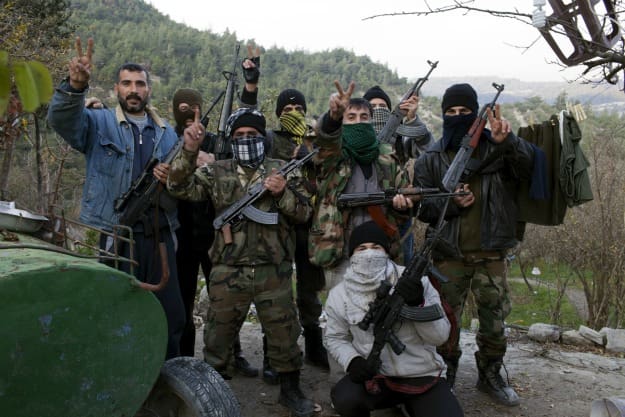
What is especially alarming is that Syrians are increasingly accepting that civil war is their last hope, as it becomes clear that the international community will not intervene, Omar Shakir, an activist from Homs, the city at the center of the protest movements, said, “Until now there is not civil war, but if the international community continues like this, just watching and doing nothing, there will be.” Activists and rebel soldiers are increasingly identifying themselves as members of the Free Syrian Army, an armed resistance movement that claims to have control of many towns throughout Syria.
Rami Jarrah, another Syrian activist forced to flee Syria to Cairo, told reporters, “This is not going to stop. It’s becoming an armed rebellion, it’s going to be chaos, and I don’t know why the world doesn’t understand that.” In many ways, it’s encouraging to see a nation standing up and fighting for their freedom. However, much of the Syrian opposition’s strength was in their embrace of nonviolent methods. International inaction has forced protestors who were determined to defeat Assad peacefully turn to civil war and violence against government supporters. Sectarian tension is sure to escalate any such conflict.
The inability of both the Arab League and the U.N. to stop Assad’s brutality is the frustrating result of a lack of global tools and mechanisms to rapidly prevent conflict and intervene when a government begins to use force against its own people. When a nation’s rule of law has broken down completely, the international community needs to know exactly how and when to step in to prevent human rights violations from occurring.
At this point, it seems unlikely that conflict in Syria will end without more bloodshed and additional loss of life. The Arab League will meet this weekend to discuss whether or not they will extend the observer mission, though the legitimacy and possible impact of such a mission has become almost negligible. The U.N. is also unlikely to act. Russian Foreign Minister Sergei Lavrov has refused to budge, stating that Russia “opposes the use of force against the Syrian government of President Bashar al-Assad and will use its veto to prevent the United Nations from supporting armed intervention.”
Martin Luther King, Jr. day was just this past Monday, a day for the global community to reflect on Dr. King’s commitment to universal peace and justice. It was Dr. King, in quoting Dante, who said, “The hottest places in Hell are reserved for those who in a period of moral crisis maintain their neutrality. There comes a time when silence becomes betrayal.” Inaction on the injustices in Syria and the betrayal of innocent civilians, has earned much of the international community a spot in the hottest place in Hell.


