
Originally published on the CGS blog on March 16, 2016.
On March 3, Sri Lanka became the 163rd state to agree to the Ottawa Treaty, a UN anti-personnel mine ban convention. It’s an important step toward recovery from the country’s 26-year long civil war, a conflict that claimed upwards of 80,000 lives, displaced an estimated 280,000, and left the Northern and Eastern regions covered in landmines.
Weapon of Choice in the Civil War
The Sri Lankan Civil War ended in 2009, but unexploded mines and ordinances (UXOs) made returning home a risky proposition. Both the rebel Liberation Tigers of Tamil Eelam (LTTE) and the Sri Lankan military relied heavily on landmines, scattering thousands undetonated devices across conflict areas.
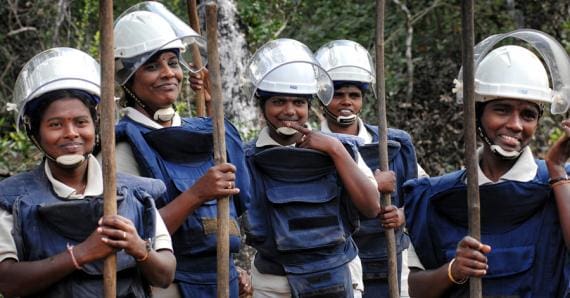
Demining efforts, in turn, became a vital part of restoring Sri Lankan civil society. But progress was slow due to random placement, lack of maps on their locations, and too few flair machines, which safely detonate landmines.
Signing the Ottawa Treaty
By joining the convention, Sri Lanka has agreed to destroy all stockpiled anti-personnel mines it owns and/or controls under its jurisdiction within four years. The country must also continue its efforts to clear the devices and assist victims. (Over 21,000 people were killed or injured by landmines during the war, according to Landmine Monitor.)
The Sri Lankan Ambassador to the UN in Geneva, H.E. Ravinatha Pandukabhaya Aryasinha, said in his speech at the First International Pledging Conference for the implementation of the Mine Ban Treaty that to date, 64 square kilometers (24.7 square miles) of mine fields remain contaminated. NGOs such as The Halo Trust, Mines Advisory Group, and DASH have already helped remove thousands of landmines.
The country will officially launch its plan to be “mine threat free” by 2020 on April 4, the International Day of Mine Awareness and Assistance in Mine Action.
“After years of campaigning, I am delighted that Sri Lanka has decided to join the international community in ridding the world of landmines. Accession to the Mine Ban Treaty reconnects Sri Lanka to the world map of disarmament,” said Vidya Abhayagunawardena, Coordinator of the Sri Lankan Campaign to Ban Landmines.
Disarmament and The Future of Sri Lanka
Now that Sri Lanka has signed the treaty, India, Nepal, and Pakistan are the only countries in Southeast Asia to remain outside the ban. The country has also announced that it started consultations in order to join Protocol V of the Convention on Conventional Weapons.
However, banning landmines is only a start if the nation wants to maintain a lasting peace. The Sri Lankan government must reintegrate returning refugees and internally displaced persons into society by giving them access to political representation in addition to housing, health care, education, and employment opportunities.
Despite progress toward disarmament, the country still has a long, slow recovery process ahead.


