
Originally published on the CGS blog on February 4, 2016.
Syria has quickly become the leading producer of refugees in the world, with 4 million people fleeing the country–half of them children. Due to the increase in violence throughout the country, Syria has grown to be one of the most unsafe places for children in the world.
However, the conversation surrounding the refugees has stopped short of addressing the millions of children who are now in need of humanitarian aid, including the ability to gain an education. With so many Syrians missing key years of primary education, it is a concern that there will be a generational gap of educated people in Syria.
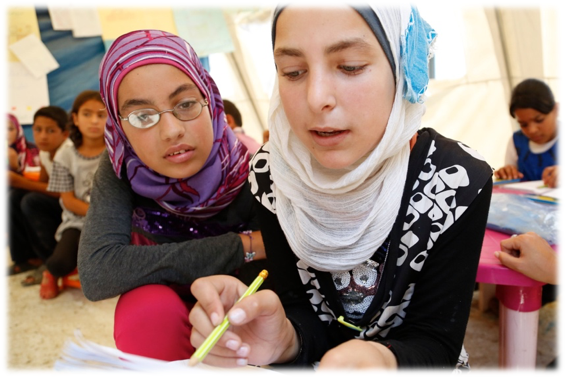
Syria is currently in desperate need of an investment in education, as access to primary school has been rapidly declining for Syrians since the beginning of the civil war. With a high attendance record and a 90% literacy rate, Syria’s education system used to be envied by various countries in the region. However, in the past five years, 2.8 million children of primary school-age have been removed from their schools due to conflict in their neighborhoods. Many Syrian parents have safety concerns and are reluctant to send their children to school in the middle of conflict. This is not surprising, since over 4,000 schools in Syria have been destroyed by bombings or turned into shelters and storage facilities over the past few years. Syrians who flee their homes often end up in refugee camps which are overcrowded and underfinanced, leading to education being neglected.
As the United Nations pushes the Sustainable Development Goals (SDGs), including the goal to ensure every child has the opportunity for primary and secondary education by 2030, there are resources provided for children in conflict zones such as regions in Syria and Iraq. The United Nations Children’s Rights and Emergency Relief Organization (UNICEF) has been at the forefront of ensuring that Syrian children are provided with a safe and uninterrupted learning environment amid the crisis. The organization recently released the Humanitarian Action for Children 2016, which dedicated the largest amount of humanitarian aid to displaced Syrians.
Throughout 2016, UNICEF expects to use $2.8 billion towards children in emergencies worldwide. This will hopefully lead to what they estimate as 8.2 million children in conflict zones gaining a formal education. More than half of this projection is aimed towards children inside of Syria or Syrians who have fled to neighboring countries during the crisis.
The Humanitarian Action for Children 2016 is a stepping stone to success for school-age children in Syria. Access to education can benefit children in various ways by allowing them to obtain the basic skills needed in their daily lives or to use their education for social mobility later on. Without education, the children of Syria are being robbed of their chance to reach these goals. When children are unable to learn skills such as reading and writing, they are losing the opportunity to become well-educated citizens who are able to contribute to society. This gap of educated citizens will hurt the next generations of Syrians, as they hope to rebuild their state following the conflict. In addressing the ongoing violence in Syria, it is crucial to include children’s right to education in the conversation.


