|
|||||||||||||
Blog TagsBlog Archive
Subscribe!Search This Site: |
03/17/2010 - 5:33pm"Courtside"! New ICC blog coming soon!Posted by Veronica Glick
CLICK HERE to To see Citizens for Global Solution’s interactive ICC flash module CLICK HERE to act in support of the ICC 03/09/2010 - 6:31pmICC Postpones Bemba TrialPosted by Veronica Glick
Jean-Pierre Bemba Gombo grew up in Belgium and the Democratic Republic of Congo (DRC). Bemba became leader of the DRC's Mouvement de Libération du Congo (MLC). In 2002, President Ange-Felix Patasse of the Central African Republic (CAR) requested help from the MLC to put down a coup attempt. The MLC allegedly used systematic rape and torture against local populations to suppress political opposition in the CAR. More than 15% of the women in northern CAR are estimated to have experienced some form of gender based violence and many girls were exposed to HIV. Reports from the area show the extent of the damage that was inflicted by the MLC on the population and are highly disturbing to read. As leader of the MLC, Bemba is charged with five counts of crimes against humanity and war crimes including charges of rape and torture.
To learn more about Bemba see Citizens for Global Solution’s interactive ICC flash module 03/08/2010 - 6:34pmInternational Women's Day!Posted by Veronica Glick
Ann Lewis, a director of communications for President Clinton, and Susan Molinari, former Republican Congresswoman for New York, wrote that "investment in women and girls’ education and empowerment is increasingly recognized as a linch-pin to advancing social, economic and political progress in most poor countries... Girls with just one year of formal education are less likely to suffer from illness or hunger...and their children are less likely to die in infancy." This reasoning was implemented in Pakistan where the U.S. supported education in the country towards a goal of addressing illiteracy. The U.S. stated that this formed part of efforts to stabilize Pakistan and to weaken the influence of Al Qaeda and the Taliban; arguing that nations that are stable and democratic are far less likely to engage in war or host terrorist organizations. Thus, it has been argued that supporting women and girls through agricultural development and improvements health-care is a worthwhile investment. Indeed, there is broad bipartisan support in the idea that investing in programs that build healthy, educated societies are a big part of making the U.S. and the world safer. 03/03/2010 - 6:20pmICC Prosecutor Names 20 People Involved in Instigating the Kenyan Post-Election ViolencePosted by Veronica Glick
ICC Prosecutor Luis Moreno-Ocampo today named 20 people that he alleges are most responsible for the deadly post-election violence which swept Kenya in December 2007 and January 2008. Kenya signed the ICC’s Rome Statute in 2005 and many people in Kenya support ICC intervention as a way to prevent violence during the next election and break years of political impunity in the country.
02/24/2010 - 6:44pmAmbassador Stephen Rapp Addresses the Washington Working Group on the International Criminal CourtPosted by Veronica Glick
(February 24, 2010) This morning Stephen Rapp, Ambassador-at-Large for War Crimes Issues, spoke to the Washington Working Group on the International Criminal Court. Rapp addressed the current status of the U.S. relationship with the International Criminal Court and his experiences at the Assembly of States Parties meeting in November of 2009. Over twenty-five NGOs attended representing a cross-section and important representation of the NGO ICC-support community in Washington DC. Ambassador Rapp spoke positively about the International Criminal Court (ICC). He referred to the situations in Darfur, Uganda and the Democratic Republic of Congo to emphasize that, far from ‘grey’ area cases, the ICC has only become involved in cases concerning atrocity crimes that shock the human conscience. Rapp explained that it is because of the gravity of the cases before the ICC that the US hopes to help ensure the work of the ICC is done effectively. Throughout the discussions, Ambassador Rapp drew from his past experience as a prosecution attorney at the International Criminal Tribunal for Rwanda, and more recently as chief prosecutor at the Special Court for Sierra Leone. For many, the highlight of the meeting came as Ambassador Rapp confirmed that Obama administration representatives will be attending the March resumed Assembly of States Parties meeting in New York and that they intend to participate in the Review Conference this June in Kampala, Uganda.
To learn more about the ICC CLICK HERE Act now in support of the ICC CLICK HERE 02/23/2010 - 11:34amICC will Continue to Pursue Preliminary Investigation in GuineaPosted by Veronica Glick
As part of an on-going ICC preliminary investivation, Fatou Bensouda, Deputy Prosecutor of the International Criminal Court (ICC), arrived in Conakry, the capital of Guinea, last Wednesday (February 17, 2010). Upon arrival Bensouda said: "The aim of our visit is to observe what has been done about the painful events of September 28 2009 here in Conakry so that justice should be done to the victims." Bensouda visited the Conakry stadium where national security forces have been accused of killing of more than 150 people at an opposition rally. A United Nations report said that in addition to the deaths, 1,200 people were injured and hundreds of girls and women were raped. Guinea's military junta reported 63 deaths.
Guinea has been a State Party to the Rome Statute since July 14, 2003. As such, the ICC has jurisdiction over war crimes, crimes against humanity or genocide possibly committed in the territory of Guinea or by nationals of Guinea. In October 2009, the ICC said the situation in Guinea was under preliminary examination. In preliminary investigations the Office of the Prosecutor considers whether the alleged crimes fall within the ICC’s jurisdiction and whether the facts warrant further involvement. Beatrice Le Fraper, the Special Adviser to the Prosecutor of the Court, has said that before a full-scale investigation the ICC will examine the nature and gravity of the crimes, the interests of justice in general and whether Guinea is unwilling or unable to try individuals accused of serious violations. Guinea’s prime minister, Jean Marie Dore told reporters that the "judiciary is a problem in Guinea, the way it is organised, the training of the magistrates and some of their behaviour presents problems between the Guinean authorities and their internal and external partners." During her time in Guinea, Bensouda met with Guinea's interim President, General Sekouba Konate, as well as Guinea’s transitional Prime Minister, Justice Minister, cabinet ministers, judges and representatives of victims' groups. Beatrice le Fraper told reporters that "[c]ooperation is good… Guinean authorities were not obliged to show us the places where potential crimes were committed but they have been transparent." A United Nations report said Moussa Dadis Camara, the junta chief at the time, and his aides bore "direct criminal responsibility" for the massacre. In the weeks after the killings, Camara was shot and seriously wounded by an aide. He is now allegedly in exile in Burkina Faso. Bensouda stated: "If the Guinean authorities are not seen to be doing something... [then] the ICC will do it…The bottom line is that there will not be impunity. The victims of these crimes will have justice one way or another." After her three days in Guinea, Bensouda spoke of "atrocious crimes" committed in the Conakry stadium, adding "men in uniform attacked civilians, they killed and wounded…In full daylight they mistreated, violated and submitted women to unprecedented sexual violence." Bensouda concluded: "As the deputy prosecutor of the ICC, I have gathered from this visit the feeling that crimes against humanity were committed… On the basis of the information that we have received from this visit, we will pursue our preliminary investigation." She added that "These few days working in Guinea confirmed that Guinean institutions and the ICC can work in a complementary way: either Guinean authorities can prosecute the main people in charge themselves, or they will turn to the court to do it."
To learn more about the ICC CLICK HERE Act now in support of the ICC CLICK HERE 02/17/2010 - 6:10pmUS to Help the ICC Protect Kenyan WitnessesPosted by Veronica Glick
On February 11, 2010 U.S. Ambassador-at-Large for War Crimes Issues, Stephen Rapp, stated that the United States would assist in protecting witnesses that testify in International Criminal Court (ICC) proceedings. The ICC is carrying out preliminary examinations into the 2007-2008 post-election violence in Kenya. ICC judges are currently in the process of deciding whether Prosecutor Luis Moreno-Ocampo can proceed with an investigation into the violence that killed more than 1,000 people and left over 300,000 people displaced. As an ICC State Party, Kenya would be obliged to arrest any citizen indicted by the Court.
According to the Kenya National Commission on Human Rights more than 20 witnesses who testified during the 2008 government-led investigation into the violence went into hiding or exile after receiving death threats. Ambassador Rapp underlined a holistic approach to protecting witnesses: “The reform agenda, in particular in regard to police and the judiciary, [is] critical. Without that, you won’t have the confidence of witnesses to come forward.” 02/12/2010 - 12:51pmCheck Out "The ICC's Most Wanted"Posted by Hannah Karns
The presentation highlights the activities of the ICC, specifically focusing upon the individuals who are presently indicted by the court. The purpose of the interactive presentation is to demonstrate that the ICC is currently active in pursuing war criminals. The Rome Statute, which is the legislation that created the ICC, defines the types of crimes that individuals can be charged for: genocide, crimes against humanity, war crimes, and the crime of aggression. Many opponents have claimed that the ICC will target the actions of U.S. soldiers. With this interactive module, Citizens for Global Solutions hopes to deflate that notion by demonstrating that the court is taking aggressive measures against individuals who have allegedly committed atrocious crimes throughout the world. “The ICC’s Most Wanted” provides summary information for the individuals who are currently being indicted for the terrible crimes they have committed. The module also shines spotlights on four regions that have experienced significant turmoil: Sudan, Uganda, Congo, and the Central African Republic. In each country’s section, it describes the details and circumstances for each of the individuals currently being pursued by the court. The Sudan, for example, describes the crimes committed by Omar al-Bashir, Ahmed Haroun, Bahr Idriss Abu Garda, and Ali Kushayb. The interactive tool is a great first introduction to the activities of the International Criminal Court. It is important to emphasize, however, that the nature of the crimes is quite disturbing. You can explore the module and all it has to offer HERE. 02/05/2010 - 12:21pmNo Immunity for National Leaders in the 'Shadow of the Court'Posted by Don Kraus
Last night I had the pleasure of participation in a presentation at the Council on Foreign Relations given by Luis Moreno-Ocampo, the Prosecutor of the International Criminal Court. As conveyors’ of the Washington Working Group on the ICC we had helped him set up a few meetings on the Hill. Our Program Coordinator, Abby Long helped out tremendously in this effort. My friend Mark Goldberg at the UN Dispatch wrote an excellent piece on Ocampo’s key points.
First, the true relevance of the Court is its global impact. Ocampo said that: “Even before any ruling in the Lubanga case, the issue of child recruitment gained new momentum, triggered debates in remote countries like Colombia or Sri Lanka and child soldiers were released in Nepal. The Special representative of the UN Secretary-General on children in armed conflicts immediately factored in such potential and used us as a tool to campaign around the world, and secure even more releases.” This is an example of how the Court can help to prevent crimes. While the ICC will only deal with a few cases, its “shadow” extends far beyond them and the 110 nations that are Parties to the Rome Statute.
Tags:
12/04/2009 - 4:08pmU.S. Government Recognizes the Value of the International Criminal CourtPosted by Komal Hiranandani
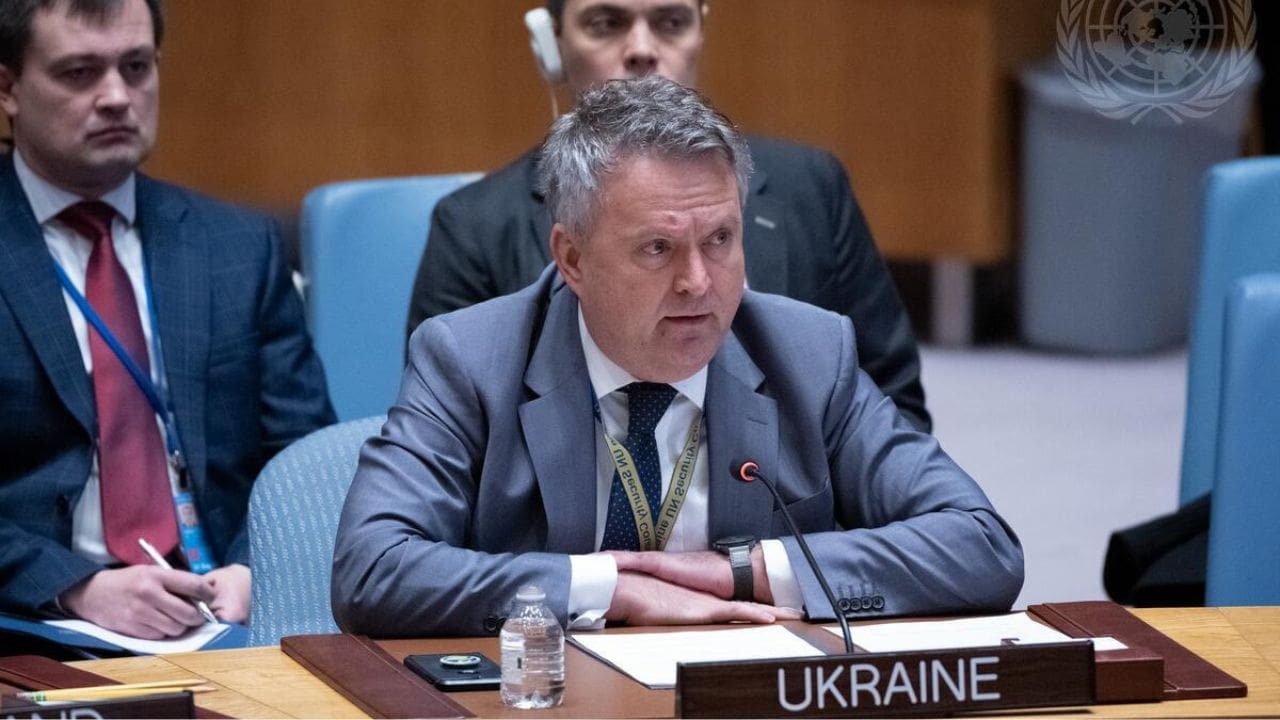
Today, U.S. Ambassador to the U.N., Rosemary A. DiCarlo, made a statement expressing concern over the tragic conflict in Darfur. Significantly, she conveyed the importance of resolving the issue through the lens of the International Criminal Court and its crucial role in ending impunity for heinous crimes such as those committed in Sudan. DiCarlo emphasized the Sudanese government’s non-cooperation with the ICC. U.N. Security Council Resolution 1593 referred the Darfur situation to the ICC, providing the court with jurisdiction in the area. Since the resolution was adopted under Chapter VII of the U.N. Charter, it is binding an all U.N. members regardless of whether they are State Parties of the ICC, which neither the U.S. nor Sudan are. DiCarlo lamented Sudanese non-cooperation despite this resolution, and noted the government’s responsibility in prolonging the conflict by killing civilians and impeding the improvement of the humanitarian situation. Most importantly, DiCarlo recognized that the ICC’s greatest value lies in its being the only permanent international institution capable of bringing to justice the leaders of mass atrocities around the world, such as that in Darfur. She said, “we believe that the ICC's prosecution of the key architects of the conflict in Darfur remains critical, "and added: “Those responsible for these atrocities must be held accountable.” Finally, DiCarlo reiterated the U.S.’s newly initiated engagement with the ICC, noting that the U.S. participated for the first time in the Assembly of States Parties to the Rome Statute as an observer- a move that Citizens for Global Solutions welcomes and has strongly advocated. DiCarlo said: “This decision reflected the U.S. commitment to engage with the international community on issues that affect our foreign policy interests. Ending impunity for crimes against humanity—including crimes on the staggering scale of those committed in Darfur—ranks high among our commitments. The United States will therefore continue to be supportive of the ICC’s prosecution of these cases, to the extent consistent with U.S. domestic law.” The U.S.’ acknowledgement of the ICC’s importance and the re-opening of U.S. engagement with the court after former President Bush shut it down are extremely vital developments. The Obama Administration is on the right track here. Next step: ratify the Rome Statute and become a member of the ICC. Read DiCarlo’s full statement here Act NOW to Support strengthened US engagement with the ICC! U.S. Government Recognizes the Value of the International Criminal Court
Today, U.S. Ambassador to the U.N., Rosemary A. DiCarlo, made a statement expressing concern over the tragic conflict in Darfur. Significantly, she conveyed the importance of resolving the issue through the lens of the International Criminal Court (http://globalsolutions.org/issues/icc) and its crucial role in ending impunity for heinous crimes ( http://globalsolutions.org/individuals_indicted_icc )such as those committed in Sudan (http://globalsolutions.org/issues/international_criminal_court/Darfur_IC...).
Most importantly, DiCarlo recognized that the ICC’s greatest value lies in its being the only permanent international institution capable of bringing to justice the leaders of mass atrocities around the world, such as that in Darfur. She said, “we believe that the ICC's prosecution of the key architects of the conflict in Darfur remains critical,” and added: “Those responsible for these atrocities must be held accountable.” Finally, DiCarlo reiterated the U.S.’s newly initiated engagement with the ICC, noting that the U.S. participated for the first time in the Assembly of States Parties to the Rome Statute as an observer- a move that Citizens for Global Solutions welcomes and has strongly advocated (http://globalsolutions.org/icc_hill_briefing_july17th). DiCarlo said: “This decision reflected the U.S. commitment to engage with the international community on issues that affect our foreign policy interests. Ending impunity for crimes against humanity—including crimes on the staggering scale of those committed in Darfur—ranks high among our commitments. The United States will therefore continue to be supportive of the ICC’s prosecution of these cases, to the extent consistent with U.S. domestic law.” The U.S.’ acknowledgement of the ICC’s importance and the re-opening of U.S. engagement with the court after former President Bush shut it down are extremely vital developments. The Obama Administration is on the right track here. Next step: ratify the Rome Statute and become a member of the ICC. Read DiCarlo’s full statement here (http://usun.state.gov/briefing/statements/2009/133176.htm) Act NOW to Support strengthened US engagement with the ICC! (http://org2.democracyinaction.org/o/5550/t/3505/campaign.jsp?campaign_KE...)
418 7th Street SE, Washington, DC 20003-2796
Phone: (202) 546-3950 Fax: (202) 546-3749 Privacy Policy |
||||||||||||
|
|
|||||||||||||