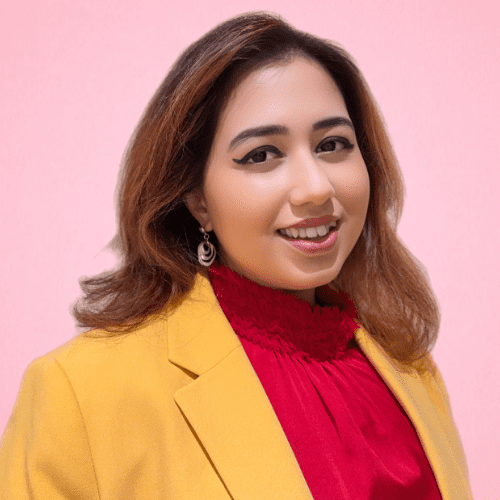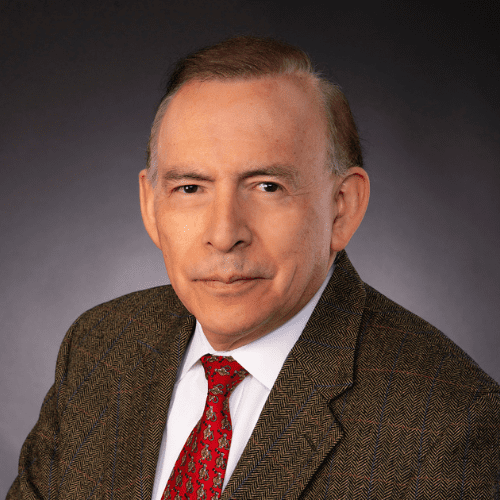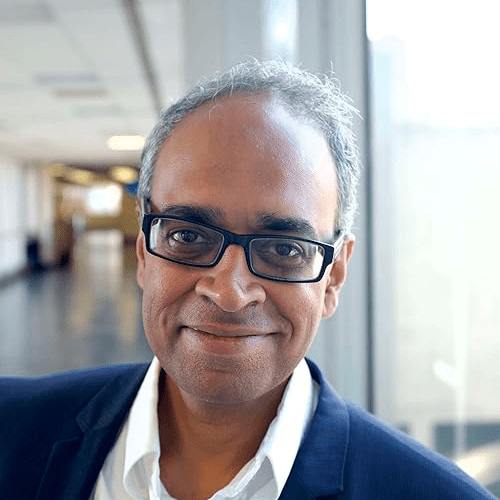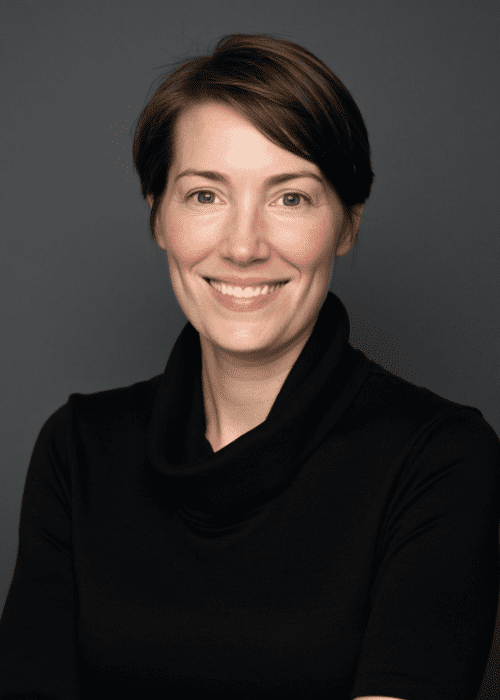
by Marina Jiménez Melgosa | Mar 30, 2023 | Global Cooperation, United Nations
Being invited to the first Global Future Forum in New York City from March 20-22 was something I never imagined when I arrived in the United States seven months ago. My name is Marina Jiménez, and I am a fourth-year Law and Political student from Universidad Carlos III de Madrid, Spain. Last September, I came to the United States to study for a year at Northeastern University (Boston) and, I was given an opportunity to be sponsored by Citizens for Global Solutions to not just to be part of the first Global Future Forum but to present my research paper, “Open Door opportunities that leave many young people on the doorstep” about the exploitative unpaid internships in the United Nations (UN) at the Youth Pavilion..
But first things first. What was the Global Futures Forum? The Global Futures Forum (GFF) was a two-day event celebrated in New York to conclude several months of work on the “People’s Pact for the Future”, a document that encapsulates several proposals made by civil society about the UN’s future and the reforms that must be made, as an attempt to not only be heard but be presented at the Summit of the Future in 2024. During the previous weeks, Coalition For the UN We Need (C4UN) and the Stimson Center– the coalition that made it all possible; coordinated different E-consultations related to seven tracks: Peace and Security, Human Rights and Participation, UN and Global Governance and Innovation, Global Economic and Financial Architecture, Environmental Governance, Development and Digital Compact. By doing so, people all around the world, all ages and all backgrounds got the chance to bring to the table their concerns and suggestions for a better future. Undoubtedly, GFF represents a significant milestone in the way civil society supports intergovernmental processes. Empowering civil society in international decision-making is the first step towards a stronger, more networked, and inclusive multilateral UN system.
To this effect and to ensure GFF was inclusive itself, it included an entirely youth-led and youth-focused forum, promoting the key role of youth in the monitoring, review and the implementation of Our Common Agenda and the achievement of the Sustainable Development Goals (SDGs). Needless to say that youth representation is a critical stakeholder that is almost never invited to the negotiating table, so being invited and having a voice is an important part of civil society has been an important move. While historically, the lack of young people in high decision-making processes is common, young have the power and full knowledge of our concerns and ambitions, and we will no longer sit on the sidelines. We demand to be part of the conversation and the solutions that concern our futures moving forward. Listening to the voice of youth is a vital part of understanding our society as a whole.
Youth have been undervalued and many in power tend to think that we are “too young and inexperienced” to be a relevant player on the field. But we are not. We are nearly half of the world’s population, and we are more educated than ever. We do not want to be just consulted. We are tired of being asked to share our opinions and solutions without seeing any real change. We want to see our proposals being taken seriously, to the same extent as those of the rest of the involved stakeholders. We want to have a say in our future. We want to get on Board.
That is why I am pleased that the “People’s Pact for the Future” that we drafted will reach the hands of the UN Secretary-General, António Guterres, and the negotiating parties at the Summit for the Future 2024. It is the most useful way to get our claims to where the decisions that affect our day-to-day lives are made. While not every recommendation will materialize from the conference, we must continue to raise our voices at all levels of power, what we experienced could be a turning point in the way the world thinks about and treats youth. It remains to be seen whether they seize the opportunity or miss the boat again.
by Vanita Singh | Mar 22, 2023 | Human Rights
Domestic violence is the most common form of violence against women and is reported globally to be experienced by one out of every three women. Women in low- to middle-income countries, including India, are disproportionately affected, owing to the predominant patriarchal culture in these countries. According to recent data from the National Family Health Survey (NFHS), close to 30% of Indian women have experienced some form of violence, whether physical, sexual, or emotional.
To combat this epidemic of violence, studies in this domain recommend various women’s empowerment initiatives, such as higher education, female labor force participation, and pay parity, among others. However, a recent study from India reports that lower levels of education, rural residence, lower family income, and higher earnings by women correlate with a higher incidence of physical abuse. The authors of one study (Singh & Babbar, 2022) argue that men in Indian society do not take kindly to their wives’ earning more money than they do. This prevalent attitude also correlates with Relative Resource Theory, which holds that a man is likely to be more abusive when he feels that his dominance is being challenged by a woman who earns more money than he does. In a patriarchal society the man is supposed to be the sole breadwinner and he controls his family through resource provision; if he fails to do so, he is mocked by the community. If a man lacks the resources to fulfill this role, he resorts to aggression and violence as a tool to control his family, especially his wife. Patriarchy is so deeply rooted in this socio-cultural context that any policy initiatives aiming to empower women are bound to fail, as women should not be seen as breadwinners. Several other studies in this same cultural context report the identical negative relationship between women’s economic empowerment and their risk of being abused. Incidences of domestic violence has increasingly been reported in high-income families as well.
This social prejudice thus raises the critical need for future research to disentangle this relationship. Among the sociological theories which explain domestic violence, the most popular is resource theory which postulates that domestic violence is more common among lower socio-economic groups due to lack of resources. However, the incidence of domestic violence has increasingly been reported in high-income families as well. A quick survey of the literature in this domain suggests that, except for a few, the existing studies do not explain the link between empowerment and the risk of abuse.
Women’s Role in Patriarchy
Patriarchy has been consistently reported to be the main cause of the violent victimization of women; however, the acceptance by women themselves of patriarchal norms tends to be neglected as a factor predicting violence against women. Research suggests that women who accept patriarchal norms are more likely to be physically abused by their husbands. According to data from NFHS-4 (2015–16), more women (25%) than men (15%) think that it is justified for a husband to beat his wife if she goes out without telling him, argues with him or neglects their children. Is this finding not shocking, given the discourse of gender equality so widespread in our society? Why would women themselves accept a subordinate position—the patriarchal norm—in an intimate relationship when she has the right to equality.
Patriarchy is the belief system which holds that men are justified in controlling women and have the right to exercise such control. The subjugation of women in and of itself is not the central theme in patriarchy but patriarchal culture is deeply misogynistic. In such a culture, women are seen as less capable, less trustworthy. Violence against women is justified by the choices and natures of individual men and women. Patriarchy is thus a social system and not a conscious conspiracy against women by men. Indeed, it is not always conscious and men too are victims, since in a patriarchal society men are supposed to be strong, to hide their emotions, to support their families through their work, etc., making men vulnerable to many mental health issues.
Women are often considered to be the principal victims of patriarchy, but in reality, they themselves are often enforcers of patriarchal norms. Patriarchy is considered to be the source of order in the family and many family members, including young boys and girls, are conditioned to believe that any failure to maintain this order may jeopardize the well-being of the whole family. Thus, the system continues to be passed on from generation to generation and women blindly carry this burden in the name of maintaining the harmony and dignity of the family.
Many tend to criticize men for promoting patriarchal norms, but children learn these cultural norms from their parents. Thus, it is “normal” for children to grow up thinking that male authority is the norm and that any deviation would bring disorder and disharmony. Thus, the education of women, especially the older generation, is needed to break this cycle. As per NFHS-4 data, it is women’s own acceptance of the patriarchal norms—for example, that wife-beating is justified—that is the most significant predictor of her own risk of abuse.
In my own ongoing research into the factors affecting women’s acceptance of patriarchal norms and the role of education, I found that, above and beyond other socio-economic factors, the media—specifically watching television—play a major role in shaping patriarchal norms among Indian women in the age group of 15 to 49 years. As per our data analysis in NFHS-4 (the domestic violence module) women who read newspapers daily are less likely to accept regressive gender norms, while women who watch television daily are more likely to accept patriarchal norms. This finding perhaps mirrors the arguments by feminists against TV soaps which tend to normalize patriarchy and male dominance and have the highest TRP (target rating points, the metric used by marketing agencies to measure the highest number of viewers of a given television program).
Gendered Content: The Role of Mass Media
In popular daily soaps broadcast on television, it is often seen that the woman who is submissive, who cares for everyone, and who gives preference to family rather than work, is considered “perfect” and is portrayed as a desirable “wife.” The most common theme among highly rated daily soaps is that of two women fighting to get the attention of a man. Lead actresses portray “superwoman”, who smoothly manages the household, the office, the children, her in-laws, even her husband’s business. Obviously, such content normalizes prevailing gender roles and the profound inequalities in the society.
The significance of the mass media in perpetuating patriarchal norms among women has serious implications for the content of daily soaps. There is no doubt that education has the potential to promote gender equality in society and that the media have the potential to play a crucial rule in reinforcing more progressive social and cultural norms. However, the question remains to be explored whether daily soaps are designed to serve the real needs of their consumers or whether they primarily promote regressive gendered norms.
The relationship between women’s empowerment initiatives and the risk of physical abuse is not linear. Unless and until there is an acceptance of women’s empowerment in a patriarchal society, these initiatives may not translate into a lower incidence of violence against women. Further research is needed to understand the factors predicting women’s acceptance of patriarchal norms, since research shows clearly that it remains a significant predictor of domestic violence against women.
by Marta Simoncini | Mar 7, 2023 | World Citizen
In 2019, 10 entrepreneurial families from Fiji, France, Germany, Italy, Kenya, Portugal, Romania, and the Swedish Saami Youth Association found common cause when their businesses – largely in agriculture and tourism – were affected by climate change disasters. With the support of scientists and non-governmental organizations, they brought a case to the European Union Court of Justice in which they demanded more commitments from European institutions in reducing greenhouse gas emissions. This group, the People’s Climate Case, became one of the largest global actions related to climate change. Despite its strategic importance, the case ended with the Court of justice declaring on appeal that it was inadmissible because the plaintiffs were not eligible for direct access to the court.
In an increasingly globalized world, many people have acquired multiple legal identities that are formed “beyond the state.” These individuals have gained a form of administrative citizenship of the world – not a passport that is derived from belonging to a national community but that is the fruit of legal globalization. More cases like these will pose new legal challenges.
The 1998 case brought to the World Trade Organization (WTO) by India, Malaysia, Pakistan and Thailand on shrimp fishing is another example. The fisherman’s activities were severely affected by the U.S. embargo on imports of shrimp caught using methods dangerous to sea turtles. The U.S. embargo aimed to protect endangered sea turtles from becoming trapped in certain types of fishing nets. To protect fishermen and traditional fisheries, Asian states said the embargo had violated international trade rules. While the WTO recognized the legitimacy of restrictive measures to protect the environment, it found the U.S. measure unlawful because it was adopted in the absence of discussion with the states concerned and, thus, in violation of the principles of due process.
Although different, these stories demonstrate how citizens are impacted by decisions made by global or supranational authorities. They also highlight how the exclusive condition of citizenship is no longer just realized at the state level. The interdependence resulting from economic globalization is governed through orders that are formed across national borders.
Although states remain central actors in international society, different forms of sovereignty are emerging in what Sabino Cassese has called a global public arena, in which public and private actors participate in different ways in the creation and implementation of norms.
Recognizing global rights and obligations promises a cosmopolitan ideal of universal rights outside the nation-state framework, but which proceeds from the inalienable contents of national citizenship – such as the right to vote and the duty to pay taxes. In a globalized world, this trend has arisen from conflict mediation outcomes between global actors. There are three main interpreters of these conflicts: the courts; administrative bodies; and political institutions. It is useful to briefly highlight different aspects of their activities to better understand the nature of the current processes.
Global Citizenship and Global Justice: The Role of the Courts
Courts play a key role in the process of asserting rights, but do not always succeed in meeting the demand for global justice.
Going back to the People’s Climate Case, the discrepancy between the demand for justice and European procedural constraints generated an obvious and painful paradox: the more generalized the prejudicial effects of the European Union act were, the more access to the courts was limited. In the words of the entrepreneurs involved in the case, “the more serious the harm and the higher the number of victims, the less judicial protection is guaranteed.”
The legal definition of who and under what conditions those persons can access the courts creates a bottleneck in the quest for justice. What happens, then, to all those situations that are not jurisdictionally protectable, yet embody interests of global significance? When the courts are not equipped to meet demands for justice, who responds to these demands in a global setting that does not have an aggregate political system?
Global Citizenship and Soft Law: The Role of Administrative Bodies
Public administrations are another crucial interlocutor in conflict mediation. Through informal cooperation between jurisdictions – and setting up standards, guidelines, and best practices – a so-called ‘soft law’ emerges, although without binding legal force. The guidelines of the European Securities and Financial Instruments and Markets Authority are one example. In theory, they ensure that advice on investment products is appropriate to the risk profile of clients. National authorities and firms can only deviate from these guidelines by justifying their dissent. In practice, not conforming to the guidelines inevitably means exposing oneself to an eventual international process of ‘naming and shaming.’
‘Soft law’ thus functions as a kind of glue. While not legally binding, it can become so in practice. But in the face of non-traditional, coercive techniques, how can the certainty of individual rights and obligations be ensured? Or how can global citizens recognize and defend themselves when administrations abuse their powers or act in violation of the law?
The quest for soft law legitimacy comes through sharing rules of conduct. Furthermore, a bottom-up process and transparency promotes consensus. But who influences these decision-making processes and who is represented? Selecting globally relevant interests is not a neutral, or just a legal, process. It is also a social and political process of discernment and mediation between diverse interests.
Global Citizenship and the Nation State: The Role of Political Institutions
Finally, politics plays a central role in mediating conflicts. Gaps between multiple legal identities create tensions between those benefitting from taking a global or regional perspective and those who hold conflicting rights and interests protected by national citizenship. Policy can either help to mitigate, or exacerbate, these conflicts. National leaders have exploited these contradictions to construct ‘us vs. them’ identities.
In the last decade these tensions strongly characterized European citizenship. The ideal of a cultural European identity has, for example, been challenged by the problems that have emerged when people who are not actively working – such as students, the unemployed, and retirees – request to live in another European country under conditions of non-discrimination compared to nationals. The latter wish to limit the ‘free riding’ phenomenon of access to public resources, at least if those moving are not actively contributing to the economic life of the host country.
The European Court of Justice, at first a proponent of European citizenship as the “fundamental status of citizens of member states,” has since aimed to remove the risks of this ‘welfare tourism.’ However, this development undermines the right to migrate to realize a better future and European citizenship has lost much of its potential in promoting social mobility.
National leaders have exploited these contradictions to construct ‘us vs. them’ identities.
The reduction of European immigration was former U.K. Prime Minister David Cameron’s rationale for the renegotiation of the British participation in the European Union as well as central to the referendum campaign in favour of leaving it.
Conclusion
A more useful approach may be to look beyond political propaganda to the existence of multiple legal identities. How can such identities be reconciled so that uneven norms do not contribute to dramatically exacerbating latent social conflicts? The answers may come from a more cosmopolitan approach based on the principles of tolerance and dialogue.
There are many knots to unravel to make the globalized world a space for exploring multiple identities. Our future depends on understanding these challenges in their complexity and seeking adequate solutions.