Mondial Article (Summer 2026)
A Global Mandate, Direct Democracy, and Cooperative Funding as a New Model for Multilateralism
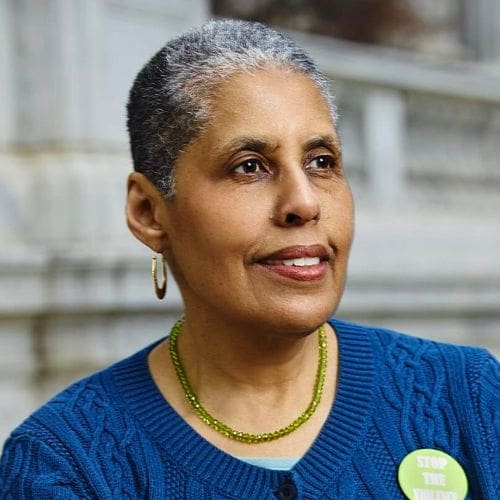
Isabella Grace Smith
Sophomore at James Madison University. In 2025, Isabella won the New Voices 4 Global Solutions essay contest. This article is based on her winning essay.
Imagine the next global climate treaty being finalized not in a closed-door meeting of diplomats, but through a global ballot. Within 90 days of its completion, the treaty is digitally distributed to citizens in participating countries. Through a secure voting platform managed by a reformed UN Electoral Commission, citizens cast their votes to ratify or reject the agreement. Countries whose populations approve the treaty gain access to critical climate adaptation and recovery funds, while those that opt out forgo this material support. In this model, public engagement is not symbolic; it carries tangible weight, pressuring even isolationist governments to respond to the public will when international cooperation is on the line.
In an era dominated by nationalism and isolationism, the world requires more than traditional diplomatic resolutions. Gridlock in multilateral institutions has repeatedly delayed necessary responses to borderless threats like climate change, forced migration, and pandemics. Traditional global governance models, defined by executive-level decision-making and bureaucratic inertia, simply aren’t equipped for today’s urgent challenges.
To revitalize multilateralism, we must decentralize power and embed cooperation directly within democratic participation. A dual framework of digital direct democracy for international treaty ratification and the creation of a Global Resilience Fund to financially support nations that uphold these agreements would offer a modern, enforceable, and inclusive model for global governance.
Isolationist trends have already weakened crucial bodies like the United Nations, the World Health Organization (WHO), and regional unions. During the COVID-19 pandemic, national stockpiling and travel bans overrode coordinated public health responses. Similarly, climate agreements like the Kyoto Protocol and the Paris Agreement have faced limited enforcement and withdrawal by major polluters. These actions have exacerbated global inequality and eroded trust. Unless democratic legitimacy and conditional enforcement are built into these agreements, global efforts risk remaining aspirational documents rather than instruments of real change.
Digital direct democracy offers the legal and civic innovation necessary to bridge this legitimacy gap. By allowing citizens to directly vote on international treaties — from climate frameworks to refugee compacts — we embed public consent into the very foundation of global governance.
These digital referendums, hosted on encrypted, accessible platforms and verified by a restructured UN Electoral Commission, would ensure both security and transparency. Citizens become active participants in multilateral decisions, rather than passive observers of elite diplomacy. This not only revitalizes international cooperation but makes it more responsive to diverse voices, particularly those of youth and marginalized communities often excluded from foreign policy discussions.
Real-world models lend credibility to this approach. European referendums on EU treaties (in Denmark, France, and Ireland, for example) show that citizens can meaningfully engage with complex international agreements. The difference in this new model is that participation is framed around cooperation, not secession.
The Global Resilience Fund introduces an institutional innovation grounded in accountability and justice. This fund would operate like a global insurance pool, providing financial assistance for climate recovery, disaster relief, and post-conflict rebuilding.
However, access would be strictly conditional: only nations that ratify international treaties through public referendums and, crucially, follow through on their commitments would be eligible. This framework incentivizes participation and action while deterring symbolic or performative diplomacy. Critically, the fund would have strict prohibitions against its use for military or security expenditures. All resources would be allocated to peaceful and constructive uses such as emergency shelters, medical relief, infrastructure repair, and environmental research.
Similar to conditional lending from the International Monetary Fund (IMF), the Global Resilience Fund would apply performance-based criteria, but with a crucial democratic difference: unlike IMF structural adjustment policies, which are often criticized for infringing on national sovereignty, this fund would be democratically accountable. Citizens approve the commitments, and states earn support by honoring them. Furthermore, participatory budgeting models, such as those used in Porto Alegre, Brazil, show that people can engage in collective financial decision-making. Adopting this model globally would allow contributors and recipients to vote on allocation priorities, ensuring transparency, equity, and shared ownership.
The fund’s financing would be both sustainable and just, drawn from two sources: carbon emission taxes and progressive wealth-based contributions. High-emitting nations would pay more through a global carbon tax model based on verified emissions data submitted to international bodies. Wealthier nations would make supplementary contributions determined by metrics like GDP per capita and national income.
These funds would be collected annually and deposited into a transparent, independently managed trust overseen by an international council. Crucially, funding would only be accessible to countries that demonstrate compliance with democratically ratified multilateral agreements.
The lack of internet access in developing nations is a valid concern. To address this, an implementation phase is necessary, providing technical and financial assistance to develop secure digital voting capabilities. This could include solar-powered voting kiosks, mobile platforms for remote regions, and civic education initiatives in native languages. The goal is not merely digitalization, but democratization, ensuring every citizen has a fair and secure opportunity to participate, including those in rural areas, people with disabilities, and displaced individuals.
Critics may also worry that direct democracy could lead to the rejection of important treaties due to populist backlash or misinformation. While possible, this is not insurmountable. Just as domestic elections have procedures to ensure informed decision-making, global referenda can include public forums, fact-checking partnerships, and media literacy initiatives. Treaties must be presented in accessible language, and countries would be encouraged to host televised debates. Furthermore, the requirement for a treaty to pass in a majority of participating countries creates a buffer against isolated rejection while preserving democratic principles.
This model respects cultural and political differences by allowing referendums to be designed and distributed within each country’s own democratic context. This soft enforcement strategy — rooted in incentives rather than sanctions — offers a balanced approach that accommodates diverse political systems while promoting shared responsibility.
In a world increasingly shaped by fragmentation and distrust, bold, inclusive, and enforceable mechanisms are not just ideal but essential. This proposal is rooted in democratic principles, innovative funding, and civic participation, offering a clear path forward.
Digital referendums give citizens a direct voice in shaping the international policies that affect their lives, while the Global Resilience Fund transforms moral commitments into material support. Together, they form a new model of multilateralism that responds to isolationism not with force, but with legitimacy, cooperation, and equity.
The global crises we face — rising temperatures, displaced populations, and failing international systems — will not be solved by 20th-century diplomacy. They demand an approach that bridges the gap between global leadership and local voices. The future of multilateralism lies in this simple yet transformative idea: let the people decide and let cooperation be the reward.
Mondial is published by the Citizens for Global Solutions (CGS) and World Federalist Movement — Canada (WFM-Canada), non-profit, non-partisan, and non-governmental Member Organizations of the World Federalist Movement-Institute for Government Policy (WFM-IGP). Mondial seeks to provide a forum for diverse voices and opinions on topics related to democratic world federation. The views expressed by contributing authors herein do not necessarily reflect the organizational positions of CGS or WFM-Canada, or those of the Masthead membership.