This site makes extensive use of JavaScript, for the best browsing experience we recommend you enable JavaScript in your browser.
The Global Citizen: genocide prevention
President Barack Obama's recent announcement that he believes Syria has used a small amount of chemical weapons ignited a debate. Has the Assad regime crossed the "red line" the White House laid down?
U.S. intelligence reports "varying degrees of confidence" that Syria used chemical weapons. "We have to act prudently," Obama said. "But I think all of us...recognize how we cannot stand by and permit the systematic use of weapons like chemical weapons on civilian populations."
The situation in Syria is clearly dire, with more than 70,000 deaths. Over 2.5 million Syrian refugees (including 600,000 children) have overwhelmed the ability of the United Nations and neighboring countries to provide adequate care. Another 2 million kids are internally displaced within Syria.
But politicians seem more concerned about U.S. credibility than suffering Syrians. So what's next for Washington?
If I were president, I'd try to carefully navigate between two horrendous mistakes my predecessors made:
What do Iran, Syria, North Korea and the NRA have in common? They are all on the losing side of trying to block the creation of a new Arms Trade Treaty. This landmark agreement has been in the making since 2006 and will be the first international treaty to regulate the conventional arms trade. The most powerful way the United Nations can agree to a treaty is by "consensus", where all nations agree to the text. But these three rouge nations blocked agreement. It was a sad sight to witness.
But fortunately, the treaty’s sponsors did the next best thing and brought it to the General Assembly where it was agreed to by an overwhelming majority: 154 to 3, with the U.S. voting in favor. A treaty is born!
The Arms Trade Treaty is a great step forward in dealing with the unregulated and illicit global trade in conventional weapons and ammunition, which fuels wars and human rights abuses worldwide
The United States played a positive role in negotiating the Treaty which is designed to help prevent the more than 500,000 deaths worldwide that happen as a result of armed violence. Firearms are used in armed conflicts and to carry out human rights violations, including genocide and gang rapes. More than 250,000 children have been forced into combat as under-aged child soldiers.
Did you know that international laws dictate the rules of the game when it comes to selling bananas and iPods, but not grenade launchers and AK-47s?
It’s crazy but true. Fortunately, a solution is at hand. Negotiators at the United Nations will soon wrap up a global Arms Trade Treaty that will establish much-needed rules to prevent selling arms to human rights violators.
Every year, more than 500,000 people around the world are killed as a result of armed violence. Firearms are used in armed conflicts and to carry out human rights violations, including genocide, gang rape, and the practice of forcing children into combat as underaged soldiers.
There are about 250,000 child soldiers.
Roughly 60 percent of documented human rights violations involve the use of small arms (such as rifles and machine guns) and light weapons (such as grenade launchers and shoulder-fired missiles). In fact, more human rights abuses are committed with small arms than with any other category of weapon.
"Bringing that dark chapter into light helps clarify and sharpen what we mean when we say never again. But despite all we have learned and accomplished in the last 70 years, never again remains an unmet, urgent goal."
Addressing a crowd of 200 onlookers at the US Holocaust Memorial Museum, Secretary of State Hillary Clinton discussed the legacy of the Holocaust at a forum entitled "Imagining the Unimaginable: Ending Genocide in the 21st Century." The pledge that never again should the world stand by while millions are killed in genocide was a central theme to her keynote speech. To remember our history and learn from past mistakes is the best way to prevent and put an end to genocide in the 21st Century. Human nature did not dramatically change when the Holocaust ended, she noted, therefore, our history continues to show that putting an end to mass atrocities must still be a priority for the international community.
But how can the international community end genocide? Clinton praised the new emphasis on prevention-worldwide education efforts and Foreign Service officers sent to at-risk countries are now being trained to watch for the warning signs. Genocide does not just erupt and explode in a single moment; over time an environment is created where "hatred is not only acceptable, it is encouraged." This "license to hate, turns into the license to kill," Clinton said.
It's hardly surprising at the point, but no less sad and infuriating. Once again, Russia and China have used their permanent veto-wielding power on the U.N. Security Council to protect Syrian President Bashar al-Assad rather than the citizens his regime continues to butcher.
In another double-veto today, Russia and China voted against a Security Council resolution which would have threatened the Syrian regime with sanctions in an effort to end the bloodshed there which has gone on for more than a year and killed at least 14,000 civilians. It's not the first time Russia and China have vetoed efforts to stop Syria's crimes against its people; they've been standing in staunch opposition to any such action by the international community for months now. And whether it's the result of Russia's ties to the Assad regime, a belief that the U.N.-approved campaign in Libya last year overreached its mandate, or the fear of what message international efforts in Syria might send to their own restive populations at home, ultimately means very little.
What matters is that the Syrian peace process continues to fail, and two-fifths of the Security Council continues to shield a tyrant and international pariah who happens to be a head of state.
Today, the International Criminal Court's (ICC) first trial was completed with the sentencing of Thomas Lubanga Dyilo to fourteen years in prison. Lubanga, of the Democratic Republic of Congo, was found guilty by the Court in March of conscripting child soldiers for use in battle.
This first sentencing is certainly a landmark moment for the ICC. It's good to see the Court complete a trial and ensure that a vicious warlord will be put away, though it's a bit disheartening to see the length of the sentence is shorter than what the ICC Prosecutor had recommended. The prosecution had asked for Lubanga to serve 30 years for his crimes. His sentence is further reduced because the six years he's been in custody will count toward his incarceration, so he will only serve an additional eight years (with the possibility of getting out even sooner due to good behavior).
With all that said, I'm still happy to see some measure of justice done in today's sentencing of Lubanga. I'm proud to see the ICC reach this milestone moment, and I hope this sentence brings some measure of peace to Lubanga's victims and their families. I look forward to a future in which the Court succeeds in putting many other war criminals behind bars where they belong.
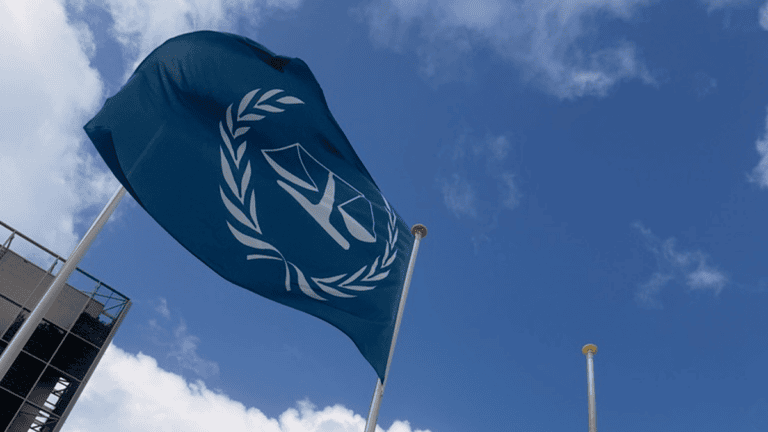
For those of us who are passionate about international justice, yesterday marked an extraordinary milestone. The International Criminal Court (ICC), the world's first permanent international court, celebrated its 10th anniversary. However, its roots go back much further than a mere decade.
The ICC traces its heritage in part back to the Nuremberg trials after World War Two, in which the U.S. played a leading role. Nazi war criminals were put on trial and brought to justice for horrific crimes against humanity committed during the war, and the international community vowed "never again" to allow such atrocities to happen on its watch. Tragically, this promise remained unfulfilled as the 20th century continued to witness genocides in places as diverse as Rwanda, the former Yugoslavia, and Sudan. The need for a permanent international body to bring war criminals to justice remained glaring.
In 1998, representatives from around the world met in Rome, Italy to firm up plans for such an international court. The result was the Rome Statute and the creation of the ICC. The Court officially came into being on July 1, 2002.
Four staffers of the International Criminal Court (ICC) were detained in Libya over the weekend after meeting with Saif Gaddafi, son of the deposed dictator, who has been indicted by the Court. An ICC team is currently working to secure their release.
ICC President Song has called for the release of the staffers, noting that "These four international civil servants have immunity when on an official ICC mission."
Australian ICC lawyer Melinda Taylor was found carrying documents for Gaddafi that were considered "suspicious" by the Libyan authorities. She and her fellow ICC staff were put under house arrest in the town of Zintan and have been ordered to be held in detention for 45 days.
This latest drama comes as the ICC and Libya remain engaged in a broader tug-of-war over where the younger Gaddafi should be tried. The Libya situation was referred to the ICC last spring by the U.N. Security Council, and the ICC has issued an arrest warrant for Gaddafi. The new Libyan government has expressed a strong desire to try Gaddafi in the country, but it is unclear that they have a sufficient judicial system set up to ensure a fair trial.
We will keep you updated as more news becomes available.
If you're like me, there's nothing quite as much fun as making a list. And listing "winners and losers" on a weekly, monthly, or yearly basis is something of a D.C. tradition. So I'm going to start a regular blog series on "Heroes and Zeros" around the globe-commending those leaders, governments, or ordinary people who did something great that positively impacts the global issues that Globalsolutions.org cares about, and calling out those whose actions have hurt the cause of creating a better world.
Here's the first edition-and feel free to let me know what you think and provide feedback!
Hero of the Week: The Nation of Malawi
As someone who follows the work of the International Criminal Court (ICC) closely, I feel that all too often I'm writing about how some new nation has flouted ICC arrest warrants by inviting a convicted war criminal for a visit. But happily, this week indicates the tide may be starting to turn on this loathsome practice, as illustrated by Malawi's refusal to host Sudanese president--and ICC indictee--Omar al-Bashir. Malawi was scheduled to hold an African Union summit, but got into a dispute with the AU because it refused to allow Bashir to attend. Despite protests from the AU, Malawi held firm to its no-Bashir stance, and the summit was moved to another country.
It was not unexpected, but the news was still dispiriting and depressing. Yesterday, the United Nation's Secretary General's top lawyer effectively put the brakes on a resolution which would have, among other things, urged the five permanent members of the Security Council (known as the P-5) to refrain from using their veto power to prevent U.N. action in situations where genocide or mass atrocities are threatening civilian lives.
The resolution had been proposed by a group of nations termed the "S-5", or small five, in contrast to the veto-wielding P-5 countries. The S-5 group--Costa Rica, Liechtenstein, Jordan, Singapore and Switzerland--had called for a vote on a resolution to urge the Council to reform the way it works, allow more scrutiny of its actions, and, most significantly for those civilians suffering from oppression by regimes such as Syria and Bahrain, hold off on using their veto when atrocities are being committed and the lives of innocent people are at stake.
Pages
Topics
- Arms Control (22)
- Become a Member (3)
- Become a Member (1)
- Capitol Hill (164)
- CGS Political Action Committee (PAC) (17)
- Chapters (4)
- Civilian Protection (133)
- Climate Change (94)
- Comprehensive Test-Ban Treaty (CTBT) (2)
- Congressional Report Card (7)
- Current Campaigns (8)
- Election News & Analysis (101)
- Fellows (2)
- Gender Based Violence (26)
- Genocide Prevention (113)
- Get Involved (68)
- Home (12)
- Human Rights (223)
- Human Rights Council (31)
- International Criminal Court (167)
- International Criminal Justice (51)
- Law & Justice (211)
- Law of the Sea Treaty (55)
- Nuclear Disarmament (81)
- Nuclear Non-Proliferation Treaty (NPT) (2)
- Other (33)
- PAC: 2010 Election Endorsements (3)
- Partners for Global Change (2)
- Peacekeeping (104)
- Prevent War (181)
- Rights of the Child Treaty (10)
- Strategic Arms Reduction Treaty (START) (19)
- Support Us (14)
- Take Action (24)
- Tax Deductible Giving (2)
- UN Funding (71)
- UN Reform & Revitalization (43)
- United Nations (321)
- usaforicc.org (1)
- WFI (5)
- Women's Rights Treaty (CEDAW) (47)
Archive
- May 2013 (5)
- April 2013 (10)
- March 2013 (6)
- February 2013 (16)
- January 2013 (12)
- December 2012 (4)
- November 2012 (11)
- October 2012 (11)
- September 2012 (7)
- August 2012 (3)
- July 2012 (17)
- June 2012 (23)