This site makes extensive use of JavaScript, for the best browsing experience we recommend you enable JavaScript in your browser.
The Global Citizen: Civilian Protection
A guest blog post by Lucy Law Webster
Syria needs help. Its government has no legitimacy having killed some 90,000 Syrian people and forced millions from their homes as internal refugees and into exile in nearby countries.
It would be a mistake for the United States to put its own boots on the ground, but it could help to provide a wide range of equipment (including weapons) to the insurgents. Above all, it could, together with the Arab League and others, support and encourage a transition process, carefully defined and backed by an overwhelming vote in the UN General Assembly.
It is important that the recently agreed Arms Trade Treaty was not abandoned when 100% consensus could not be obtained during the treaty conference negotiations. Instead, the text was taken to the General Assembly where there was a positive vote of 154 versus 3 negative votes (Syria, Iran and North Korea) with 23 abstentions.
President Barack Obama's recent announcement that he believes Syria has used a small amount of chemical weapons ignited a debate. Has the Assad regime crossed the "red line" the White House laid down?
U.S. intelligence reports "varying degrees of confidence" that Syria used chemical weapons. "We have to act prudently," Obama said. "But I think all of us...recognize how we cannot stand by and permit the systematic use of weapons like chemical weapons on civilian populations."
The situation in Syria is clearly dire, with more than 70,000 deaths. Over 2.5 million Syrian refugees (including 600,000 children) have overwhelmed the ability of the United Nations and neighboring countries to provide adequate care. Another 2 million kids are internally displaced within Syria.
But politicians seem more concerned about U.S. credibility than suffering Syrians. So what's next for Washington?
If I were president, I'd try to carefully navigate between two horrendous mistakes my predecessors made:
What do Iran, Syria, North Korea and the NRA have in common? They are all on the losing side of trying to block the creation of a new Arms Trade Treaty. This landmark agreement has been in the making since 2006 and will be the first international treaty to regulate the conventional arms trade. The most powerful way the United Nations can agree to a treaty is by "consensus", where all nations agree to the text. But these three rouge nations blocked agreement. It was a sad sight to witness.
But fortunately, the treaty’s sponsors did the next best thing and brought it to the General Assembly where it was agreed to by an overwhelming majority: 154 to 3, with the U.S. voting in favor. A treaty is born!
The Arms Trade Treaty is a great step forward in dealing with the unregulated and illicit global trade in conventional weapons and ammunition, which fuels wars and human rights abuses worldwide
The United States played a positive role in negotiating the Treaty which is designed to help prevent the more than 500,000 deaths worldwide that happen as a result of armed violence. Firearms are used in armed conflicts and to carry out human rights violations, including genocide and gang rapes. More than 250,000 children have been forced into combat as under-aged child soldiers.
The Arms Trade Treaty (ATT) will not pass this year and sources suggest the United States was central to its failure. The US showed little dissatisfaction throughout the month-long conference, but raised major concerns in the final hours of negotiations that ultimately killed the treaty.
The potential treaty would have been a historic advancement for international peace and security. It sought tougher regulation of the international sale of arms and the transfer of arms to perpetrators and potential perpetrators of atrocities.
GlobalSolutions.org remains committed to passing a meaningful arms treaty. We highlighted the broad significance of the treaty by sending the names of over 5,000 supporters to Secretary Clinton and other top diplomats. The Control Arms coalition also presented negotiators with several hundred thousand petition signatures supporting more regulation.
It's hardly surprising at the point, but no less sad and infuriating. Once again, Russia and China have used their permanent veto-wielding power on the U.N. Security Council to protect Syrian President Bashar al-Assad rather than the citizens his regime continues to butcher.
In another double-veto today, Russia and China voted against a Security Council resolution which would have threatened the Syrian regime with sanctions in an effort to end the bloodshed there which has gone on for more than a year and killed at least 14,000 civilians. It's not the first time Russia and China have vetoed efforts to stop Syria's crimes against its people; they've been standing in staunch opposition to any such action by the international community for months now. And whether it's the result of Russia's ties to the Assad regime, a belief that the U.N.-approved campaign in Libya last year overreached its mandate, or the fear of what message international efforts in Syria might send to their own restive populations at home, ultimately means very little.
What matters is that the Syrian peace process continues to fail, and two-fifths of the Security Council continues to shield a tyrant and international pariah who happens to be a head of state.
The 2012 Summer Olympics in London are only eighteen days away and the famous logo featuring five interlocking rings is appearing daily on television. Throughout the past several weeks we profiled stories of courage, cooperation, and athleticism at the Olympics. The Games are a forum for dialogue and understanding and this week we want to highlight a few emerging trends and institutions that are helping to facilitate effective and inclusive international policy. There are the well-known institutions such as the United Nations, NATO, and Arab League that represent the world's most powerful countries, but several forums and ideas are originating, primarily in the Global South, that promote more participation for burgeoning world economies.
Responsibility while Protecting (RwP)
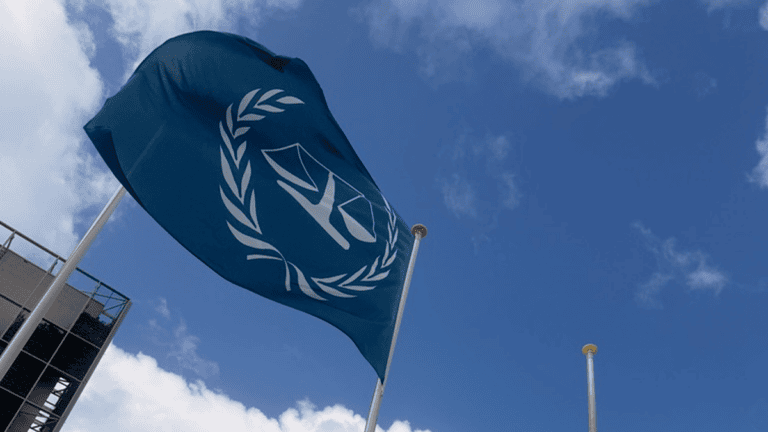
Today, the International Criminal Court's (ICC) first trial was completed with the sentencing of Thomas Lubanga Dyilo to fourteen years in prison. Lubanga, of the Democratic Republic of Congo, was found guilty by the Court in March of conscripting child soldiers for use in battle.
This first sentencing is certainly a landmark moment for the ICC. It's good to see the Court complete a trial and ensure that a vicious warlord will be put away, though it's a bit disheartening to see the length of the sentence is shorter than what the ICC Prosecutor had recommended. The prosecution had asked for Lubanga to serve 30 years for his crimes. His sentence is further reduced because the six years he's been in custody will count toward his incarceration, so he will only serve an additional eight years (with the possibility of getting out even sooner due to good behavior).
With all that said, I'm still happy to see some measure of justice done in today's sentencing of Lubanga. I'm proud to see the ICC reach this milestone moment, and I hope this sentence brings some measure of peace to Lubanga's victims and their families. I look forward to a future in which the Court succeeds in putting many other war criminals behind bars where they belong.
Last October, President Obama announced the deployment of 100 United States military advisors to Central Africa. Obama hoped to combat the remaining Lord Resistance Army forces that have committed atrocities throughout the region, primarily in northern Uganda, for the past twenty-five years. The year prior, a billed called the Lord's Resistance Army Disarmament and Northern Uganda Recovery Act bolstered "comprehensive U.S. efforts to help mitigate and eliminate the threat posed by the LRA to civilians and regional stability." Moreover, a viral video launched by the US-based advocacy group Invisible Children last March briefly made the fight against the LRA a national conversation, but attention has since returned to anemically low-levels.
Four staffers of the International Criminal Court (ICC) were detained in Libya over the weekend after meeting with Saif Gaddafi, son of the deposed dictator, who has been indicted by the Court. An ICC team is currently working to secure their release.
ICC President Song has called for the release of the staffers, noting that "These four international civil servants have immunity when on an official ICC mission."
Australian ICC lawyer Melinda Taylor was found carrying documents for Gaddafi that were considered "suspicious" by the Libyan authorities. She and her fellow ICC staff were put under house arrest in the town of Zintan and have been ordered to be held in detention for 45 days.
This latest drama comes as the ICC and Libya remain engaged in a broader tug-of-war over where the younger Gaddafi should be tried. The Libya situation was referred to the ICC last spring by the U.N. Security Council, and the ICC has issued an arrest warrant for Gaddafi. The new Libyan government has expressed a strong desire to try Gaddafi in the country, but it is unclear that they have a sufficient judicial system set up to ensure a fair trial.
We will keep you updated as more news becomes available.
If you're like me, there's nothing quite as much fun as making a list. And listing "winners and losers" on a weekly, monthly, or yearly basis is something of a D.C. tradition. So I'm going to start a regular blog series on "Heroes and Zeros" around the globe-commending those leaders, governments, or ordinary people who did something great that positively impacts the global issues that Globalsolutions.org cares about, and calling out those whose actions have hurt the cause of creating a better world.
Here's the first edition-and feel free to let me know what you think and provide feedback!
Hero of the Week: The Nation of Malawi
As someone who follows the work of the International Criminal Court (ICC) closely, I feel that all too often I'm writing about how some new nation has flouted ICC arrest warrants by inviting a convicted war criminal for a visit. But happily, this week indicates the tide may be starting to turn on this loathsome practice, as illustrated by Malawi's refusal to host Sudanese president--and ICC indictee--Omar al-Bashir. Malawi was scheduled to hold an African Union summit, but got into a dispute with the AU because it refused to allow Bashir to attend. Despite protests from the AU, Malawi held firm to its no-Bashir stance, and the summit was moved to another country.
Pages
Topics
- Arms Control (22)
- Become a Member (3)
- Become a Member (1)
- Capitol Hill (164)
- CGS Political Action Committee (PAC) (17)
- Chapters (4)
- Civilian Protection (133)
- Climate Change (94)
- Comprehensive Test-Ban Treaty (CTBT) (2)
- Congressional Report Card (7)
- Current Campaigns (8)
- Election News & Analysis (101)
- Fellows (2)
- Gender Based Violence (26)
- Genocide Prevention (113)
- Get Involved (68)
- Home (12)
- Human Rights (223)
- Human Rights Council (31)
- International Criminal Court (167)
- International Criminal Justice (51)
- Law & Justice (211)
- Law of the Sea Treaty (55)
- Nuclear Disarmament (81)
- Nuclear Non-Proliferation Treaty (NPT) (2)
- Other (33)
- PAC: 2010 Election Endorsements (3)
- Partners for Global Change (2)
- Peacekeeping (104)
- Prevent War (181)
- Rights of the Child Treaty (10)
- Strategic Arms Reduction Treaty (START) (19)
- Support Us (14)
- Take Action (24)
- Tax Deductible Giving (2)
- UN Funding (71)
- UN Reform & Revitalization (43)
- United Nations (321)
- usaforicc.org (1)
- WFI (5)
- Women's Rights Treaty (CEDAW) (47)
Archive
- May 2013 (5)
- April 2013 (10)
- March 2013 (6)
- February 2013 (16)
- January 2013 (12)
- December 2012 (4)
- November 2012 (11)
- October 2012 (11)
- September 2012 (7)
- August 2012 (3)
- July 2012 (17)
- June 2012 (23)