by Jerry Tetalman | Oct 14, 2025 | Peace & Disarmament, United Nations
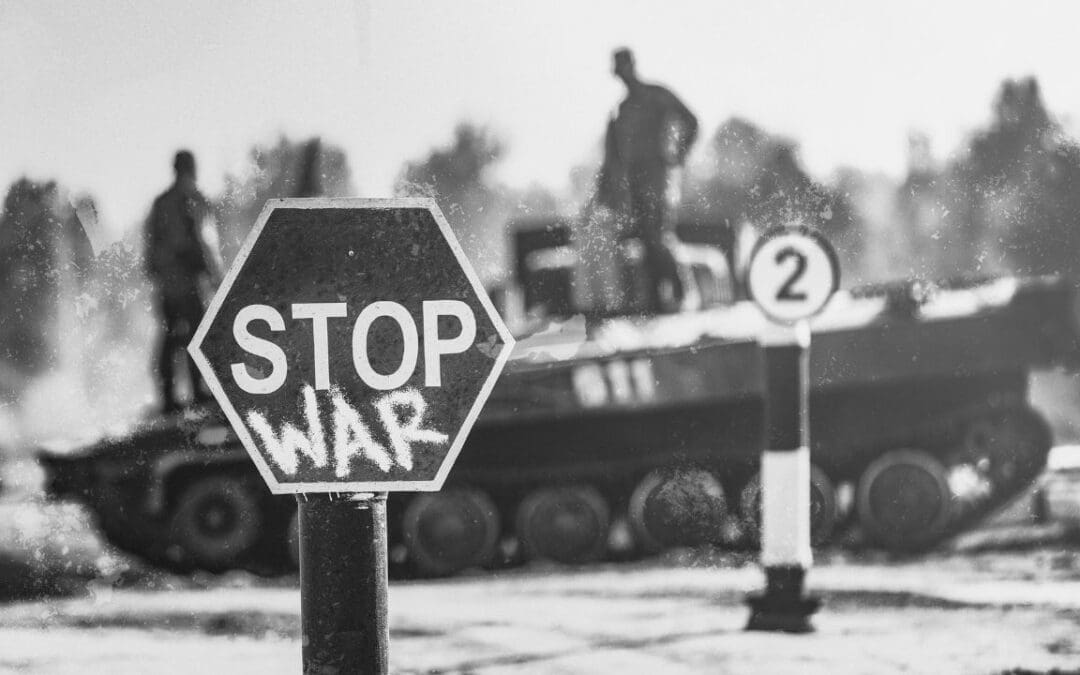
Since the Russian invasion of Ukraine, the major countries of the world have been aligning in two different blocs: NATO (which includes most European nations, the United States, and Canada), Japan, and South Korea, on one side, and Russia, China, North Korea, Iran, and India on the other. Both blocs of countries are supporting their side in the war with weapons, trade, or troops. The negotiations to end the Ukraine-Russia war have so far failed due to Vladimir Putin’s reluctance to engage. NATO has so far only supplied weapons and military support. Still, it has been careful not to confront Russia with troops directly―probably because Russia has a large nuclear arsenal and the United States and NATO are trying to avoid a full-scale war. This strategy, so far, has resulted in a protracted stalemate.
If allowed to spread and escalate, however, the Ukraine-Russia war might trigger World War III.
So, how does the United States deal with this dilemma? One option is to do more of what it has been doing: provide more weapons and sanctions, in the hope that they will bring Putin to the negotiating table in earnest. Another, more daring approach is to look at what causes war and then address the root cause of war.
We live in a world where most nations or groups of nations solve their disputes through military force rather than the force of law. But in some parts of the world, we have replaced war with law and government. For example, the European Union has created peace between its member states, such as France and Germany, countries that had fought bitterly against one another in World Wars I and II. Now these nations settle their disputes by voting in the European Parliament and the European Union courts.
Why has the European Union succeeded in creating peace among its members while the United Nations has failed in these efforts? The answer lies in the fact that the United Nations is based on treaty law, a voluntary system of agreements among nations that lacks an enforcement mechanism that true law uses.
A new, more powerful, and democratic United Nations, however, could create peace among the world’s countries. By convening a UN reform conference under Article 109 of the UN charter, it would be possible to engage the world’s nations in creating a rules-based system of international law that is enforceable rather than voluntary. Building a civilized world based on law and rules, rather than on military power, would create a global framework for peace, and hopefully, reverse the schism of the world into warring camps.
Would such a framework solve the Russia-Ukraine war? Not directly, but it would provide an institution capable of resolving it.
If left on their current trajectory, international relations and military conflict will soon reach a dark place that will be difficult to recover from. The alternative is not radical; indeed, rules and laws provide the basis of civilization, and today they are desperately needed at the international level. These can be provided by a structure of limited world government, similar to that of the European Union. Individual nations would remain free to develop their own laws dealing with their internal affairs, but, in international affairs, they would abide by the laws between countries. In this fashion, a small piece of sovereignty would be exchanged for a peaceful world.
The world’s nations can begin this process by invoking Article 109 of the UN Charter to call for a global conference to craft a new, more effective United Nations. For such a mission to succeed, many details must be worked out, but the alternative of more war and destruction is unacceptable.
by Lawrence Wittner | Aug 6, 2025 | Peace & Disarmament
Ever since the atomic bombings of Japanese cities in August 1945, the world has been living on borrowed time.
The indications, then and since, that the development of nuclear weapons did not bode well for human survival, were clear enough. The two small atomic bombs dropped on Hiroshima and Nagasaki killed between 110,000 and 210,000 people and wounded many others, almost all of them civilians. In subsequent years, hundreds of thousands more people around the world lost their lives thanks to the radioactive fallout from nuclear weapons testing, while substantial numbers also died from the mining of uranium for the building of nuclear weapons.
Most startlingly, the construction of nuclear weapons armadas against the backdrop of thousands of years of international conflict portended human extinction. Amid the escalating nuclear terror, Einstein declared: “General annihilation beckons.”
Despite the enormity of the nuclear danger, major governments, in the decades after 1945, were too committed to traditional thinking about international relations to resist the temptation to build nuclear weapons to safeguard what they considered their national security. Whatever the dangers, they concluded, military power still counted in an anarchic world. Consequently, they plunged into a nuclear arms race and, on occasion, threatened one another with nuclear war. At times, they came perilously close to it―not only during the 1963 Cuban missile crisis, but during the October 1973 Arab-Israeli war and on numerous other occasions.
By contrast, much of the public found nuclear weapons and the prospect of nuclear war very unappealing. Appalled by the nuclear menace, they rallied behind organizations like the National Committee for a Sane Nuclear Policy in the United States, the Campaign for Nuclear Disarmament in Britain, and comparable groups elsewhere that pressed for nuclear arms control and disarmament measures. This popular uprising secured its first clear triumph when, in the fall of 1958, the governments of the United States, the Soviet Union, and Britain agreed to halt nuclear weapons testing as they negotiated a test ban treaty. As the movement crested, it played an important role in securing the Partial Test Ban Treaty of 1963 and a cascade of nuclear arms control measures that followed.
Even when U.S. and Soviet officials revived the nuclear arms race in the late 1970s and early 1980s, a massive public uprising halted and reversed the situation, leading to the advent of major nuclear disarmament measures. As a result, the number of nuclear weapons in the world’s arsenals plummeted from about 70,000 to about 12,240 between 1986 and 2025. At a special meeting of the UN Security Council in 2009, the leaders of the major nuclear powers called for the building of a nuclear weapons-free world.
In recent decades, however, the dwindling of the popular movement and the heightening of international conflict have led to a revival of the nuclear arms race, now well underway. As three nuclear experts from the Federation of American Scientists reported this June: “Every nuclear country is improving its weapons systems, while some are growing their arsenals. Others are doing both.” The new nuclear weaponry currently being tested includes “cruise missiles that can fly for days before hitting their targets; underwater unmanned nuclear torpedoes; fast-flying maneuverable glide vehicles that can evade defenses; and nuclear weapons in space that can attack satellites or targets on Earth without warning.” The financial costs of the nuclear buildup by the nine nuclear powers (the United States, Russia, China, Britain, France, Israel, India, Pakistan, and North Korea) will be immense. The U.S. government will reportedly spend over $1.7 trillion on its nuclear “modernization.”
To facilitate these nuclear war preparations, the major nuclear powers have withdrawn from key nuclear arms control and disarmament treaties. The New START Treaty, the last of the major U.S.-Russian nuclear agreements, terminates in February 2026.
Furthermore, over the past decade, the governments of North Korea, the United States, and Russia have issued public threats of nuclear war. In line with its threats, the Russian government announced in late 2024 that it had lowered its threshold for using nuclear weapons.
In response to these developments, the Doomsday Clock of the Bulletin of the Atomic Scientists has been set at 89 seconds to midnight, the most dangerous level in its 79-year history.
As the record of the years since 1945 indicates, the catastrophe of nuclear war can be averted. To accomplish this, however, a revival of public pressure for nuclear disarmament is essential, for otherwise governments easily slip into the traditional trap of enhancing military “strength” to cope with a conflict-ridden world―a practice that, in the nuclear age, is a recipe for disaster.
This public pressure could begin, as the Nuclear Freeze movement of the 1980s did, with a call to halt the nuclear arms race, and could continue with the demand for specific nuclear arms control and disarmament measures.
But, simultaneously, the movement needs to champion the strengthening of global institutions―institutions that can provide greater international security than presently exists. The existence of these strengthened institutions―for example, a stronger United Nations―would help resolve the violent conflicts among nations that spawn arms races and would undermine lingering public and official beliefs that nuclear weapons are essential to safeguard national security.
Once the world is back on track toward nuclear disarmament, the movement could focus on its campaign for the signing and ratification of the Treaty on the Prohibition of Nuclear Weapons. This treaty, providing the framework for a nuclear weapons-free world, was adopted in 2017 by most of the world’s nations and went into force in 2021. Thus far, it has been signed by 94 nations and ratified by 73 of them.
Given recent international circumstances, none of the nuclear powers has signed it. But with widespread popular pressure and enhanced international security, they could ultimately be brought on board.
They certainly should be, for human survival depends upon ending the nuclear terror.
by Lawrence Wittner | May 22, 2025 | Peace & Disarmament
Although the statement that “power grows out of the barrel of a gun” was made by Chinese communist leader Mao Zedong, it’s an idea that, in one form or another, has motivated a great many people, from the members of teenage street gangs to the statesmen of major nations.
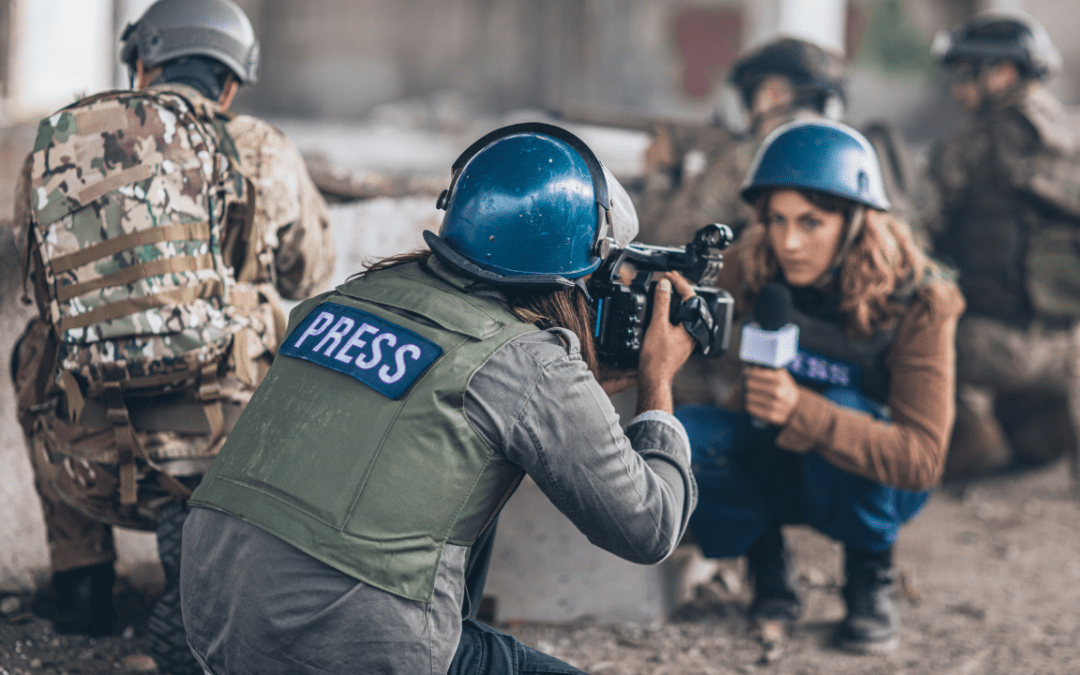
The rising spiral of world military spending provides a striking example of how highly national governments value armed forces. In 2024, the nations of the world spent a record $2.72 trillion on expanding their vast military strength, an increase of 9.4 percent from the previous year. It was the tenth year of consecutive spending increases and the steepest annual rise in military expenditures since the end of the Cold War.
This enormous investment in military might is hardly a new phenomenon. Over the broad sweep of human history, nations have armed themselves―often at great cost―in preparation for war. And an endless stream of wars has followed, resulting in the deaths of perhaps a billion people, most of them civilians. During the 20th century alone, war’s human death toll numbered 231 million.
Even larger numbers of people have been injured in these wars, including many who have been crippled, blinded, hideously burned, or driven mad. In fact, the number of people who have been wounded in war is at least twice the number killed and has sometimes soared to 13 times that number.
War has produced other calamities, as well. The Russian military invasion of Ukraine, for example, has led to the displacement of a third of that nation’s population. In addition, war has caused immense material damage. Entire cities and, sometimes, nations have been reduced to rubble, while even victorious countries sometimes found themselves bankrupted by war’s immense financial costs. Often, wars have brought long-lasting environmental damage, leading to birth defects and other severe health consequences, as the people of Hiroshima, Nagasaki, Vietnam, and the Middle East can attest.
Even when national military forces were not engaged in waging foreign wars, they often produced very undesirable results. The annals of history are filled with incidents of military officers who have used their armies to stage coups and establish brutal dictatorships in their own countries. Furthermore, the possession of military might has often emboldened national leaders to intimidate weaker nations or to embark upon imperial conquest. It’s no accident that nations with the most powerful military forces (“the great powers”) are particularly prone to war-making.
Moreover, prioritizing the military has deprived other sectors of society of substantial resources. Money that could have gone into programs for education, healthcare, food stamps, and other social programs has been channeled instead into unprecedented levels of spending to enhance military might.
It’s a sorry record for what passes as world civilization―one that will surely grow far worse, or perhaps terminate human existence, with the onset of a nuclear war.
Of course, advocates of military power argue that, in a dangerous world, there is a necessity for deterring a military attack upon their nations. And that is surely a valid concern.
But does military might really meet the need for national security? In addition to the problems spawned by massive military forces, it’s not clear that these forces are doing a good job of deterring foreign attack. After all, every year government officials say that their countries are facing greater danger than ever before. And they are right about this. The world is becoming a more dangerous place. A major reason is that the military might sought by one nation for its national security is regarded by other nations as endangering their national security. The result is an arms race and, frequently, war.
Fortunately, though, there are alternatives to the endless process of military buildups and wars.
The most promising among them is the establishment of international security. This could be accomplished through the development of international treaties and the strengthening of international institutions.
Treaties, of course, can establish rules for international behavior by nations while, at the same time, resolving key problems among them (for example, the location of national boundaries) and setting policies that are of benefit to all (for example, reducing greenhouse gases in the atmosphere). Through arms control and disarmament agreements they can also address military dangers. For example, in place of the arms race, they could sponsor a peace race, in which each nation would reduce its military spending by 10 per cent per year. Or nations could sign and ratify (as many have already done) the Treaty on the Prohibition of Nuclear Weapons, which would end the menace of nuclear annihilation.
International institutions can also play a significant role in reducing international conflict and, thus, the resort to military action. The United Nations, established in 1945, is tasked with maintaining international peace and security, while the International Court of Justice was established to settle legal disputes among nations and the International Criminal Court to investigate and, where justified, try individuals for genocide, war crimes, crimes against humanity, and the crime of aggression.
Unfortunately, these international organizations are not fully able to accomplish their important tasks―largely because many nations prefer to rely upon their own military might and because some nations (particularly the United States, Russia, and Israel) are enraged that these organizations have criticized their conduct in world affairs. Even so, international organizations have enormous potential and, if strengthened, could play a vital role in creating a less violent world.
Rather than continuing to pour the wealth of nations into the failing system of national military power, how about bolstering these global instruments for attaining international security and peace?
by Lawrence Wittner | Apr 7, 2025 | Peace & Disarmament
Amid growing international chaos, it should come as no surprise that nuclear dangers are increasing.
The latest indication is a rising interest among U.S. allies in enhancing their nuclear weapons capability. For many decades, remarkably few of them had been willing to build nuclear weapons―a result of popular opposition to nuclear weapons and nuclear war, progress on nuclear arms control and disarmament, and a belief that they remained secure under the U.S. nuclear umbrella. But, as revealed by a recent article in London’s Financial Times, Donald Trump’s public scorn for NATO allies and embrace of Vladimir Putin have raised fears of U.S. unreliability, thereby tipping the balance toward developing an expanded nuclear weapons capability.
This growing interest in nuclear weapons is especially noticeable in Europe, where Trump’s berating of NATO and Putin’s threats of nuclear attack are particularly unsettling. Although Friedrich Merz, Germany’s chancellor-in-waiting, dismissed any notion of Germany developing its own nuclear weapons, he has stated that it must explore “whether nuclear sharing, or at least nuclear security from the U.K. and France, could also apply to us.” Furthermore, several German think tank experts have floated the idea of building the infrastructure that, if necessary, could produce German nuclear weapons.
In Poland, too, a nuclear weapons capacity has become increasingly appealing. Prime Minister Donald Tusk has recently raised the idea of pursuing nuclear weapons or, at least, seeking an agreement for sharing France’s nuclear arsenal. A board director of PGZ, Poland’s state-controlled military manufacturer, remarked: “There are suddenly a lot of words and different opinions about what to do, but they all show Poland believes in stronger nuclear deterrence against Russia.”
In South Korea, North Korea’s nuclear weapons program and its growing military relationship with Russia, combined with Trump’s unreliability, have contributed to growing support for the nation’s acquiring its own nuclear weapons. Although neither of the two major parties has announced this policy, Cho Tae-yul, the foreign minister, informed parliament that acquiring nuclear weapons was “not off the table,” for “we must prepare for all scenarios.”
Similarly, the idea of developing nuclear weapons is drawing increasing scrutiny in Japan. Sharing South Korea’s fear of a North Korean attack and Trump’s unreliability, Japanese leaders also worry about China’s growing assertiveness. If a North Korean or Chinese nuclear strike occurred, Japan would have only five minutes of warning time. Moreover, thanks to its nuclear power plants, Japan already holds enough plutonium to build several thousand nuclear bombs.
In addition, of course, a nuclear arms race is well underway among the nuclear weapons-producing nations: the United States, Russia, China, Britain, France, Israel, India, Pakistan, and North Korea. All of them are either expanding their nuclear arsenals, building a new generation of nuclear weapons, or both. Most of the nuclear arms control and disarmament agreements of the past have been abandoned, while the remaining agreements are on life support. The New Start Treaty between Russia and the United States, the two nations possessing almost 90% of the world’s 12,331 nuclear weapons, is scheduled to expire in February 2026, and there are no negotiations underway to replace it. Meanwhile, in recent years, the top officials of three nuclear-armed nations―Vladimir Putin, Donald Trump, and Kim Jong Un―have issued numerous statements threatening nuclear war.
Against this backdrop, this January the editors of the Bulletin of the Atomic Scientists reset their “Doomsday Clock,” established in 1946, at 89 seconds to midnight, the closest ever to human extinction. The following month, U.N. Secretary-General António Guterres, deploring the unraveling of international security arrangements, warned that nuclear weapons provided a “one-way road to annihilation.”
These escalating nuclear dangers suggest that, if nuclear weapons, whether possessed by an alliance or by individual nations, are unable to safeguard humanity from total destruction, then a different approach to survival in the nuclear age is needed: one grounded in international security.
With this in mind, the official representatives of most of the world’s nations, gathering in 2017 under U.N. auspices, met and crafted the Treaty on the Prohibition of Nuclear Weapons. Endorsed by a vote of 122 to 1 (with one abstention), it banned the use, threatened use, development, manufacture, acquisition, possession, stockpiling, stationing, and installation of nuclear weapons. The treaty entered into force in January 2021, and has been signed, thus far, by 94 nations. Opinion polls and declarations by hundreds of cities in a variety of nations indicate that it has substantial public support.
Although the Treaty on the Prohibition of Nuclear Weapons provides a useful framework for creating a nuclear weapons-free world, it has not, as yet, rolled back the nuclear menace. The reason is that its provisions are only binding on the nations that have signed it. And the nine nuclear weapons-producing nations, joined by the nations under their nuclear umbrella, refuse to do so―at least so far. Convinced that, in a world of independent and often hostile nations, their security rests upon possession of nuclear weapons, they remain unwilling to abolish them.
Even so, their resistance to the treaty might be overcome by a further step toward international security: the strengthening of international organizations. At present, the United Nations lacks the power to effectively enforce its primary mission of maintaining international peace and security. But that power could be expanded by providing the global organization with an independent source of income, restricting the role of the veto in the Security Council, and expanding the role of the General Assembly. International security would also be enhanced by increasing the jurisdiction of the International Court of Justice and of the International Criminal Court.
Both Citizens for Global Solutions (CGS) and the World Federalist Movement-Institute for Global Policy have teamed up with many other concerned civil society organizations to champion “Common Security” as an alternative to nuclear deterrence. In a joint statement to the 2023 Preparatory Committee for the 11th Non-Proliferation Treaty (NPT) Review Conference, they argued that the primary reason a significant number of nations continued to rely on nuclear weapons was “because nuclear deterrence is perceived by them as providing security.” But adopting a Common Security approach―one that took into account not only one’s own security needs, but the security needs of other nations, including adversaries―could provide a sound basis for abandoning nuclear weapons, they maintained. During the meeting in late April and early May of the 2025 Preparatory Committee for the NPT Review Conference, CGS will be holding a side event on “Common Security and Nuclear Deterrence in a Turbulent World,” as well as another on “The International Court of Justice and the Climate-Nuclear Nexus.”
Strengthening international security might seem impractical at this time of overheated nationalist claims and the global chaos they produce. Even so, times of crisis sometimes produce historic breakthroughs, and the prospect of nuclear annihilation might have that effect.
by Lawrence Wittner | Mar 26, 2025 | Global Justice, Peace & Disarmament
Although the nations of the world have pledged to respect a system of international law and global responsibility, the recent behavior of several countries provides a sharp challenge to this arrangement.
For over three years, the Russian government has conducted a brutal military invasion, occupation, and annexation of Ukraine―the largest and most devastating military operation in Europe since World War II. Defying Russia’s international obligations―including a peace treaty it signed with Ukraine, a ruling by the International Court of Justice demanding Russia halt its military operations in Ukraine, the UN Charter, and repeated UN General Assembly condemnations of Russian behavior by an overwhelming majority of the world’s nations―the Putin regime has stubbornly persisted with Russia’s imperialist aggression against its smaller, weaker neighbor.
The consequences have been horrific. Russian and Ukrainian military forces are estimated to have suffered a total of roughly a million deaths or injuries. Moreover, the war has taken a severe toll on Ukraine’s civilian population, with some 42,000 civilians killed or injured and over 10 million more fleeing the country or internally displaced. In July 2024, it was estimated that, thanks to the Russian military’s indiscriminate bombing and shelling of civilian infrastructure, Russia had damaged more than 1,600 Ukrainian medical centers and destroyed over 200 hospitals. In the first year-and-a-half of the war, Human Rights Watch reported, the Russian invasion “devastated schools and kindergartens throughout the country,” with “over 3,790 educational facilities . . . damaged or destroyed.” A more recent study by this leading human rights organization noted that, in areas of Ukraine that Russian forces occupy, they have “committed war crimes and crimes against humanity. These include torture and killings of civilians, sexual violence, enforced disappearances, and forcible transfers and unlawful deportations of Ukrainians” to Russia.
For its part, the Israeli government has long been at odds with the United Nations over Israel’s mistreatment of Palestinians and, particularly, its refusal to end its military occupation of the Palestinian territory it conquered during the 1967 Mideast war. Committed to building a Greater Israel, rightwing Israeli government officials have seized Palestinian land in the occupied West Bank and flooded it with about 700,000 heavily-subsidized Israeli settlers. In turn, the UN General Assembly, by an overwhelming vote, has called upon Israel to comply with international law and withdraw its military forces, cease new settlement activity, and evacuate its settlers from the West Bank.
The simmering Israeli-Palestinian conflict erupted once again in October 2023, when, in response to an Hamas terrorist attack, Benyamin Netanyahu, Israel’s prime minister, launched a full-scale military invasion of Gaza with a colossal humanitarian impact. An estimated 46,788 Palestinians have been killed, most of them civilians, and 110,453 have been injured. According to the United Nations, 1.9 million people (90 percent of the population) have been internally displaced thanks to the Israeli bombing campaign, 69 percent of all structures have been destroyed (including 50 percent of hospitals, with the rest just partially functional), and about 1,060 medical workers have been killed. Thanks to the Israeli government’s blockade of food and water supplies, an estimated 91 percent of the population have faced severe levels of hunger.
Although only recently restored to the White House, Donald Trump has already embarked on an ambitious program of scrapping U.S. international commitments and proceeding, instead, with U.S. empire-building. Ordering U.S. sanctions on the International Criminal Court, as well as a U.S. pullout from two key UN agencies (the World Health Organization and the Human Rights Council), he has also chosen a U.S. ambassador to the UN, Representative Elise Stefanik, who has promised to bring the world organization into line with Trump’s “America First” priorities. Moreover, the American president has abruptly terminated nearly all USAID programs, putting millions of people around the world at risk of starvation, disease, and death. In sharp contrast to the severe cuts in domestic social spending that Trump is implementing, he has called for increased military spending, potentially raising the annual U.S. military expenditure from $842 billion to over $1 trillion. This enhanced military power should prove useful, for since returning to office he has championed seizing the Panama Canal and Greenland, taking over Gaza, and annexing Canada as the 51st American state.
In all three cases, the reckless pursuit of narrowly-defined national interests has taken precedence over the shared interests of the world community.
Nor is this an accident, for Putin, Netanyahu, and Trump are caught up in overheated nationalist dreams quite out of touch with global reality. Today, as human survival is threatened by climate catastrophe, a renewed nuclear arms race, disease pandemics, and widespread poverty―crises that cry out for global solutions―these government officials and their rightwing counterparts in other lands are driven by nationalist fantasies. Putin is enamored with Russian imperial glory, Netanyahu is obsessed with visions of Greater Israel, and Trump is intoxicated with America First. And, in their respective fantasies, each of them takes on heroic stature as the Supreme Leader.
Unfortunately, we have seen this phenomenon, along with its catastrophic consequences, many times before.
Fortunately, however, multitudes of people realize that things need not be this way. Indeed, Putin, Netanyahu, and Trump are out of line with the views of many national leaders and social movements that have recognized, and continue to recognize, that the reckless pursuit of narrow national interests is a recipe for disaster. To avoid this disaster, our far-sighted predecessors created the United Nations, the International Court of Justice, the International Criminal Court, and other international institutions. That is also why these institutions must be strengthened, for without the enforcement of world law, national irresponsibility will thrive.
Indeed, if humanity is to survive in coming decades, it is imperative that reckless competition and conflict among nations give way to cooperation and collective action. War must be replaced by peace, privilege by equality, and the rule of force with the force of law.
Above all, no nation can go it alone, for we are all part of one world and must act accordingly.
by Jerry Tetalman | Mar 7, 2025 | Peace & Disarmament
The true challenge of our time is to bring rules, law, and democracy to the chaos of international relations. If we want to overcome the existential threats of nuclear weapons and abolish war, we will need a world governing body that is more democratic and empowered to act than the current United Nations.
The organized murder of one group of humans by another group of humans is called war. We live in a world where the vilest of crimes, which are punished with severe consequences within most societies, are somehow acceptable when committed as part of war. War has been an integral part of human history and, in the nuclear age, is the most imminent threat to our continued existence. As modern, civilized people, most of us find war abhorrent, but few of us call for the abolition of war or understand why war still exists in the contemporary world.
War exists because human society has been organized around the concept of the in-group and the out-group. The in-group could be a tribe, city, nation, or group of nations. The out-group may be tolerated, but in many instances, it is considered the enemy. The question of our time is, can we create a new story where humanity is the in-group? Can we civilize a lawless world by creating a basic system of enforceable global law?
Wars between countries continue because countries exist in relative anarchy at the international level. We have international law based on treaties that help maintain order, but this system is not an actual law, as it is voluntary. Valid law has consequences and enforcement mechanisms if one breaks the law. At the international level, we still live and die by the law of the jungle, which is “might makes right.”
The countries of the European Union have found peace after thousands of years of warfare and two world wars by trading away a piece of sovereignty to form a collective. They now resolve disputes in the European Union’s parliament and courts. The world’s countries can find peace by building an international union of nations and creating a similar system of courts and a global parliament.
The United Nations has a membership of almost all the countries on earth, and this in itself is an impressive accomplishment in that it creates an inclusive forum for discussion of international problems. Unfortunately, the UN lacks democratic standards and is flawed by its outdated design, and thus ineffective in addressing the major global security issues of our day. International security issues are dealt with in the UN by the Security Council and, in particular, the five permanent members who were the victors of World War II: the United States, the United Kingdom, France, the Russian Federation, and the People’s Republic of China. They each have a veto, allowing a single country to block the action called for by the majority. The General Assembly can pass resolutions, but they constitute no more than recommendations. The United Nations also suffers from a democratic deficit, as each member country has one vote regardless of population.
We are at a critical moment in human history. International laws exist, but they are often not enforceable. Force and military might still rule the world in terms of global affairs.
Fortunately, a US organization, Citizens for Global Solutions – like the World Federalist Movement, which brings together organizations with a similar orientation around the globe — works to create a world ruled by law rather than force to build the legal institutions necessary for peace and to abolish war. Citizens for Global Solutions is working to enhance the jurisdiction and use of the International Court of Justice to resolve disputes without violence in a campaign called Law, not War.
The challenge of our time is to abolish war and create the global institutions of law necessary to resolve disputes through legal, rather than lethal means.