by Sovaida Maani Ewing | Feb 20, 2026 | Peace & Disarmament, United Nations
In 2011, the New START Treaty, which had been signed by the United States and Russia the previous year, came into effect. The Treaty aimed to restrict the number of nuclear warheads the two nations could deploy. It also provided for a verification system to ensure that both sides were complying with the Treaty rules by providing for on-site inspections of their respective nuclear sites. This month, the Treaty expired.
With the end of the New START Treaty, the nuclear arms race is likely to heat up again. This time, it will be more complicated and dangerous than it was during the Cold War, given that another big power China—has already vigorously entered the race. She has been determinedly and steadily growing her nuclear arsenal, particularly since 2012. Consequently, one of America’s great fears is that, instead of having to defend herself against Russia alone, she might have to face both China and Russia, especially if they choose to join forces.
The problem is that if, in anticipation of such danger, America starts to deploy more nuclear weapons, Russia will follow suit and China will likely step up her efforts even further, setting off a domino effect: China’s neighbor India, with which it has long had slow-burning border conflicts, is also likely to become nervous about a steady increase in nuclear deployments and so follow suit. Such a move would most probably trigger Pakistan to react in kind, to protect herself against her nuclear neighbor, India. And so the dominoes fall.
The problem will be compounded: those countries in Europe and Asia which have been relying on the American nuclear umbrella to shield them against aggression may well conclude that in an increasingly nuclear insecure world, the only effective way to bolster their own protection is to seek their own nuclear capabilities.
As smaller nations seek to acquire nuclear arms, their larger and more powerful neighbors may feel increasingly threatened and evince more aggressive tendencies to quash such nascent nuclear ambitions, leading to a world that is increasingly unstable and insecure.
We must act swiftly and decisively to arrest this dangerous descent into nuclear chaos, which can only result in a nuclear war that, however limited in geographic scope or duration, will have a devastating impact on the entire planet. The most effective path is for nations to create a world parliament that is democratically elected by the people of each country and therefore truly represents the interests of the collective whole. This parliament should be granted the authority to pass international laws on the basis of some sort of majority vote, that are binding on all the nations of the world. No nation can be allowed to opt out for any reason. The law must apply equally to all nations, great or small, powerful or weak. A suitable enforcement mechanism must also be devised and agreed upon, so that nations are suitably deterred from any temptation to flout the Parliament’s international law with impunity.
The time has come for humanity to take this next, inevitable step in its collective evolution. It is an idea whose time has come!
by Lawrence Wittner | Feb 17, 2026 | Peace & Disarmament
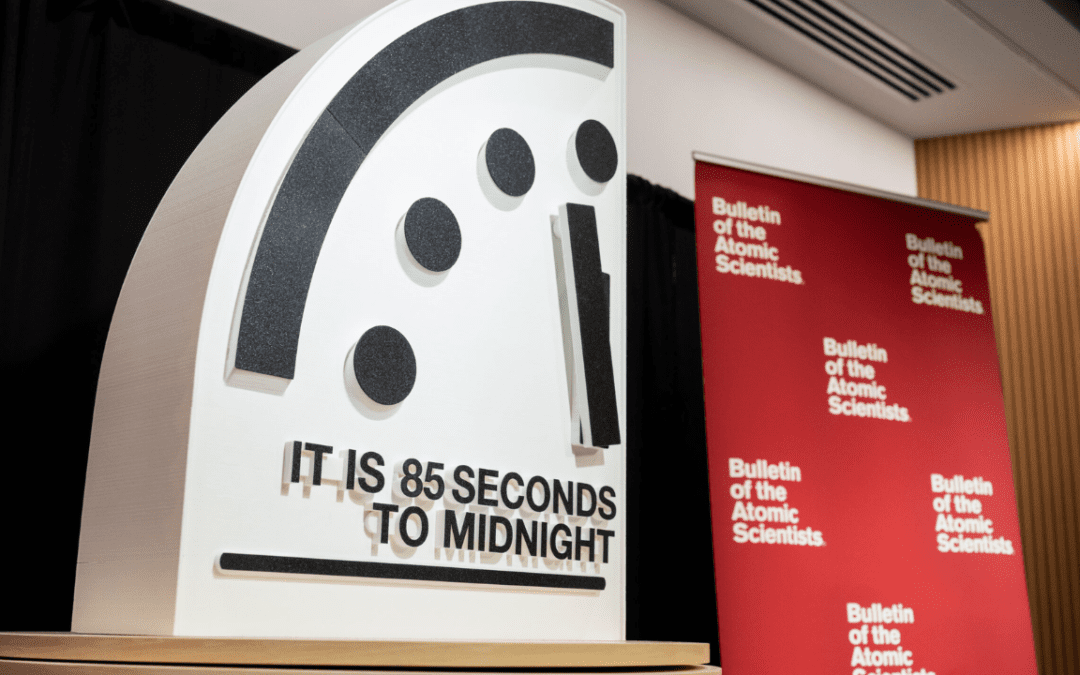
On January 27, 2026, the editors of the Bulletin of the Atomic Scientists moved the hands of their famous “Doomsday Clock” to 85 seconds to midnight―the closest setting, since the appearance of the clock in 1946, to nuclear annihilation.
This grim appraisal has impressive evidence to support it.
The New Start Treaty, the last of the major nuclear arms control and disarmament treaties between the United States and Russia, expired on February 5, without any serious attempt to replace it. New Start’s demise enables both nations, which possess about 86 percent of the world’s 12,321 nuclear weapons, to move beyond the strict limits set by the treaty on the number of their strategic nuclear weapons (the most powerful, most devastating kind), thus enhancing the ability of their governments to reduce the world to a charred wasteland.
Actually, a nuclear arms race has been gathering steam for years, as nearly all the governments of the nine nuclear powers (which, in addition to Russia and the United States, include China, Britain, France, Israel, India, Pakistan, and North Korea) scramble to upgrade existing weapons systems and add newer versions. China’s nuclear arsenal is the fastest-growing among them. “The era of reductions in the number of nuclear weapons in the world . . . is coming to an end,” observed Hans Kristensen, a highly regarded expert on nuclear armament and disarmament. “Instead, we see a clear trend of growing nuclear arsenals, sharpened nuclear rhetoric, and the abandonment of arms control agreements.”
The U.S. government is currently immersed in a $1.7 trillion nuclear “modernization” program that President Donald Trump has championed and repeatedly lauded. As early as February 2018, he boasted that his administration was “creating a brand-new nuclear force. We’re gonna be so far ahead of everybody else in nuclear like you’ve never seen before.” In late October 2025, to facilitate the U.S. nuclear buildup, Trump ordered the Pentagon to prepare to resume U.S. nuclear weapons testing, which had ceased 33 years before. In line with the Comprehensive Test Ban Treaty of 1996, signed by 187 nations (including the United States), no nuclear power (other than the rogue nation of North Korea) has conducted explosive nuclear testing in over 25 years.
Another sign of the escalating nuclear danger is the revival of implicit and explicit threats to initiate nuclear war. Such threats, which declined with the end of the Cold War, have resurfaced in recent years. When angered by the policies of other nations, Donald Trump, Kim Jong Un, and Vladimir Putin have repeatedly and publicly threatened them with nuclear destruction. According to the U.S. government’s Voice of America, the Russian government, in the context of its invasion of Ukraine, issued 135 nuclear threats between February 2022 and December 17, 2024. Although some national security experts have discounted most Russian threats as manipulative rather than serious, in November 2022, Chinese leader Xi Jinping thought the matter serious enough to publicly chide his professed ally, Putin, for threatening to resort to nuclear arms in Ukraine.
Underlying this drift toward nuclear war are the growing conflicts among nations―conflicts that have significantly weakened international cooperation and the United Nations. As the editors of the Bulletin of the Atomic Scientists put it, rather than heed past warnings of catastrophe, “Russia, China, the United States, and other major countries have instead become increasingly aggressive, adversarial, and nationalistic.” Consequently, “hard-won global understandings are collapsing, accelerating a winner-takes-all great power competition and undermining the international cooperation critical to reducing the risks of nuclear war.”
But this is not necessarily the end of the story―or of the world.
After all, much the same situation existed in the second half of the twentieth century, when conflicts among the great powers fueled a dangerous nuclear arms race that, at numerous junctures, threatened to spiral into full-scale nuclear war. And, in response, a massive grassroots campaign emerged to save the world from nuclear annihilation. Although that campaign did not succeed in banning the bomb, it did manage to curb the nuclear arms race, reduce the number of nuclear weapons by more than 80 percent, and prevent a much-feared nuclear catastrophe.
Furthermore, in the early twenty-first century, there have been new and important developments. The worldwide remnants of the nuclear disarmament movement regrouped as the International Campaign to Abolish Nuclear Weapons and, joined by farsighted officials in smaller, non-nuclear nations, drew upon the United Nations to sponsor a series of antinuclear conferences. In 2017, by a vote of 122 to 1 (with 1 abstention), delegates at one of these UN conferences adopted the Treaty on the Prohibition of Nuclear Weapons (TPNW). Although all nine nuclear powers strongly opposed the TPNW―which banned the use, threatened use, development, manufacture, acquisition, possession, stockpiling, stationing, and installation of nuclear weapons―the treaty secured sufficient national backing to enter into force in January 2021. Thus far, it has been signed by 99 countries―a majority of the world’s nations.
In addition to the efficacy of public pressure for nuclear disarmament and the existence of a treaty banning nuclear weapons, at least one other factor points the way toward a non-nuclear future: the self-defeating nature—indeed, the insanity―of nuclear war. With even a single nuclear bomb capable of killing millions of people and leaving the desperate survivors crawling painfully through a burnt-out, radioactive hell, even a nuclear “victory” is a defeat. In the aftermath of a nuclear war, as Soviet leader Nikita Khrushchev is believed to have said, “the survivors would envy the dead.” It’s a lesson that most people around the world have learned, although not perhaps the lunatics.
Lunatics, of course, exist, and some of them, unfortunately, govern modern nations and ignore international law.
Even so, although we are on the road to nuclear war, there is still time to take a deep breath, think about where we are going, and turn around.
by Lawrence Wittner | Jan 25, 2026 | Global Justice, Peace & Disarmament
There is a widening gap today between global possibilities and global realities.
The global realities are quite grim.
Despite some advances in countering worldwide poverty, it remains at a startlingly high level. According to the World Bank, half of humanity lives on less than $6.85 per day per person, with over 700 million people living on less than $2.15 per day.
Moreover, economic inequality is vast and increasing. A recently-released World Inequality Report, produced in conjunction with the United Nations, found that, in almost every region of the world, the richest 1 percent is wealthier than the bottom 90 percent combined. Indeed, the richest 0.001 percent of the world’s population controls three times the wealth of the poorest half, and its wealth is growing at a faster rate.
As the charitable organization Oxfam has observed, there is no morally defensible justification for this state of affairs. “Extreme wealth is not accumulated simply as a reward for extreme talent,” it has noted. “The majority of billionaire wealth . . . is unearned, derived from inheritance, crony connections, and monopolistic power.” Moreover, billionaires and giant corporations are fostering greater economic inequality and misery by opposing labor laws and policies that benefit workers, undermining progressive taxation, employing modern colonial systems of wealth extraction in the Global South, and using monopoly power to control markets and set the rules and terms of exchange.
Furthermore, when it comes to respecting international law, the rulers of some powerful nations are behaving increasingly like gangsters.
Donald Trump is particularly flagrant in this regard. During his second term as President of the United States, he has already bombed seven nations (Iran, Iraq, Nigeria, Somalia, Syria, Venezuela, and Yemen), threatened to invade or seize five others (Canada, Colombia, Cuba, Greenland, and Mexico ), blown up 33 foreign boats and their sailors, kidnapped the president of a sovereign nation (Venezuela), and announced plans to “run” Venezuela and take control of its vast oil resources. “I don’t need international law,” he explained.
Trump’s “America First” policy―redolent of traditional great power imperialism―is complemented by other measures showing contempt for key international institutions. Trump quickly withdrew the U.S. government from leading UN agencies like the World Health Organization and the UN Human Rights Council, refused to participate in the UN Relief and Works Agency, and announced plans to withdraw from UNESCO. On January 7, 2026, the White House followed up by announcing U.S. withdrawal from 66 international and UN entities. It has also withheld at least two years of mandated dues to the UN’s regular budget and has placed sanctions on the judges and chief prosecutor of the International Criminal Court.
Clearly, Trump has other priorities. He dramatically increased U.S. military spending soon after he returned to power and, in January 2026, proposed raising military spending by another $600 billion to a record $1.5 trillion, thereby creating his “Dream Military.” Apparently, this dream does not include ending the menace of nuclear annihilation, for―asked about renewing the last nuclear arms control agreement remaining with Russia, scheduled to expire next month―Trump responded: “If it expires, it expires.”
Unfortunately, leaders of other nations are also working full-time to destroy what remains of international law and humanity’s hopes for the future.
Vladimir Putin has stopped at nothing to revive what he considers Russia’s imperial glory by waging nearly four years of war to conquer and annex his far smaller, weaker neighbor, Ukraine. Ignoring strong condemnations by the UN General Assembly, the International Court of Justice, and the International Criminal Court, Putin has pressed on with an imperialist war that has reduced cities to rubble, damaged or destroyed thousands of schools and health care facilities, and sent 6 million Ukrainians fleeing abroad. The wounded or dead number hundreds of thousands of Ukrainians and as many as 1.2 million Russian soldiers.
Nor is this the extent of Putin’s military interventionism. Until quite recently, he conducted a brutal bombing campaign for nearly a decade in Syria to prop up the Assad dictatorship against its domestic foes. He also employed the Wagner Group, a shadowy private mercenary army headquartered in Russia, to conduct military operations elsewhere in the Middle East and in numerous African nations.
Like Trump, Putin has scrapped nuclear arms control agreements and occasionally threatened nuclear war.
Other national rulers, enamored with military power and widening their realms, have also turned their countries into rogue nations. Kim Jong Un, despite offers from the South Korean and U.S. governments to improve diplomatic relations, has chosen instead to dramatically expand North Korea’s nuclear arsenal, threaten nuclear war, and dispatch more than 14,000 combat troops to help Russia subdue Ukraine. Benjamin Netanyahu, while constantly claiming Israel’s victimization, has in fact superintended a genocidal slaughter of Palestinian civilians, staged military attacks on numerous nations, and―in defiance of a ruling by the International Court of Justice―refused to end Israel’s decades-long occupation of Palestinian territory.
And yet, the possibilities for reversing this sad state of affairs are enormous, for―thanks to a variety of factors, ranging from increases in knowledge to advances in economic productivity―it’s finally feasible for all of humanity to lead decent and fulfilling lives.
No longer is poverty necessary, for the enormous global economy can produce adequate food, goods, and services for all the world’s people.
Human health and longevity can be improved substantially, thanks to breakthroughs in science and medicine.
Education, communications, transportation, and culture have made huge strides toward enriching human existence and could finally be made available to all.
Meanwhile, the rise of the United Nations and of international law holds the promise of moving beyond the violent, bloodstained past and securing peace, human rights, and justice on the international level.
Although it’s tragic that powerful forces seem intent on building an unjust, lawless, and violent planet, let’s not forget that another world remains possible. Indeed, with an organized international effort, it could be a wonderful world.
by Donna Park | Dec 19, 2025 | Peace & Disarmament
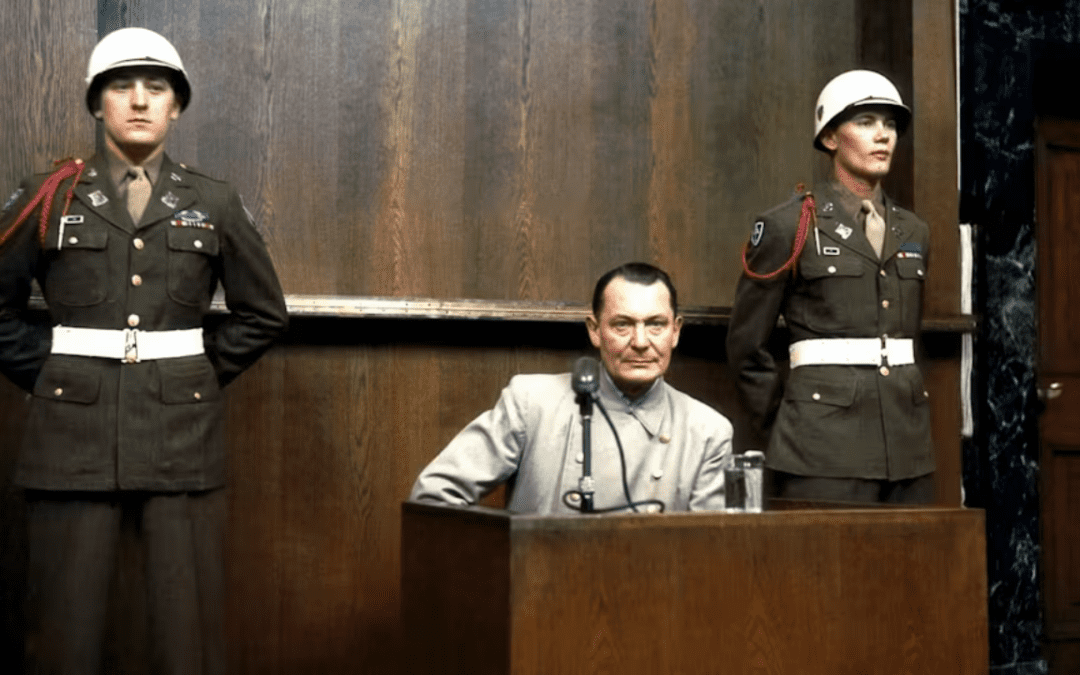
Given my long-term interest in international affairs, I went to see the recently released movie, “Nuremberg,” to revisit the issue of how a court of law can be used to convict those guilty of war crimes. As a result, several parts of the film left me uneasy and looking for a better way to govern our world.
A statement in the film made by Hermann Goering, one of the most powerful leaders of Germany’s Nazi Party from 1933 to 1945, particularly struck me. He told the American psychologist whose job was to get to know him and keep him alive for the trial: “I am a prisoner because you won and we lost, not because you’re morally superior.” Goering suggested that if the Germans won the war, the Americans could have been brought to trial for dropping two nuclear bombs on Japan in August 1945.
Although, of course, Goering was a monster, his suggestion that the war’s victors were also responsible for war crimes has a disturbing element of truth to it. According to the K=1 Project, Center for Nuclear Studies at Columbia University, within the first few months after the bombing between 150,000 and 246,000 people, most of whom were civilians, died in Hiroshima and Nagasaki due to the force and excruciating heat of the explosions as well as deaths caused by acute radiation exposure.
Indeed, the preparations for the Nuremberg war crimes trials were closely interwoven with the atomic bombings. The London Charter that created the International Military Tribunal for the prosecution of Nazi war criminals was signed on August 8, 1945―two days after the atomic bombing of Hiroshima and one day before the atomic bombing of Nagasaki.
It’s also worth pondering what would have happened to the war crimes trials of Nazi leaders if the four major Allied powers―the United States, the United Kingdom, France, and the Soviet Union—had not all agreed to them. Would the trials have occurred at all?
In fact, the world lacked an institutional structure to hold an individual accountable for war crimes until the Rome Statute, an international treaty, was adopted at the Rome Conference on July 17, 1998. Effective beginning July 1, 2002, the Rome Statute created the International Criminal Court (ICC). According to its website, the ICC “investigates and, where warranted, tries individuals charged with the gravest crimes of concern to the international community: genocide, war crimes, crimes against humanity and the crime of aggression. As a court of last resort, it seeks to complement, not replace, national Courts.”
Despite this breakthrough, the ICC is facing serious difficulties. Only 125 nations have ratified the Rome Statute, with the non-signers including China, Russia, Israel, India, Iran, and the United States. Furthermore, the U.S. government, under the presidency of Donald Trump, has recently imposed damaging economic sanctions against several members of the ICC. Meanwhile, Vladimir Putin has refused to surrender to the ICC for investigation of war crimes, while Benjamin Netanyahu has refused to submit to the court’s authority in connection with war crimes and crimes against humanity.
Holding individuals accountable for the gravest crimes should be a high priority of our world. We should not accept a world in which individuals can commit genocide, war crimes, crimes against humanity, and the crime of aggression with impunity. But officials of major powers continue to obstruct the operations of the ICC and to act with impunity.
How can we move forward to creating a world in which international law and its obligations receive proper respect?
We can do so by looking back to San Francisco and the promises made there in 1945 during the creation of the United Nations (UN). As World War II was ending, representatives of 50 countries gathered in that city from April 25 to June 26 to draft and sign a Charter for the UN in the hopes of fostering international security and preventing another world war. There were many compromises made in the initial Charter, the biggest being the veto in the Security Council granted to the 5 permanent members. But this veto was balanced with a promise to revisit the Charter in no more than 10 years.
Accordingly, Article 109, paragraph three of the Charter promised a vote in the UN General Assembly by 1955 on whether to hold a conference for all member states to review the Charter. This decision only requires a majority vote of the 193 members of the General Assembly and any seven members of the 15-member states in the Security Council. There is no possibility of a veto in connection with this vote, so it can pass even if all five permanent members oppose the conference.
Unfortunately, no such vote has ever been taken at the General Assembly. We are now 70 years past the promised date. The multi-dimensional crises facing our world, including our inability to hold individuals accountable for the gravest crimes against humanity, demand such a vote, followed by the strengthening of the UN Charter and the international law it is supposed to enforce. Our world should be governed using the rule of law, not military might.
The recently formed Article 109 Coalition is now working towards a conference to review and strengthen the UN Charter. Concerned Americans should learn more about it and take action to support it. There is a better way to govern our world and to keep humanity safe and secure from military threats and crimes against humanity. Let’s move forward with it!
by Lawrence Wittner | Oct 30, 2025 | Peace & Disarmament
Early this year, legislators in the U.S. House of Representatives and in the U.S. Senate introduced resolutions that call upon the U.S. government to lead a global effort to halt and reverse the nuclear arms race. Co-sponsored by 36 members of the House and 5 members of the Senate, H. Res. 317 and S. Res. 323 urge the U.S. government to pursue nuclear disarmament, renounce the first use of nuclear weapons, end sole presidential authority to launch them, cancel plans for new, enhanced nuclear weapons and delivery systems, maintain the current moratorium on nuclear testing explosions, and provide a just economic transition for impacted communities.
The context for these antinuclear measures is an escalating nuclear arms race that is rapidly spiraling out of control. In recent years, Russia and the United States, which together possess 87 percent of the world’s nuclear weapons, have scrapped nearly all their nuclear arms control agreements. The only exception is the New Start Treaty, which is scheduled to expire in February 2026. Meanwhile, all nine nuclear powers (Russia, United States, Britain, France, China, Israel, India, Pakistan, and North Korea) have committed themselves to dramatically upgrading their nuclear arsenals. The U.S. government, for example, at the enormous cost of $1.7 trillion, is currently engaged in revamping its entire nuclear weapons complex and building an array of new, more devastating nuclear weapons.
This worldwide nuclear weapons buildup has been accompanied by a revival of public threats by the leaders of nuclear-armed nations to initiate nuclear war―threats that have been issued, repeatedly, by Donald Trump, Kim Jong Un, and Vladimir Putin. Not surprisingly, the Doomsday Clock of the Bulletin of the Atomic Scientists currently stands at 89 seconds to midnight, the most dangerous setting in its history.
The House and Senate resolutions seeking to halt and reverse this race toward catastrophe are primarily the product of the Back from the Brink campaign. Founded in 2017 by the leaders of two U.S. national organizations, Physicians for Social Responsibility and the Union of Concerned Scientists, Back from the Brink has emerged as an impressive coalition of organizations, individuals, and public officials working together to create a world free of nuclear weapons.
At this point, the Back from the Brink campaign has secured the endorsement of a significant number of additional national organizations, including peace and disarmament groups like the American Friends Service Committee, the Federation of American Scientists, Pax Christi USA, Peace Action, and Veterans for Peace, religious organizations like the Episcopal Church, the Presbyterian Church, the Unitarian Universalist Association, and the United Church of Christ, environmental groups like 350.org, the Natural Resources Defense Council, and the Sierra Club, political activist groups like the Hip Hop Caucus and Indivisible, and governmental organizations like the United States Conference of Mayors.
In addition, the campaign has attracted the support of hundreds of local peace, academic, civic, environmental, health, policy, religious, and other organizations, as well as endorsements from 78 municipalities and counties, 8 state legislative bodies, 488 municipal and state officials, and 53 members of Congress.
Despite this array of support, Back from the Brink’s immediate prospects are not good. Its antinuclear resolutions, now awaiting action by the Republican-controlled House and Senate, seem unlikely to pass, as not a single Republican legislator has signed on as a co-sponsor of them thus far. Nor is it likely that President Donald Trump, who seems enamored with U.S. military “strength,” will champion halting, much less reversing, the nuclear arms race.
Longer term, however, the prospects are brighter. Unlike the Republican Party of recent decades, the Democratic Party has championed a variety of nuclear arms control and disarmament measures. Thus, if the Democrats do well in the 2026 midterm elections and, thereby, retake control of the House and the Senate, there is a reasonable chance that they will pass Back from the Brink’s antinuclear resolutions. Also, if the Democrats hold on to Congress and win the presidency in 2028, it’s quite possible that nuclear arms control and disarmament will appear once again on the U.S. government’s public policy agenda.
Of course, even if there are public policy advances along these lines, as there have been in the past, it will not end the immense danger of worldwide nuclear annihilation―a danger that emerged with startling clarity in 1945 with the advent and use of nuclear weapons to obliterate two Japanese cities. Ultimately, a secure future for civilization will be attained only when these weapons of mass destruction are abolished.
Is that feasible?
It’s certainly a possibility. After all, when directly confronted with the issue of human survival, most people have displayed an appropriate concern for it by demanding an end to the nuclear menace. And that goal could be attained by seeing to it that all nations sign and ratify the Treaty on the Prohibition of Nuclear Weapons. That landmark treaty, which was hammered out painstakingly at the United Nations in 2017 and which entered into force in 2021, has already been signed by 95 countries (a majority of the world’s nations) and ratified by 74 of them.
Admittedly, the nine nuclear powers, still clinging doggedly to their nuclear weapons, are not among them. But, if there were a mobilization of substantial public pressure and the development of international security guarantees enforced by a strengthened United Nations, the reluctance of these holdouts could be overcome and a nuclear weapons-free world established.
Meanwhile, to provide us with the time it will take to get to this state of affairs, we do need to focus on turning back from the brink of nuclear war.
by Lawrence Wittner | Oct 14, 2025 | Peace & Disarmament
Although Albert Einstein is best-known as a theoretical physicist, he also spent much of his life grappling with the problem of war.
In 1914, shortly after he moved to Berlin to serve as director of the Kaiser Wilhelm Institute of Physics, Einstein was horrified by the onset of World War I. “Europe, in her insanity, has started something unbelievable,” he told a friend. “In such times one realizes to what a sad species of animal one belongs.” Writing to the French author Romain Rolland, he wondered whether “centuries of painstaking cultural effort” have “carried us no further than . . . the insanity of nationalism.”
As militarist propaganda swept through Germany, accompanied that fall by a heated patriotic “Manifesto” from 93 prominent German intellectuals, Einstein teamed up with the German pacifist Georg Friedrich Nicolai to draft an antiwar response, the “Manifesto to Europeans.” Condemning “this barbarous war” and the “hostile spirit” of its intellectual apologists, the Einstein-Nicolai statement maintained that “nationalist passions cannot excuse this attitude which is unworthy of what the world has heretofore called culture.”
In the context of the war’s growing destructiveness, Einstein also helped launch and promote a new German antiwar organization, the New Fatherland League, which called for a prompt peace without annexations and the formation of a world government to make future wars impossible. It engaged in petitioning the Reichstag, challenging proposals for territorial gain, and distributing statements by British pacifists. In response, the German government harassed the League and, in 1916, formally suppressed it.
After the World War came to an end, Einstein became one of the Weimar Republic’s most influential pacifists and internationalists. Despite venomous attacks by Germany’s rightwing nationalists, he grew increasingly outspoken. “I believe the world has had enough of war,” he told an American journalist. “Some sort of international agreement must be reached among nations.” Meanwhile, he promoted organized war resistance, denounced military conscription, and, in 1932, drew Sigmund Freud into a famous exchange of letters, later published as Why War.
Although technically a Zionist, Einstein had a rather relaxed view of that term, contending that it meant a respect for Jewish rights around the world. Appalled by Palestinian-Jewish violence in British-ruled Palestine, he pleaded for cooperation between the two constituencies. In 1938, he declared that he would “much rather see reasonable agreement with the Arabs on the basis of living together in peace than the creation of a Jewish state.” He disliked “the idea of a Jewish state with borders, an army, and a measure of temporal power,” plus “the development of a narrow nationalism within our own ranks.”
The most serious challenge to Einstein’s pacifism came with the Nazi takeover of Germany in 1933 and the advent of that nation’s imperialist juggernaut. “My views have not changed,” he told a French pacifist, “but the European situation has.” As long as “Germany persists in rearming and systematically indoctrinating its citizens in preparation for a war of revenge, the nations of Western Europe depend, unfortunately, on military defense.” In his heart, he said, he continued to “loathe violence and militarism as much as ever; but I cannot shut my eyes to realities.” Consequently, Einstein became a proponent of collective security against fascism.
Fleeing from Nazi Germany, Einstein took refuge in the United States, which became his new home. Thanks to his renown, he was approached in 1939 by one of his former physics students, Leo Szilard, a Hungarian refugee who brought ominous news about advances in nuclear fission research in Nazi Germany. At Szilard’s urging, Einstein sent a warning letter to President Franklin Roosevelt about German nuclear progress. In response, the U.S. government launched the Manhattan Project, a secret program to build an atomic bomb.
Einstein, like Szilard, considered the Manhattan Project necessary solely to prevent Nazi Germany’s employment of nuclear weapons to conquer the world. Therefore, when Germany’s war effort neared collapse and the U.S. bomb project neared completion, Einstein helped facilitate a mission by Szilard to Roosevelt with the goal of preventing the use of atomic bombs by the United States. He also fired off an impassioned appeal to the prominent Danish physicist, Niels Bohr, urging scientists to take the lead in heading off a dangerous postwar nuclear arms race.
Neither venture proved successful, and the U.S. government, under the direction of the new president, Harry Truman, launched the nuclear age with the atomic bombing of Japan. Einstein later remarked that his 1939 letter to Roosevelt had been the worst mistake of his life.
Convinced that humanity now faced the prospect of utter annihilation, Einstein resurrected one of his earlier ideas and organized a new campaign against war. “The only salvation for civilization and the human race,” he told an interviewer in September 1945, “lies in the creation of a world government, with security of nations founded upon law.” Again and again, he reiterated this message. In January 1946, he declared: “As long as there exist sovereign states, each with its own, independent armaments, the prevention of war becomes a virtual impossibility.” Consequently, humanity’s “desire for peace can be realized only by the creation of a world government.”
In 1946, he and other prominent scientists, fearful of the world’s future, established the Emergency Committee of Atomic Scientists. As chair of the new venture, Einstein repeatedly assailed militarism, nuclear weapons, and runaway nationalism. “We shall require a substantially new manner of thinking,” he said, “if mankind is to survive.”
Until his death in 1955, Einstein continued his quest for peace, criticizing the Cold War and the nuclear arms race and calling for strengthened global governance as the only “way out of the impasse.”
Today, as we face a violent, nuclear-armed world, Einstein’s warnings about unrestrained nationalism and his proposals to control it are increasingly relevant.
P.S.: Albert Einstein was a member of the National Advisory Council of the World Federalist Association, the predecessor of the Citizens for Global Solutions Education Fund.