Mondial Article (Winter 2023)

How a World Federation Can Respect and Protect LGBTQI+ Rights

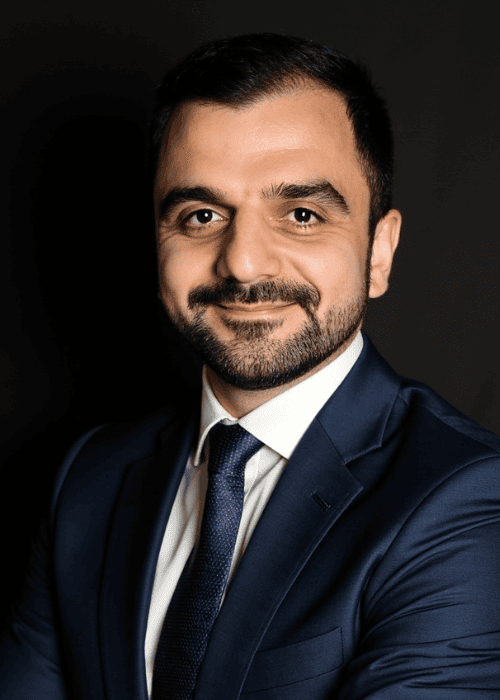
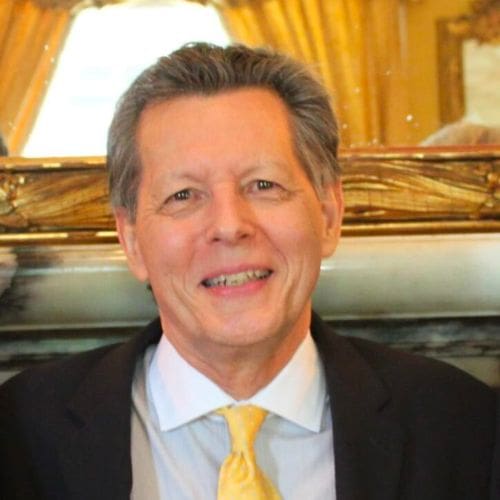
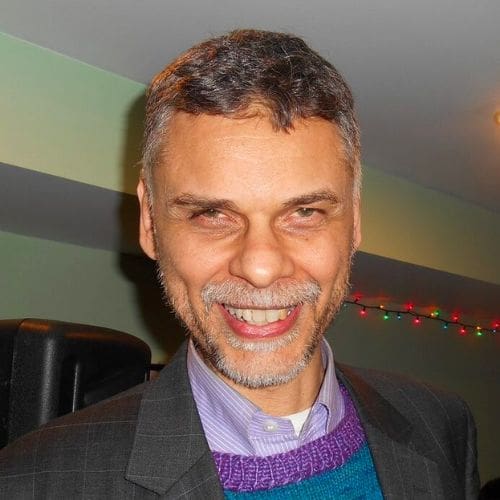
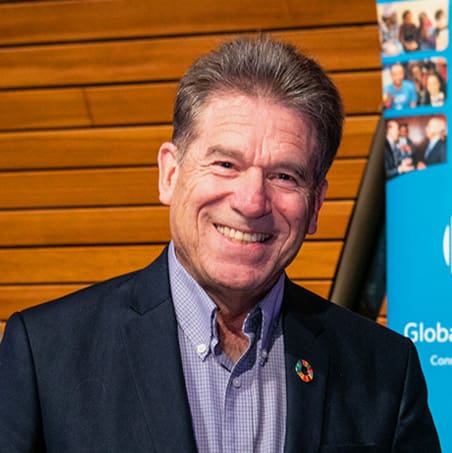
Jacopo DeMarinis

Jacopo DeMarinis

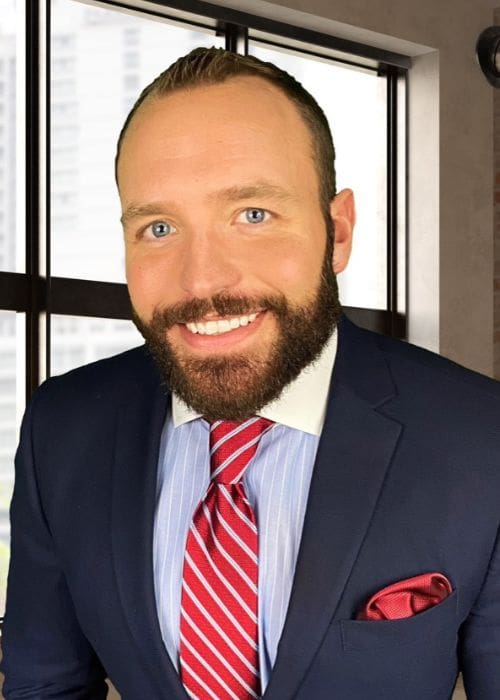
A graduate of the University of Illinois at Urbana-Champaign, DeMarinis joined CGS as Social Media and Communications Coordinator in 2022. He sits on the boards of Anne’s Haven, a Chicago-area nonprofit dedicated to women’s empowerment, and Chicago Peace Action.

How can world federalism ensure human rights and the equality of all people, including LGBTQI+ persons? This critical topic is the focus of this article. According to Citizens for Global Solutions, the US member organization of the World Federalist Movement/Institute for Global Policy, world federalist organizations advocate for universal human rights partly by promoting the universal ratification and efficacy of the eight core United Nations (UN) Human Rights Treaties and their optional protocols, including the International Covenant on Civil and Political Rights (ICCPR). However, this article posits that these international human rights treaties reflect the political and social realities of the 20th century. Since the creation of these human rights frameworks, the struggles of previously overlooked groups of people, including LGBTQI+ persons, to achieve equality have come to the fore. If the movement for democratic world federation is to effectively advocate for stronger global governance with respect to human rights in the 21st century, it is crucial that we address these evolving social and political realities.

CURRENT CHALLENGES FACING LGBTQI+ PEOPLE

Eliminating discrimination against LGBTQI+ persons both in the US and globally can be seen as a key step toward achieving universal compliance with the Universal Declaration of Human Rights (UDHR). Per the Office of the High Commissioner for Human Rights, “protecting LGBTI persons from violence and discrimination does not require a new set of human rights laws or standards…. It is based on the Universal Declaration of Human Rights.” Thus, while the UDHR does not explicitly reference the rights of LGBTQI+ persons, the UN High Commissioner for Human Rights interprets the international human rights framework laid out in the UDHR as covering the rights of LGBTQI+ persons.

While significant progress has been made in some areas, particularly regarding marriage equality – as noted by LGBTQ Nation in its list of “7 International LGBTQ+ rights advances in 2022” – the LGBTQI+ community still faces discrimination and violence worldwide that have hindered their full and equal participation in society. For example, in June 2023, the Human Rights Campaign declared a state of emergency for LGBTQI+ people in the US due to increasing hate crimes against the LGBTQI+ community and anti-LGBTQI+ legislation. This troubling trend is reflected globally: according to Human Rights Watch, the rights of LGBTQI+ people around the world are seriously compromised, as in Uganda, where President Museveni recently signed the Anti-Homosexuality Act into law, mandating the death penalty for anyone guilty of “aggravated homosexuality.”

PRECEDENTS FOR GLOBAL PROTECTION OF LGBTQI+ RIGHTS

One of the earliest instances of a UN body addressing discrimination against the LGBTQI+ community was the case of Toonen vs. Australia in 1994. According to Communication No. 488/1992, submitted to the Human Rights Committee by Nicholas Toonen, Toonen, a resident of the Australian state of Tasmania, challenged two provisions of the Tasmanian Criminal Code that criminalized sexual relations between men before the UN Human Rights Committee, which is charged with ensuring the implementation of the ICCPR. Toonen argued that these provisions violated Articles 17 and 26 – among others – of the ICCPR, which focus on the right to privacy and anti- discrimination. The Committee determined that the criminal code was indeed a violation of Mr. Toonen’s rights under the ICCPR, mandating a reversal of the offending provisions. Importantly, this legal case established a precedent of existing international human rights frameworks being applied to protect LGBTQI+ rights.

Subsequently, the UN Human Rights Council (HRC) passed a resolution in June of 2011 – A/HRC/RES/17/19 – condemning discrimination and violence on the basis of sexual orientation and gender identity. The resolution also commissioned a report on the status of anti- LGBTQI+ violence and discrimination from the UN High Commissioner for Human Rights. Furthermore, a 2016 UN HRC resolution, A/HRC/RES/32/2, established the office of an Independent Expert on the topic. The independent expert is responsible for raising awareness of anti-LGBTQI+ discrimination and cooperating with civil society and state actors to identify how international human rights law can safeguard LGBTQI+ rights. One of the first reports prepared by the independent expert – Victor Madrigal-Borloz, in May of 2018 (A/HRC/38/43) – probes the complexities of anti-LGBTQI+ sentiment, underscoring the fact that anti-LGBTQI+ discrimination is rooted in a desire to force LGBTQI+ persons to conform to preconceived notions regarding sexual orientation and gender identity. Some of the Independent Expert’s recommendations from this report include exhorting countries to repeal laws criminalizing same- sex relations and gender identity and build databases to track violence and discrimination against LGBTQI+ persons.

Civil society actors have also played a significant role in advancing universal rights for LGBTQI+ rights. For example, in 2006, a prominent group of international human rights experts met in Indonesia to devise a set of international principles, the Yogyakarta Principles, which explicitly link the rights of LGBTQI+ people to universal human rights. The Yogyakarta Principles include the “right to state protection” from violence and discrimination, the right to privacy (specifically with regard to one’s sexual orientation and/or gender identity), and the right to “equality and non-discrimination” with respect to sexual orientation and gender identity. These mirror provisions of the Universal  Declaration of Human Rights (UDHR) including Article 12 (privacy) and Article 7 (equality, state protection, and non-discrimination). The Yogyakarta Principles also include recommendations regarding how to implement the principles, including ensuring that “national human rights institutions” include efforts to protect LGBTQI+ rights under the umbrella of their human rights advocacy. While the Principles have not been incorporated into an international treaty (they are merely guidelines and do not constitute binding international law), by connecting the rights of LGBTQI+ persons to widely accepted human rights frameworks like the UDHR, they provide a solid foundation for protecting LGBTQI+ rights around the world.

More recently, civil society organizations including MADRE and Outright International have launched a campaign to demand the inclusion of explicit protections for women and LGBTQI+ people in the new proposed Treaty on Prevention and Punishment of Crimes Against Humanity, which was under debate by the Sixth Committee of the UN in October. The treaty has been hailed by some LGBTQI+ advocates for its departure from the Rome Statute definition of gender as a binary construction, although that has provoked heated debate among States Parties.

WORLD FEDERALIST LGBTQI+ TOOLKIT

A democratic world federation is premised on the understanding that a sustainable future for humankind depends on empowered global governance institutions and stronger international law. Such a sustainable future for all entails protecting human rights, as defined by the UDHR and corpus of human rights law, which for LGBTQI+ rights, should include the Yogyakarta Principles. Unfortunately, the world federalist movement has not yet made an effective case for how democratic world federation can protect the rights of LGBTQI+ persons. However, there are several ways in which the world federalist movement can advocate for LGBTQI+ rights. My recommendations can be viewed as a series of “steps,” each progressively advocating for more robust international law and the creation of new global institutions and mechanisms to advance LGBTQI+ rights.

ENFORCING EXISTING INTERNATIONAL AND REGIONAL TREATY LAW

  • Advocating for regional courts and bodies to interpret regional human rights treaties, including the European Convention on Human Rights and the American Convention on Human Rights, in an inclusive way that protects LGBTQI+ A successful example is the Inter-American Court on Human Rights which interpreted the American Convention on Human Rights as covering LGBTQI+ rights. In “Consultative Opinion 24/17,” the Inter-American Court on Human Rights ruled that countries party to the American Convention on Human Rights are required to legalize same-sex marriage and allow for people to change their name and gender on government documents to reflect their gender identity. Furthermore, the Inter- American Commission on Human Rights established a Rapporteurship on the Rights of Lesbian, Gay, Bisexual, Trans and Intersex Person in 2014 to further LGBTQI+ rights within the Organization of American States. Other regional bodies could follow this example.
  • Leveraging existing international human right instruments, like the Convention on the Elimination of All Forms of Discrimination Against Women (CEDAW) and the ICCPR, the world federalist movement should advocate for LGBTQ+ rights. For example, the Equal Rights Coalition, an intergovernmental organization advocating for the rights of LGBTQI+ persons, and Human Dignity Trust, a global civil society organization dedicated to protecting LGBTQI+ rights through human rights law, both support leveraging CEDAW to advance the decriminalization of LGBTQI+ people worldwide. Notably, on Feb. 21, 2022, CEDAW issued the Decision on Communication No. 134/2018, ruling that a Sri Lankanlawcriminalizingconsensual, same-sexintimacy between women was a violation of their human rights.

PROMULGATING NEW LEGAL AND GLOBAL GOVERNANCE MECHANISMS FOR PROTECTION

  • Calling for an inclusive UN and civil society-led conference and declaration in support of LGBTQI+ rights as an integral part of the UNDR, similar to the 2001 World Conference Against Racism, Racial Discrimination, Xenophobia, and Related Intolerance, which resulted in the Durban Declaration and Programme of Action, according to the United Nations Office of the High Commissioner on Human Rights. This conference and subsequent declaration could focus on enhancing international support for the Yogyakarta Principles. World federalist organizations like CGS could lead the way by holding a preliminary forum on global governance and LGBTQI+ rights and campaigning for a subsequent conference involving the UN
  • Buildingonthe Independent Expert’s recommendations laid out in his July 2022 report presented to the United Nations General Assembly (A/77/235), world federalists should campaign for LGBTQI+ issues to be incorporated into the Women, Peace and Security Agenda, an international peace framework drawn up by the Working Group on Women, Peace, and Security, to draw more attention to the specific challenges facing LGBTQI+ people in conflict zones. Furthermore, incorporating provisions on LGBTQI+ rights into the People’s Pactfor the Future, a compilation of civil society recommendations regarding the 2024 Summit of the Future, would be a definite step toward ensuring that LGBTQI+ rights are included in international
  • Supporting an additional international human rights convention specifically dedicated to LGBTQI+ rights to hold countries accountable for their treatment of LGBTQI+ citizens and compel national governments to act to counter anti-LGBTQI+ discrimination and This convention would resemble CEDAW and the International Convention on the Elimination of All Forms of Racial Discrimination  , and could be centered around the Yogyakarta Principles.
  • Campaigning to ensure that the new Treaty on Prevention and Punishment of Crimes Against Humanity covers LGBTQI+ rights, as discussed

ESTABLISHING GOVERNANCE STRUCTURES AND INSTITUTIONS TO ENSURE ACCOUNTABILITY

  • Creating a UN Civil Society Envoy, supported by world federalist organizations like Democracy Without Borders, which would enhance the representation of civil society in the UN system. As civil society organizations are spearheading the movement for LGBTQI+ rights throughout the world, a UN Civil Society Envoy could help ensure greater visibility of the LGBTQI+ movement in the UN system, provided that LGBTQI+ civil society organizations actively engage with the envoy by proposing initiatives to protect LGBTQI+
  • Implementing the UN World Citizens’ Initiative, which would enable global citizens to propose initiatives before the UN bodies like the UN General Assembly or the Security Council, augmenting civilian involvement in the UN system. This mechanism could further enhance the visibility and strengthen the voice of marginalized groups throughout the world, including LGBTQI+ As in the case of a UN Civil Society Envoy, global citizens would have to actively participate in the initiative to effectively advance LGBTQI+ rights.
  • Advocating for the establishment of a World Court of Human Rights (WCHR), which would look to the UDHRforguidancetoensurethathumanrightsarebeing universally observed and create a universal standard for protecting human rights, including LGBTQI+
  • Calling for the establishment of a United Nations Parliamentary Assembly (UNPA) which, in conjunction with the UN General Assembly, would eventually be able to pass binding resolutions regarding issues of global concern, including the rights of LGBTQI+

MOVING FORWARD

As advocates for democratic world federation, we have a responsibility to actively engage with civil society organizations and people around the world that are committed to advancing human rights. By earnestly seeking ways to engage with civil society in the human rights sphere, we will enhance public awareness of the relevance of democratic world federation to human rights, including LGBTQI+ rights, while laying a global foundation for addressing human rights issues that is based on binding world law and more effective global governance institutions.

In today’s turbulent world, world federalists have much to offer civil society organizations that are eager for unique perspectives on how to address escalating attacks on civil liberties and human rights. Let us not miss the moment; the time to advance democratic world federation is now.

Mondial Cover for Winter 2023

Mondial is published by the Citizens for Global Solutions (CGS) and World Federalist Movement — Canada (WFM-Canada), non-profit, non-partisan, and non-governmental Member Organizations of the World Federalist Movement-Institute for Government Policy (WFM-IGP). Mondial seeks to provide a forum for diverse voices and opinions on topics related to democratic world federation. The views expressed by contributing authors herein do not necessarily reflect the organizational positions of CGS or WFM-Canada, or those of the Masthead membership.
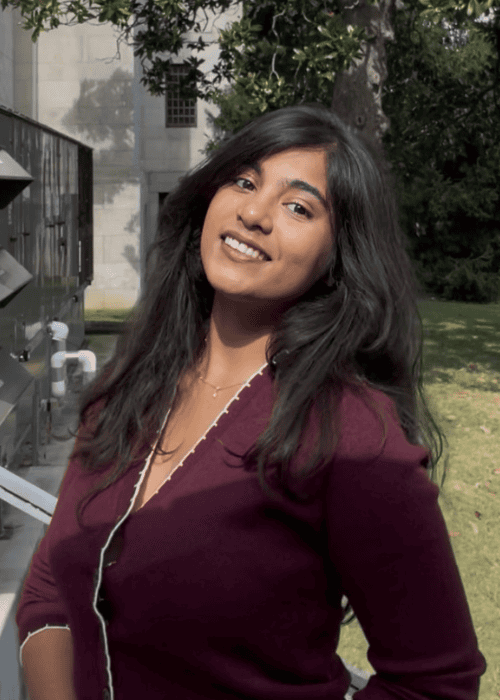
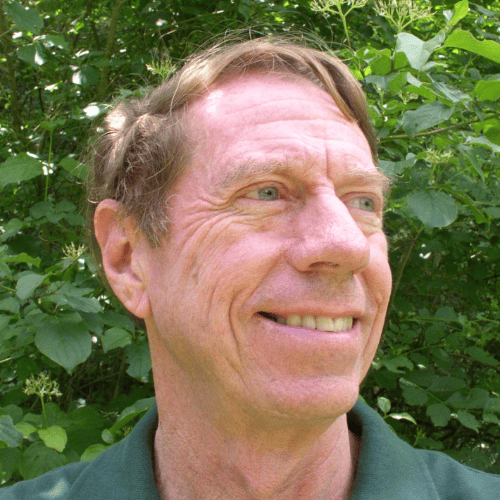
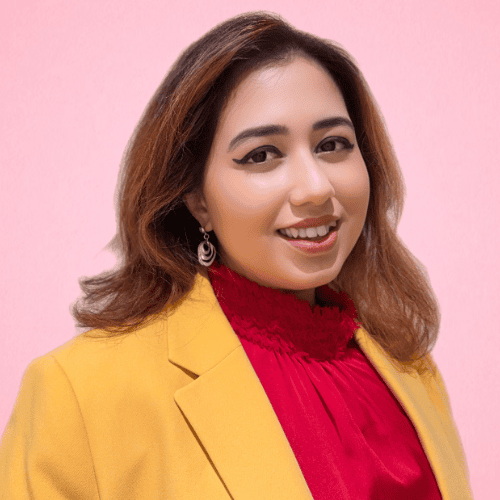
Kehkashan Basu

Kehkashan Basu

Influencer, educator, environmentalist, feminist, champion of women and children’s rights, TEDx speaker, Climate Reality Mentor, author, musician, peace and sustainability campaigner

Kehkashan Basu, M.S.M., MBA is an iconic global influencer, educator, environmentalist, feminist, champion of women and children’s rights, TEDx speaker, Climate Reality Mentor, author, musician, peace and sustainability campaigner. She is the recipient of Canada's Meritorious Service Medal and the only Canadian to win the International Children’s Peace Prize. A Forbes 30 Under 30 and the first-ever Winner of the Voices Youth Gorbachev-Schultz Legacy Award for her work on nuclear disarmament, Kehkashan is a United Nations Human Rights Champion, a National Geographic Explorer, a UNCCD Land Hero, a UN Habitat Young City Champion, the Regional Organizing Partner for North America for the NGO Major Group and one of Canada's Top 100 Most Powerful Women.

Kehkashan is the Founder-President of global social innovation enterprise Green Hope Foundation, that works at a grassroots level in 28 countries, empowering over half a million young people and women, especially those from vulnerable communities, turning Education for Sustainable Development into ground-level action by harnessing clean energy technology for social good. She has spoken at over 500 United Nations and other global fora. She is the Co-President of the World Federalist Movement/Institute for Global Policy, Trustee of the Parliament of the World's Religions, Co-Lead of UN Women Generation Equality Forum's Action Coalition on Feminist Action for Climate Justice and a member of the World Humanitarian Forum Youth Council.

She is the recipient of several awards that include the Spirit of the United Nations Award, World Literacy Award for Significant Contribution to Literacy by a Young Person, Canada's Global Energy Show Emerging Leader Award, Dubai Supreme Council of Energy's Emirates Energy Award and the Pax Christi Toronto Teacher of Peace Award. Kehkashan was listed as one of the Top 100 SDG Leaders in the world in 2019 and was named the 2019 Innovator of the Year at the HundrEd Innovation Summit for her global work on Sustainability Education. Kehkashan holds an MBA from Cornell University and an Honours BA with High Distinction in Environmental Studies from the University of Toronto.

Augusto Lopez-Claros

Augusto Lopez-Claros

International Economist and the Executive Director of the Global Governance Forum

Augusto Lopez-Claros is an international economist and the Executive Director of the Global Governance Forum. He has published several books on global governance reform and is currently spearheading the Global Governance Forum’s drafting of a Second United Nations Charter. He brings more than 30 years of experience in international organizations, including most recently as director of the Global Indicators Group at the World Bank, one of the departments within the Bank’s research Vice Presidency. Previously he was chief economist at the World Economic Forum, where he directed the Global Competitiveness Program and edited the Global Competitiveness Report, the Forum’s flagship publication. Before joining the Forum, he worked for several years in the financial sector in London, with a special focus on emerging markets. He was the International Monetary Fund’s Resident Representative in Russia during the 1990s. He has also been a Senior Fellow at the Edmund Walsh School of Foreign Service at Georgetown University. Educated in England and the United States, he received a diploma in Mathematical Statistics from Cambridge University and a Ph.D. in Economics from Duke University. Recent publications include “Removing Impediments to Sustainable Economic Development: The Case of Corruption” (2015), Equality for Women = Prosperity for All (2018, St. Martin’s Press) and Global Governance and the Emergence of Global Institutions for the 21 Century (2020, Cambridge University Press). His book Global Governance and International Cooperation: Managing Global Catastrophic Risks in the 21st Century, coedited with Richard Falk, was published by Routledge in 2024. He has lectured at some of the world's leading universities, think tanks and international organizations; a list of recent lectures can be found at: www.augustolopezclaros.com.

Manu Bhagavan

Manu Bhagavan

Professor of History & Human Rights
at Hunter College & Graduate Center-CUNY

Manu Bhagavan is Professor of History, Human Rights, and Public Policy at Hunter College and the Graduate Center-The City University of New York, where he is also Senior Fellow at the Ralph Bunche Institute for International Studies. He is author or editor of eight books, including the landmark biography The Remarkable Madame Pandit (Columbia University Press 2025, Penguin/Allen Lane India 2023), the critically-acclaimed The Peacemakers (HarperCollins India 2012, Palgrave Macmillan 2013) and India and the Cold War (Penguin India and UNC Press, 2019).

Manu is the recipient of a 2006 fellowship from the American Council of Learned Societies and Hunter’s 2023 Presidential Award for Excellence in Scholarship. He has been interviewed for several documentaries and was featured in a skit on the Not the White House Correspondent’s Dinner, part of the satirical television program Full Frontal with Samantha Bee. In 2023, he also served as a judge for the PEN Literary Awards in the category of biography. Manu appears regularly in the media to discuss current affairs.

Hannah Fields

Cinthya Calderon-Hernandez

Trinity Global Governance Fellowship Coordinator

Cinthya Calderon-Hernandez is a senior at Trinity Washington University, majoring in Political Science and Global Affairs with a minor in Communications. A proud alum of the Trinity Global Governance Fellowship, she is excited to serve as this year’s Fellowship Coordinator. Her interest in anthropology and diplomacy, alongside her experience in mentoring, makes her confident in taking this role to help this year's cohort work towards their capstone projects. Cinthya is inspired daily by her friends and community. She hopes to encourage others to achieve their goals.

Hannah Fields

Drea Bergman

Program & Operations Consultant

Drea Bergman is a program strategist and instructional design expert dedicated to building inclusive, evidence-based solutions. With dual master’s degrees from the Maastricht Graduate School of Governance and United Nations University MERIT (Maastricht Economic and Social Research Institute on Innovation and Technology), Drea has spearheaded strategic planning, end-to-end development, and global rollout of youth education initiatives on UN Systems, aligning program objectives with stakeholder priorities, crafting evidence-based curricula, and training facilitators to ensure high-impact delivery across diverse contexts.

An expert in mixed-methods research, Drea builds robust monitoring & evaluation frameworks to measure and refine program effectiveness. She’s conducted field studies synthesizing quantitative and qualitative policy analysis to drive continuous improvement with thematic focus areas including education, housing, and health.

Hannah Fields

Keshet Benschikovski

Program Associate

Keshet Benschikovski is a Program Associate at Citizens for Global Solutions, where she supports the development, implementation, and coordination of CGS program activities. She brings a diverse background in international development, humanitarian assistance, and conflict resolution, with experience spanning project assistance, policy research, and business development.

Prior to joining Citizens for Global Solutions, Keshet served as a Project Assistant with the International Organization for Migration, where she played a key role in case management for the U.S. Refugee Admissions Program. She previously worked at Social Impact, where she led knowledge management initiatives and contributed to the development of multimillion-dollar proposals for international development activities promoting democracy, human rights, and governance. Her experience also includes research, advocacy, and reporting assistance for EcoPeace Middle East, where she supported environmental cooperation initiatives in Israel, Palestine, and Jordan.

Keshet holds an M.A. in Conflict Resolution and Mediation from Tel Aviv University and a B.A. in International Studies from American University. She holds certificates in Mediation from Tel Aviv University and Results-Based Management from UNICEF.

Anthony Vance

Anthony Vance

Senior Representative, Bahá'ís of the U.S. Office of Public Affairs

Anthony oversees the development of the Bahá'ís of the United States Office of Public Affairs programs and strategic direction. He joined the office in 2010 after spending four years at the Baháʼí World Center in Haifa, Israel representing it to the diplomatic community, civil society, and parts of the host government. A lawyer by training, he spent 21 years in the U.S. Agency for International Development in legal and managerial positions in Washington, Cote d’Ivoire, Kenya, Botswana, and Egypt. Anthony holds a B.A. in Economics, an MBA, and a J.D. from Harvard University.

James Lowell May

James Lowell May

Program Officer

James May is a programme and project development specialist. He has lived in Serbia since 2005, and prior to joining Citizens for Global Solutions, worked across the Western Balkans on a broad range of issues including human, minority and child rights, accountability for war crimes and crimes against humanity, Holocaust commemoration, democratic participation, social justice and economic empowerment, and environmental restoration.

James began working in the Western Balkans on issues related to accountability for human rights violations, first for the Youth Initiative for Human Rights, a coalition of NGOs active in the countries of the former Yugoslavia, as the network’s development coordinator, then the Lawyers’ Committee for Human Rights, leading a research project documenting the nomenclatural of the Milosevic Regime, and then the Federation of Jewish Communities in Serbia, running a Holocaust research and education project.

James then transitioned from accountability to efforts to protect and fulfil the rights of marginalised communities. For a decade James worked for the Centre for Youth Integration, an NGO that provides specialized services for children and youth in street situations in Belgrade, where he began as a volunteer before taking up a permanent role, while concurrently volunteering for community mental health organizations, as well as consultancy work for a number of local and international organizations, and most recently branched out to apply his experience to the environmental sector, focussing on social impact assessments and community-oriented nature-based solutions projects.

James has a degree in Archaeology from University College London. He was born and grew up in Great Britain. He is an avid cyclist.

Jon Kozesky

Jon Kozesky

Director of Development 

Jon brings over 17 years of experience in development and fundraising in both the public and private sectors.  He started his career in politics working in the Ohio Statehouse and later in the office of U.S. Congressman Steven LaTourette, as well as former Secretary of State Hillary Rodham Clinton. After leaving Capitol Hill, Jon pursued his passion of helping nonprofits secure the resources they needed to best serve their constituents. This passion led to his founding of Jon Thomas Consulting, a boutique nonprofit management and development firm serving organizations across the United States and throughout the world in streamlining their processes and maximizing their revenue growth through grant writing, government affairs, donor stewardship, and major event planning.

Prior to his fundraising career, Jon proudly served his community as a firefighter and water rescue diver. In his personal time, Jon is a champion competitive sailor and a bit of a thrill-seeker, having skydived and bungee jumped on 6 continents.

Helen Caldicott

Physician, Author, and Speaker

Helen Caldicott is a physician, author, and anti-nuclear advocate. She founded several associations dedicated to opposing the use of nuclear power, depleted uranium munitions, nuclear weapons, nuclear weapons proliferation, and military action in general. In 1980, she founded the Women’s Action for Nuclear Disarmament (WAND), which was later renamed Women’s Action for New Directions. In 2008, she founded the Helen Caldicott Foundation for a Nuclear Free Future.

Blanche Wiesen Cook

Blanche Wiesen Cook

Professor, Author, and Historian

Blanche Wiesen Cook is a Distinguished Professor of History and Women’s Studies at John Jay College of Criminal Justice, City University of New York. She is author of a three-volume biography of Eleanor Roosevelt, as well as The Declassified Eisenhower: A Divided Legacy of Peace and Political Warfare.

David Cortright

Author, Activist, and Leader

David Cortright is director of Policy Studies at the Kroc Institute for International Peace Studies at the University of Notre Dame and chair of the Board of the Fourth Freedom Forum. In 1977, Cortright was named the executive director of he Committee for a SANE Nuclear Policy (SANE), which under his direction became the largest disarmament organization in the U.S. Cortright initiated the 1987 merger of SANE and the Nuclear Weapons Freeze Campaign and served for a time as co-director of the merged organization. In 2002, he helped to found the Win Without War coalition in opposition to the U.S. invasion of Iraq.

He is the author or co-editor of 19 books including Waging Peace in Vietnam: U.S. Soldiers and Veterans Who Opposed the WarGandhi and Beyond: Nonviolence for a New Political Age, and Peace: A History of Movements and Ideas.

Andrea Cousins

Andrea Cousins

Psychologist, Psychoanalyst, and Anthropologist

Andrea Cousins is a psychologist and psychoanalyst who has practiced for more than 30 years. She has a doctorate in anthropology from Harvard University and a Doctor of Psychology degree from the Massachusetts School of Professional Psychology. Her father, journalist and peace activist Norman Cousins, served as president of the World Federalist Association and chairman of the Committee for Sane Nuclear Policy, and was honored with recognitions including the United Nations Peace Medal.

Gary Dorrien

Gary Dorrien

Professor, Author, Social Ethicist

Gary Dorrien is the Reinhold Niebuhr Professor of Social Ethics at Union Theological Seminary and Professor of Religion at Columbia University. An Episcopal priest, he has taught as the Paul E. Raither Distinguished Scholar at Trinity College in Hartford, Connecticut, and as Horace De Y. Lentz Visiting Professor at Harvard Divinity School. He is a member of the Democratic Socialists of America’s Religion and Socialism Commission and the author of 18 books on ethics, social theory, philosophy, theology, politics, and intellectual history.
Oscar Andrew Hammerstein

Oscar Andrew Hammerstein

Painter, Writer, Lecturer, and Historian

Oscar Andrew Hammerstein is a painter, writer, and lecturer. He has taught graduate-level courses on New York theatre history and general musical theatre history as an adjunct professor at Columbia University. He is the author of The Hammersteins: A Musical Theatre Family.

Gordon Orians

Gordon Orians

Ecologist

Gordon Orians, an ornithologist and ecologist for more than half a century, has focused his work on behavioral ecology and the relationships between ecology and social organization, as well as on the interface between science and public policy. He was director of the University of Washington Seattle’s Institute for Environmental Studies for a decade and has also served on the Board of Directors of the World Wildlife Fund and on state boards of the Nature Conservancy and Audubon.

Orians was elected to the National Academy of Sciences in 1989 and to the American Academy of Arts and Sciences in 1990.

William Pace

International Organizer

William Pace was the founding convenor of the Coalition for an International Criminal Court (ICC) and a co-founder of the International Coalition for the Responsibility to Protect. He has been engaged in international justice, rule of law, environmental law, and human rights for four decades, serving as executive director of the World Federalist Movement-Institute for Global Policy, secretary-general of the Hague Appeal for Peace, director of the Center for the Development of International Law, and director of Section Relations of the Concerts for Human Rights Foundation at Amnesty International, among other roles. He is the recipient of the William J. Butler Human Rights Medal from the Urban Morgan Institute for Human Rights and was nominated for the Nobel Peace Prize for his work on the ICC.

James T. Ranney

Professor, International Legal Consultant, and Author

James T. Ranney is an adjunct professor of international law at Widener Law School. He co-founded the Jeannette Rankin Peace Center in Montana and served as a legal consultant to the United Nations International Criminal Tribunal for the Former Yugoslavia. He has written extensively on the abolition of nuclear weapons and the establishment of international dispute resolution mechanisms.

Rick Ulfik

Rick Ulfik

The Founder of WE, The World, and the WE Campaign

Rick Ulfik is the founder of We, The World, an international coalition-building organization whose Mission is to maximize social change globally. He and his organization work closely with the New York Center for Nonviolent Communication, where he has been a facilitator since 2004. He is also the co-creator of the annual 11 Days of Global Unity - 11 Ways to Change the World, September 11-21.

He is an award-winning composer and keyboard player who has written, arranged, produced and orchestrated music for television networks, feature films, commercials, and albums. He has performed with Queen Latifah, Phoebe Snow, Carlos Santana, Bernadette Peters, and Judy Collins.

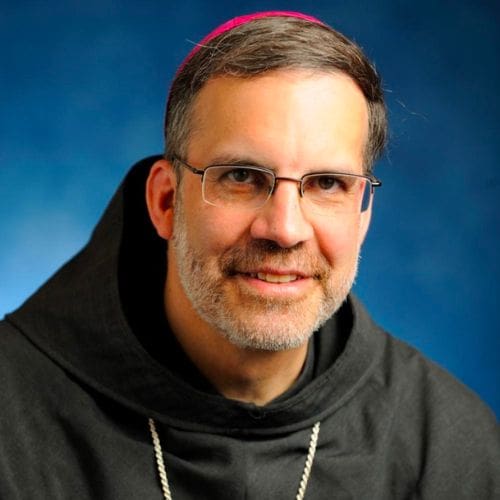
John Stowe

Bishop

John Stowe is the Roman Catholic bishop of the Diocese of Lexington, Kentucky. He is a member of the Order of Friars Minor Conventual, a mendicant religious order founded by Francis of Assisi. In 2015, Pope Francis appointed Stowe bishop of the Diocese of Lexington. He is the Episcopal President of the U.S. board of Pax Christi, an international Catholic Christian peace movement with a focus on human rights, disarmament, nonviolence, and related issues.

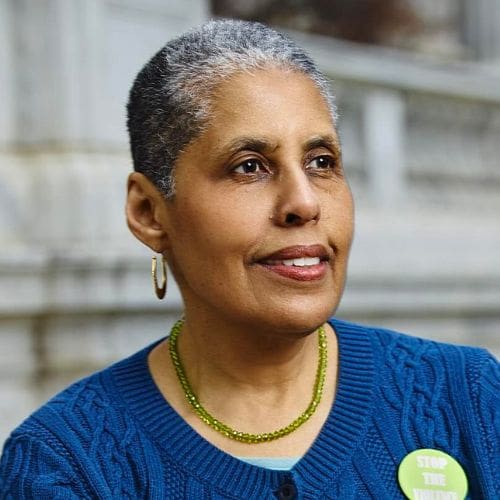
Barbara Smith

Author, Activist, and Scholar

Barbara Smith has played a significant role in Black feminism in the U.S. for more than 50 years. She taught at numerous colleges and universities for 25 years and has been published in a wide range of publications including The New York Times Book ReviewMs.Gay Community NewsThe Village Voice, and The Nation.

Among her many honors are the African American Policy Forum Harriet Tubman Lifetime Achievement Award, the Lambda Literary Award, and the Stonewall Award for Service to the Lesbian and Gay Community. In 2014, SUNY Press published Ain’t Gonna Let Nobody Turn Me Around: Forty Years of Movement Building with Barbara Smith.

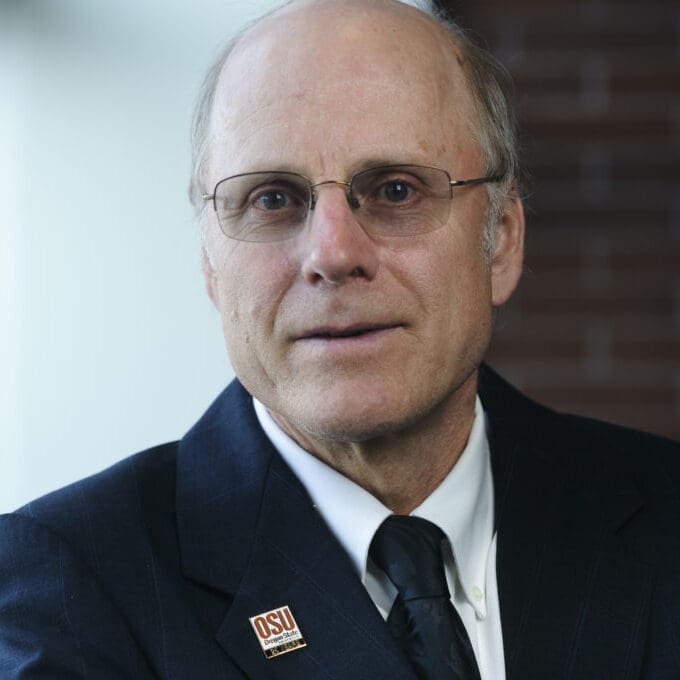
William J. Ripple

Conservationist, Author, and Professor

William J. Ripple is a Distinguished Professor of Ecology in the Department of Forest Ecosystems and Society at Oregon State University. He has published two books and has authored more than 200 scientific journal articles on topics including conservation, ecology, wildlife, and climate change. He was the co-lead author on the 2020 paper “The World Scientists’ Warning of a Climate Emergency,” which was endorsed by more than 14,000 scientist signatories from around the world. He is the director of the Alliance of World Scientists, which has approximately 26,000 scientist members from 180 countries.

Mark Ritchie

President, Global Minnesota

Mark Ritchie is Chair of Minnesota's World Fair Bid Committee Educational Fund. From 2019 - 2022 he served as president of Global Minnesota, a nonprofit, nonpartisan organization devoted to advancing international understanding and engagement. Ritchie was Minnesota's elected Secretary of State from 2007 to 2015. Since leaving elected public service, he has led the public-private partnership working to bring a world exposition (World's Fair) to Minnesota and he has served on the board of directors for LifeSource, Communicating for America, U.S. Vote Foundation, and Expo USA. He is also a national advisory board member of the federal Election Assistance Commission, where he serves as National Secretary.


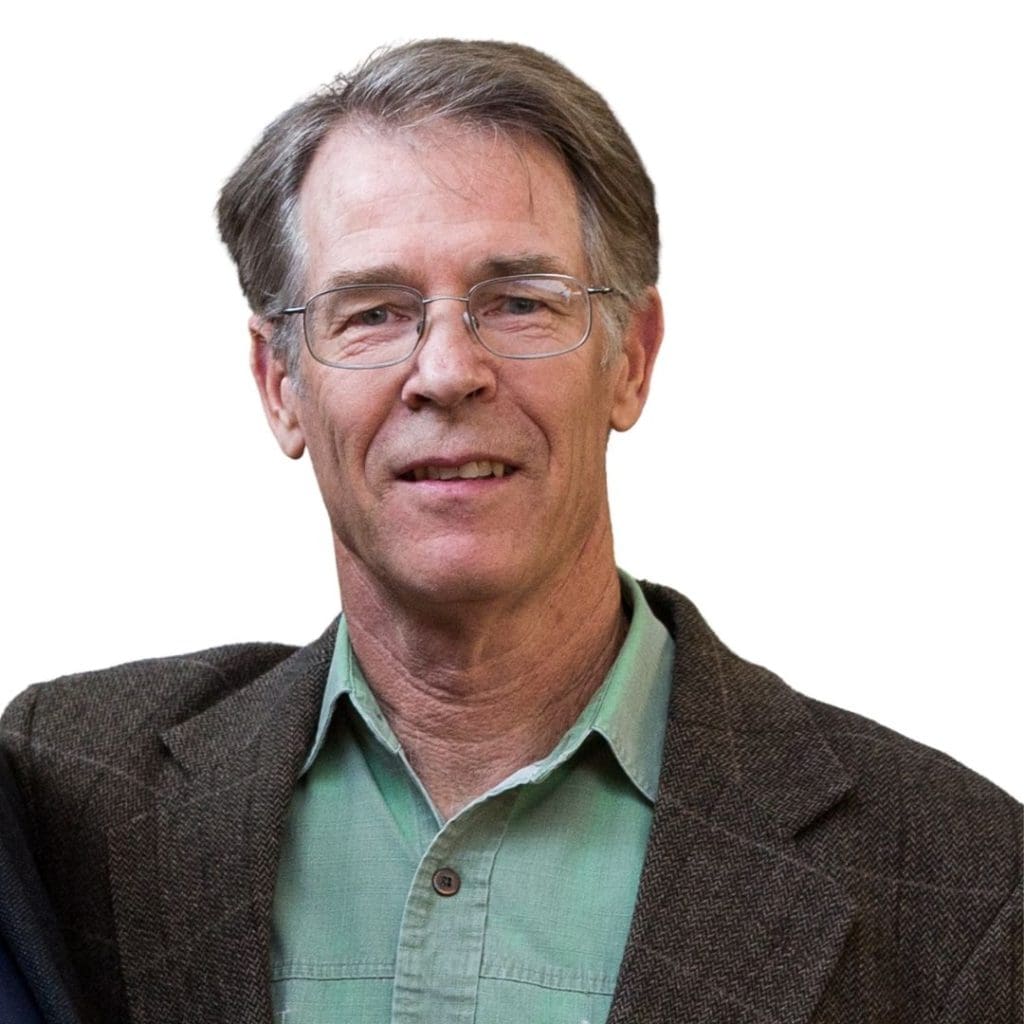
Kim Stanley Robinson

Author

Kim Stanley Robinson is the author of many works of science fiction, including the internationally bestselling Mars trilogy, and more recently Red Moon, New York 2140, and The Ministry for the Future. His work has been translated into 25 languages, and won awards including the Hugo, Nebula, and World Fantasy awards. In 2016, asteroid 72432 was named “Kimrobinson.”

Leila Nadya Sadat

Special Advisor to the ICC Chief Prosecutor, Professor, Author

Leila Sadat is the James Carr Professor of International Criminal Law at Washington University School of Law and the director of the Whitney R. Harris World Law Institute. She is an internationally recognized expert on the International Criminal Court (ICC) and served as Special Advisor on Crimes Against Humanity to Chief Prosecutor Fatou Bensouda of the ICC. She is also the director of the Crimes Against Humanity Initiative, a multi-year project to study the problem of crimes against humanity and draft a comprehensive convention addressing their punishment and prevention. She is a former member of the U.S. Commission on International Religious Freedom, served as the Alexis de Tocqueville Distinguished Fulbright Chair at the University of Cergy-Pontoise in Paris, and is the author of several books.

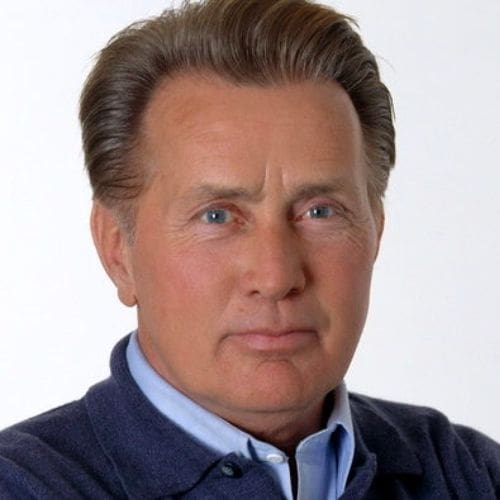
Martin Sheen

Martin Sheen

Actor, Activist, and Leader

Martin Sheen is an Emmy Award-winning and Golden Globe Award-winning actor who has worked with directors including Francis Ford Coppola and Oliver Stone, in addition to starring as the U.S. president on the long-running television drama “The West Wing.” In his early days as a struggling actor in New York, he met activist Dorothy Day, beginning his lifelong commitment to social justice.

The self-described pacifist was an early opponent of the 2003 U.S. invasion of Iraq and has been a consistent opponent of nuclear arms. As honorary mayor of Malibu, California in 1989, he declared the city a nuclear-free zone. Nearly 20 years later, Sheen was arrested during a protest at the Nevada Test Site. Sheen said in 2009 that he had been arrested 66 times for acts of civil disobedience, leading one activist to declare Sheen to have “a rap sheet almost as long as his list of film credits.”

Sheen has also been active in anti-genocide and pro-immigrant causes, as well as in the environmental movement. In 2010, he told a crowd of young people, “While acting is what I do for a living, activism is what I do to stay alive.” In a 1963 episode of “The Outer Limits,” he portrayed a future astronaut wearing a large breast patch that read “UE. Unified Earth.”