Subscribe!

Email:
Zip:

04/23/2010 - 2:58pm

Senate Climate Change Legislation- The Battle Continues… (A guest blog by Komal Hiranandani)

-A guest blog written by former intern Komal Hiranandani-

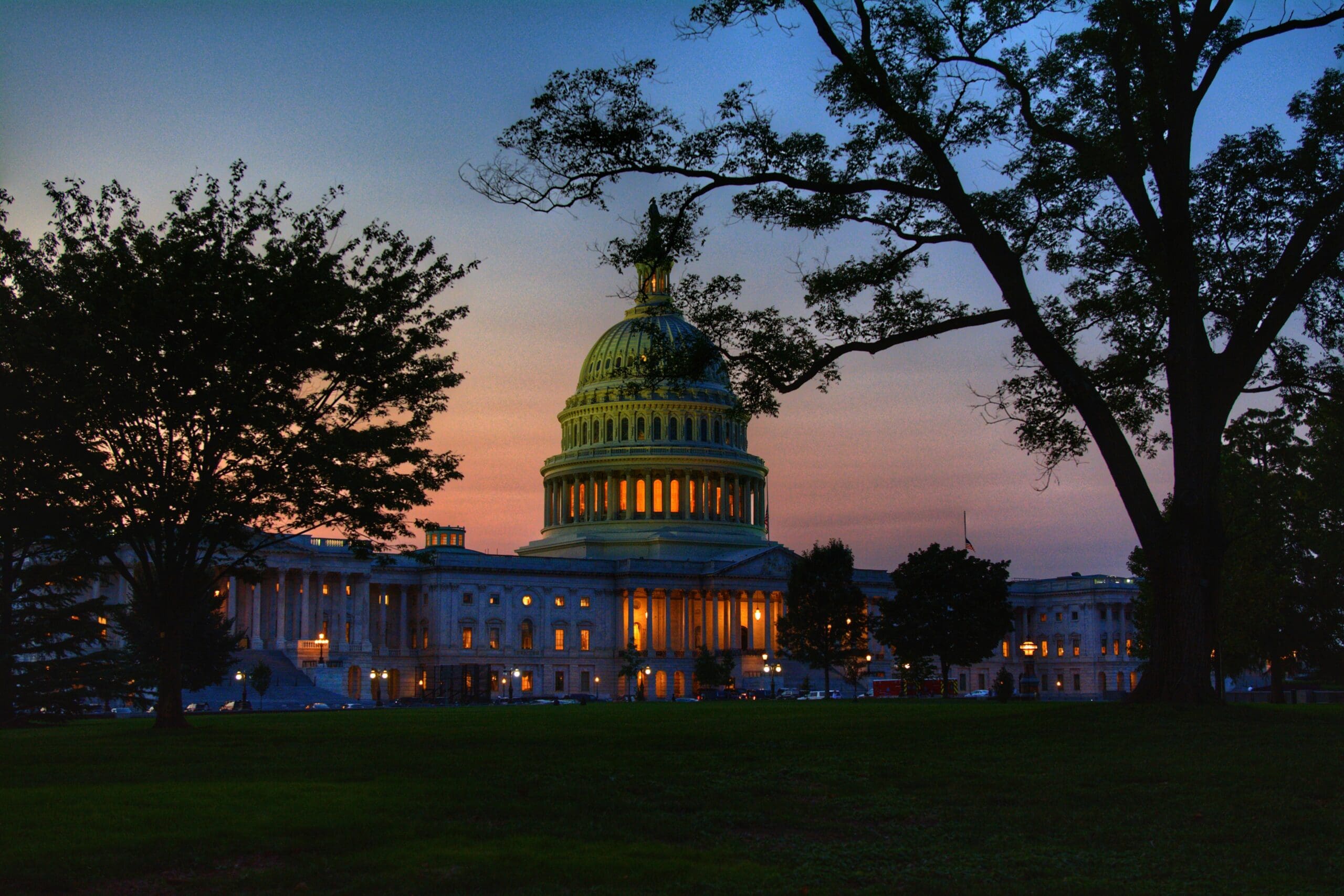
Senators John Kerry (D-Mass.), Lindsey Graham (R-S.C.) and Joe Lieberman (I-Conn.) have plans to unveil a comprehensive climate change bill in the Senate next weak, tentatively called the "American Power Act." Running on the heels of Earth Day celebrations, this Senate Bill follows the passage of the House’s H.R. 2454 Waxman-Markey Bill in June last year.

A lot has happened between then and now. President Obama attended the Copenhagen climate summit in December, which acknowledged the scientific need to prevent climate change, acknowledged the assistance needed for developing countries to transition to clean energy economies, and saw the U.S. agreeing to pledge aid to developing countries for this purpose. However, the summit failed to produce the binding agreement across nations to take specific measures to fight this threat. The U.S. Senate debated the Kerry-Boxer climate bill that tried to follow H.R. 2454, but this moved fizzled out as Senators refused to come together and other issues clogged the agenda.

Once again, Senator Kerry has attempted to pick up the reins, and lead efforts to complete this process in the Senate. Conjecture has already begun about what this might and might not include. Reports indicate that it will pursue a 17% reduction in greenhouse gas emissions from 2005 levels by 2020, which was H.R. 2454’s target. The new bill is expected to move away from the House version’s economy-wide cap-and-trade system for carbon emissions, limiting itself to the utilities and industrial sectors.  Support for the nuclear industry is also expected. Manufactures can expect to see tax breaks for employing energy-efficiency measures.

However, the bill still needs to iron out several points of contention. These include opposing views on whether the Environmental Protection Agency’s authority should be retained, oil and gas revenue- sharing systems from federal waters with coastal states , and the issue of new federal legislation superseding stronger state and regional measures already taken in states like California.

As Senators work out such technicalities, the need for finding common ground must be kept in mind. NASA confirmed that the earth has experienced the warmest decade on record. The U.S. draft report on climate change said that "Global warming is unequivocal and primarily human-induced,” and the International Energy Agency calculated that the cost of greenhouse gas emissions abatement increases by half a trillion dollars for every year that the world fails to take comprehensive steps to address climate change.

Meanwhile, Senator Kerry has emphasized the tremendous opportunity that a clean-energy economy represents. He noted that the energy market is a 6 trillion dollar market with about 4.5 billion eligible users. This explains why China is currently investing aggressively in alternative energy development.  
Don Kraus, CEO of Citizens for Global Solutions pointed out that, “the Senate must pass a climate bill for three reasons:  morality, security, and diplomacy.  First, reducing U.S greenhouse gas emissions is the right thing to do.  We continue to have a lopsided impact on the global climate that affects the lives of people throughout the world.  Second, our oil habit still supports tyrannical regimes and makes our nation less secure.  Finally, the U.S. will not be seen as credible partner at global climate change negotiations without it.  The history of our presidents making agreements that are not back by the Senate is long, sad, and too well known.” Kraus went on to add that the EPA’s authority should be retained saying that “whatever is passed will only be a first step.  This and future administrations will need an ‘EPA stick’ along with carrots to keep Congress engaged.”


The new Senate Bill must provide incentives for such a transition to take place in the U.S.  Speedy legislation is necessary to mitigate uncertainties currently faced by companies here because they are unsure about what new laws might penalize or reward. Easing cap-and-trade to only apply to utilities and industries may be an acceptable short-term compromise, but this should be pushed as a concession that is accepted in exchange for broader cap-and-trade coverage in the future. The use and development of clean energy, like solar and wind, should be amply rewarded, and the EPA’s regulatory authority should be retained as far as possible. Strong incentives should be provided for companies to invest in clean energy and energy efficiency. If this is accomplished, the Senate might successfully win this battle in the long chain of steps we need to take to fight climate change.


This Earth Day urge your Senator to pass strong climate change legislation.

04/22/2010 - 12:15pm

Happy Earth Day!

HAPPY EARTH DAY!earth

As Citizens for Global Solutions, we naturally love the earth.  Today, we are proud to join in celebrating the milestone 40th anniversary of Earth Day.


Earth Day was first launched on April 22, 1970 as the brainchild of the late Senator Gaylord Nelson of Wisconsin, who was frustrated by Washington’s failure to adequately address environmental issues.  A few months after the first Earth Day celebration, Congress had passed and President Nixon had signed the Clean Air and Clean Water Acts, and the Environmental Protection Agency (EPA) was created.  Ever since the first Earth Day celebration, April 22nd has provided environmentalists with an opportunity to both celebrate the earth and to stress that despite environmental progress, much more still needs to be done to safeguard the health of the planet for future generations.


In the U.S. Senate, a new climate change bill is expected to be introduced early next week to coincide with Earth Day celebrations.  This legislation, sponsored by Senators John Kerry (D-MA), Lindsey Graham (R-SC) and Joseph Lieberman (I-CT), is expected to place greenhouse gas emission limits on different sectors of the U.S. economy, and also to expand domestic production of oil and gas, as well as nuclear power.  To learn more about climate change legislation, visit our website at http://www.globalsolutions.org/issues/climate-change.


Plans are afoot to celebrate Earth Day around the nation.  Here in Washington, DC, a “Climate Rally” is scheduled to take place on the National Mall this Sunday, April 25th at noon, with participants urging Congress to “get serious about climate change.”  If you are unable to make it to DC, there are plenty of other events taking place around the country.  To learn about Earth Day events in your area, visit http://www.earthday.org/events/search/distance/21048.

04/21/2010 - 11:35am

Adieu, Tuvalu!

Photograph by Peter Bennetts/Getty Images


The island nation of Tuvalu has less than 10 square miles of total actual land area. Those ten square miles of land area hold the 12,000 residents of this tiny nation. Lately, environmentalists around the world have been infatuated with Tuvalu. But why? Tuvalu's islands are mere feet above sea level and the slightest increase in sea level threatens life on the islands. Increases in sea level are caused by the emission of greenhouse gases. Close to Tuvalu, the Federated States of Micronesia have dealt with similar troubles. The Federated States of Micronesia already had to declare a national emergency last year due to a rise in sea levels. The government spent more than 7 percent of its budget and  $42 million to bring rice and drinking water to the islands. Taro, one of the staple foods on the island had been impossible to grow due to the increase in sea levels and rising high tides as the soil has been soured and the aquifer heavily salted. Unfortunately, Tuvalu may be in the same dire straits.

The Federated States of Micronesia, under the principle of transboundary harm, actually lodged a legal challenge to the Prunéov plant, the largest polluter in the Czech Republic, on the grounds that its chronic pollution threatens the nation's existence. Transboundary harm in the sense of air pollution means pollution whose physical origin is situated wholly or in part within the area under the jurisdiction of one Party and which has adverse effects, other than effects of a global nature, in the area under the jurisdiction of the other Party. Micronesia filed a formal objection against the Prunerov Plant under the Czech Republic's environmental impact assessment law.


Countries affected by oceanic changes could also seek redress via the Convention on the Law of the Sea, although it can't be used against the US—which hasn't ratified the treaty. At CGS, we're fighting to see the U.S. ratify the Law of the Sea treaty. Click here to tell your Senator how YOU feel.

For more information, you can hear from Rachel Morris at Mother Jones Magazine or Max Fisher from the Atlantic Wire on the same topic.

03/12/2010 - 4:54pm

Car-puccino: an alternative fuel?

A coffee-powered car, dubbed the "car-puccino," went on a 250-mile road trip yesterday from London to Manchester.  The vehicle, powered by nothing more than coffee beans, burned the equivalent of more than 10,000 espressos during its journey.

The car is part of a showcase for alternative fuels at the annual "Big Bang: UK Young Scientists and Engineers Fair." It is the creation of engineer Jem Stansfield, presenter of the BBC show ‘Bang Goes The Theory.’  The car, formerly destined for a scrap heap, began as a 1988 VW Scirocco bought on eBay for £400 (roughly $600). A furnace built into the back of the car roasts coffee grounds to generate flammable vapors that fuel the engine.  

The car was cheered through the streets as it battled endless traffic jams and eventually made it to Manchester last night.  The journey took approximately 17 hours and was interrupted by some hiccups along the way, as well as for a coffee refueling stop every 60 miles.  The UK’s Telegraph reported, "by lunchtime it seemed more likely to be using decaf." Francesca Bennett, a member of the team responsible for the car, responded by saying: "It's not the most reliable form of transport, but we knew that…This is the first time this has been done and it wasn't about reliability. It was about energy and making people think about how they use it."

Car-paccino is unlikely to become commercially viable; it consumes a kilo of ground coffee for every three miles, which pales in comparison to one’s daily Starbucks habit.  Nonetheless, the car’s designers say the same gasification process could be used to power a car with other unusual fuels such as woodchips or walnut shells.  The idea behind the car remains a creative way demonstrate how easily obtainable products can be used to generate energy.  Just don’t expect it to take the grind out of commuting.


CLICK HERE to learn more about alternative energy and climate change

02/26/2010 - 6:05pm

World Climate Change to be Independently Analyzed

Last week the World Meteorological Organization (WMO) held a meeting in Antalya, Turkey where world weather agencies agreed to compile data from around the world and allow independent scrutiny of the raw figures.  The UK Met Office put forward the "grand challenge" proposal which was accepted by 150 delegates from around the world.  The details will be agreed upon at a conference to be held in Britain later this year.

The Met Office proposal explains that this "effort will ensure that the datasets are completely robust and that all methods are transparent"  The proposal additionally states that "any such analysis does not undermine the existing independent datasets that all reflect a warming trend."

The proposal aims to have the entire global record of land-based air temperatures from 5,000 weather stations available to anyone. Several groups of scientists working independently in different countries will re-examine millions of observations, dating back to before 1860. The methods of the scientific groups will also be made transparent and open to scrutiny.  The task is expected to take three years.

The Met Office stated that current measurements were "fundamentally ill-conditioned to answer 21st-century questions, such as how extremes are changing, and therefore what adaptation and mitigation decisions should be taken."

The new agreement came about amidst criticism that climate change data had been exaggerated in recent documents. Scientists and other climate specialists said the WMO has been trying to enhance data collection for years.  Interestingly they said that it took a persistent campaign by opponents of climate change to take the issue more seriously.

EARTH

To learn more about climate change CLICK HERE

Support Stronger Legislation to Combat Global Warming CLICK HERE

01/28/2010 - 2:49pm

Priorities, Priorities!

During President Obama’s first State of the Union address on January 27, 2010, he focused on the upcoming economic challenges to be faced by the American people, as well as health care legislation and educational reform at all levels.  However, he also spoke about several issues that are key to the work of Citizens for Global Solutions.

Climate Change: Although President Obama focused primarily upon the need to improve the domestic job market and American economy, he stated that“…to create more of these clean energy jobs, we need more production, more efficiency, more incentives.  And yes, it means passing a comprehensive energy and climate bill with incentives that will finally make clean energy the profitable kind of energy in America.”  He reaffirmed his dedication to climate change legislation, asserting that “the nation that leads the clean energy economy will be the nation that leads the global economy.  And America must be that nation.”

Prohibition of torture: He spoke of the threat of terrorism as well as the prohibition of torture in the same paragraph.  Through this gesture, he established a possible link between the need to balance the pursuit of terrorists and the remembrance of every individual’s inherent human rights.  

Nuclear non-proliferation: President Obama stated “the greatest danger to the American people – the threat of nuclear weapons.” Emphasizing the importance of nuclear non-proliferation, he stated that one of his responsibilities as leader of the nation was reducing nuclear stockpiles.  Additionally, he described engaging internationally in nuclear weapons discussions at the upcoming Nuclear Security Summit to be held in April.

Photo Courtesy of "The Globe and Mail"

Engagement with international organizations: Obama emphasized the importance of active US engagement in international institutions through summits such as the G-20, which focuses primarily upon global economic issues.  Stressing the historical significance of engagement, President Obama said, “As we have for over 60 years, America takes…actions because our destiny is connected to those beyond our shores.  But we also do it because it is right.”

As Obama exclaimed, “Let’s seize this moment – to start anew, to carry the dream forward…”  Citizens for Global Solutions has incredible work ahead in order to accomplish our goals.  With the assistance of our members, and a president who has expressed support for many of our issue areas, CGS has hope for this next year too.

01/05/2010 - 10:28am

Reflections on the Copenhagen Climate Summit

This is a guest blog post from Citizens for Global Solutions member James Nelson.

Modest but meaningful progress was made at the United Nations Framework Convention on Climate Change held in Copenhagen. It was exciting to participate in a small way in one of the most momentous and far-reaching issues of our time. I tried to contribute using my experience in business, civic organizations and horticultural activities.  Most of all I tried to carefully listen learn and discern a response to these challenges.

The conference fell short of its goal of producing a world-wide binding treaty to limit green house gases but it did produce emission pledges by all major developed countries including for the first time the United States and China. Key elements of the Copenhagen Accord include overarching goals, fresh commitments of funding and new incentives to obtain the greatest impact on reducing greenhouse gases. New mechanisms for standard measurement and verification were strongly debated and only loosely agreed among major countries fearful of giving up sovereignty.

The paramount goal is to limit temperature increases of the earth’s surface by 2 degrees Celsius. This agreement calls for specific commitments from individual countries.  Furthermore, there must be standard reporting and independent verification of each countries activity.  Funding was a contentious issue. In the end $30 billion was approved for the first 3 years and a goal was established to mobilize $100 billion per year by 2020.

At Klimaforum o9, the People Climate Summit, civil society groups conducted a conference in parallel with the government deliberations.  Here diverse groups from around the world manifested the unfolding climate change drama with compelling exhibits, publications and seminars. It was the UN Association of Denmark, part of the World Federalist Movement that provided the human face for the somber climate models and contentious policy debates.

Over several years, the Danish group has worked with UN groups from Brazil, India, Tanzania, Finland etc to assure that the voices of marginalized people were heard. They produced compelling panel discussions on the personal impacts of climate change. These long term changes extend far beyond normal patterns in variability in temperatures, frequency and intensity of rainfall.  We learned these changes can be dangerous especially to poor nations or regions were food production is impacted, creating instability and ultimately triggering a migration of “climate refugees”.

At this conference it was my opportunity to propose a piece of the climate jigsaw solution puzzle. My grassroots solution to climate change focused on the unique properties of deep rooted native plants, to filter contaminants in water, prevent erosion, to counter the tendency to flood, to provide homes for wildlife and pollinators and especially the capability to sequester carbon deep in the soil.  My presentation also focused on grassroots organizations that actively promote the regeneration of native plants and cultivate the future generations of people to value and expand that tradition. Many in the audience felt that my contribution was very applicable to developing countries with degraded landscape and underutilized workers.

Many leaders believe that we are heading for a serious climate issue unless we align economic activities with natural processes. If the political leaders were deciding “what” we must do to preclude severe climate problems, it was business leaders that illustrated “how” we are going to going to dramatically improve efficiency in a carbon constrained world.  Midway through the conference, during a pause in the negotiations, the business community hosted “Bright Green” where 170 leading clean-tech companies showcased innovative technologies: windmills, smart electric grids, biocatalysts for new fuels and many innovative carbon sparing technologies. Just as the revolution in information technologies fueled the growth of industry and jobs in the current generation, the transformation to a less intensive/energy economy could propel growth for the next generation.

Climate change has strong but differential effect on people within and between countries and regions and between this generation and future generations. We need to continue to strongly advocate for strong legally binding climate treaties. We need to insist that agreements contain effective international organizations capable of orchestrating global and enforcing solutions. A strong legal framework will give businesses the regulatory certainty to make investments in new jobs and technologies to make the needed improvements.

We need to renew our commitments to Citizens for Global Solutions and other vital civic organizations to assure that the voices of those least capable of coping with climate change can be heard and answered.

12/07/2009 - 5:32pm

Copenhagen Climate Talks- Talking the Same Language

The Copenhagen climate talks began today amid much excitement, anxiety and hope. As representatives from around the world negotiate key issues such as emissions reduction commitments and monetary assistance to developing countries, they should keep in mind one goal that will facilitate the agreement to and monitoring of all other climate deals: establishing a common metrics for measuring and declaring emissions reductions.

Citizens for Global Solutions has advocated the establishment of such a common metrics, and today the Washington Post released an article making the same point. Fredd Krupp of the Environmental Defense Fund said that climate change mitigation efforts should be “measured in the same units -- tons of carbon” in order to facilitate private capital investments for mitigation funds to assist developing countries. This editorial demonstrated one of the many beneficial effects of setting a standard of how to measure emissions reductions.

Currently, countries use different methods of measurement when announcing climate change action. Most use a percentage reduction in emissions below a base year, but even the base year used by countries is not uniform. For example, the U.S. has announced targets of reducing emissions to 17% below 2005 levels by 2020, and the European Union has talked about accepting cuts of 30% below 1990 by 2020. Moreover, when individual countries make commitments in terms of percentage reductions, it is extremely difficult to calculate how close the total global emissions reductions are to the level that the scientific community says we need to achieve to avert the worst effects of climate change. Setting a common language to speak about emissions reductions needs to be on the Copenhagen Agenda! Read more here

11/30/2009 - 4:28pm

China Announces Carbon Intensity Reduction Goals: Why We Need More

The climate talks in Copenhagen received a positive push this week, but we need to push further still. The governments of U.S. and China have announced that their heads of state will be representing their countries in Copenhagen, and that they will bring reduction commitments to the table. These are encouraging steps, but much more needs to be achieved in Copenhagen. For one, China’s goals to mitigate climate change have been expressed in terms of reducing carbon intensity, rather than in terms of reducing the amount of emissions released. China has announced a goal to reduce its carbon intensity to 40-45% below 2005 levels by 2020, but this method of measurement entails much uncertainty. Carbon intensity measures the amount of carbon emitted per unit of energy consumed, and reductions in it do not necessarily result in emissions reductions. What matters to reduce global warming is that the total amount of emissions reduces, not the efficiency with which carbon is used. Carbon intensity could fall with more efficient use of carbon, but the total amount of carbon emissions actually released could increase at the same time. This is the danger of using such measures for reductions in climate change- they could be misleading and counterproductive.

The Copenhagen summit should standardize measures for climate change mitigation action. This standard metrics can be measuring the amount of carbon emissions reduced in metric tons. This way, commitments of various countries can be easily compared, and the global community can estimate how close the combined reductions commitments of all countries are to reaching the goal that the scientific community has said we need to achieve in order to avert the worst effects of climate change: reducing total emissions to 13-16 billion metric tons by 2020. This is a much more concrete measure than China’s carbon intensity standards in terms of its comparability and indication of the absolute amount of carbon emissions released. If this is not established soon, other countries may follow China’s lead in using potentially misleading measures for climate change mitigation action.

11/25/2009 - 12:54pm

Obama to go to Copenhagen!

Giving a boost to the upcoming Copenhagen climate talks, the White House has announced that President Obama himself will be attending the negotiations that aim to develop an international climate change agreement. An administration official has also revealed that Obama will commit to cutting U.S. emissions to 17% below 2005 levels by 2020, the target of the House bill (Waxman-Markey bill) that was passed this June. This is a bold and important step, necessary to counter the pessimism of many about the speculated productivity of the talks, the delay in passing climate legislation in the U.S. Senate, the statements by Senator Inhofe (R-OK) about bringing a “truth squad” to Copenhagen to show the world what is “really” happening in the U.S. in terms of willingness and capacity to enact climate legislation, and the stalemate between developing and developed countries about financial assistance and binding emissions reduction commitments.

The President’s presence has given renewed momentum to the upcoming summit. It is crucial that the negotiations continue with everyone at the table, including countries at all levels of development. To do this, the demands of developed countries for developing countries to commit to binding emissions reduction targets on one hand, and the demands of developing countries for developed countries to provide financial aid for such measures on the other, will have to be addressed in some way. As of now, the European Union seems more inclined to give such aid than the U.S. is. Countries like China have demanded 1% of the GDP from developed countries for these purposes. Even if such commitments cannot be made this year, the process of finding a deal could continue with Obama’s presence signaling U.S. commitment to act on this front, and with the U.S. providing incentives such as subsidized clean energy technology transfers to developing countries that have taken demonstrated efforts to adopt a clean development path.

It is a welcome sign that our President will be joining the roughly 65 other heads of state in Copenhagen, but the road ahead is still long. The emissions reduction that the U.S. is agreeing to is roughly 4-7% below 1990 levels by 2020, whereas developing countries and the scientific community have said that developed countries need to cut emissions by 25-40% below 1990 levels by 2020. Though this gap is large, the process must continue, so that the next climate summit scheduled for 2010 in Mexico City will be more fruitful. At this point, developed countries can set emissions reductions commitments, developing countries can agree to lower their emissions increases, and developed countries can work together to help fund such changes in developing countries. This is a strong place to start, and at the very least, this much must be agreed to now.

After Copenhagen, Obama’s next stop will be Norway, to formally accept his Nobel Peace Prize- where he will now have one more contribution to speak of.

Read more here

Giving a boost to the upcoming Copenhagen climate talks, the White House has announced that President Obama himself will be attending the negotiations that aim to develop an international climate change agreement. An administration official has also revealed that Obama will commit to cutting U.S. emissions to 17% below 2005 levels by 2020, the target of the House bill (Waxman-Markey bill) that was passed this June.  This is a bold and important step, necessary to counter the pessimism of many about the speculated productivity of the talks, the delay in passing climate legislation in the U.S. Senate, the statements by Senator Inhofe (R-OK) about bringing a “truth squad” to Copenhagen to show the world what is “really” happening in the U.S. in terms of willingness and capacity to enact climate legislation, and the stalemate between developing and developed countries about financial assistance and binding emissions reductions commitments.

                The President’s presence has given renewed momentum to the upcoming summit. It is crucial that the negotiations continue with everyone at the table, including countries at all levels of development. To do this, the demands of developed countries for developing countries to commit to binding emission reduction targets on one hand, and the demands of developing countries for developed countries to provide financial aid for such measures on the other, will have to be addressed in some way. As of now, the European Union seems more inclined to give such aid than the U.S. is. Countries like China have demanded 1% of the GDP from developed countries for these purposes. Even if such commitments cannot be made this year, the process of finding a deal could continue with Obama’s presence signaling U.S. commitment to act on this front, and with the U.S. providing incentives such as subsidized clean energy technology transfers to developing countries that have taken demonstrated efforts to adopt a clean development path.

                It is a welcome sign that our President will be joining the roughly 65 other heads of state in Copenhagen, but the road ahead is still long. The emissions reduction that the U.S. is agreeing to is roughly 4-7% below 1990 levels by 2020, whereas developing countries and the scientific community has said that developed countries need to cut emissions by 25-40% below 1990 levels by 2020. Though this gap is large, the process must continue, so that the next climate summit scheduled for 2010 in Mexico City will be more fruitful. At this point, developed countries can set emissions reductions commitments, developing countries can agree to lower their emissions increases, and developed countries can work together to help fund such changes in developing countries. This is a strong place to start, and at the very least, this much must be agreed to now.

                After Copenhagen, Obama’s next stop will be Norway, where he will formally accept his Nobel Peace Prize- where he will now have one more contribution to speak ok.

Read more here


http://thecaucus.blogs.nytimes.com/2009/11/25/obama-will-go-to-copenhagen/


418 7th Street SE, Washington, DC 20003-2796
Phone: (202) 546-3950 Fax: (202) 546-3749
Privacy Policy