|
|||||||||||
Blog TagsBlog Archive
Subscribe!Search This Site: |
12/07/2009 - 5:32pmCopenhagen Climate Talks- Talking the Same LanguagePosted by Komal Hiranandani
Citizens for Global Solutions has advocated the establishment of such a common metrics, and today the Washington Post released an article making the same point. Fredd Krupp of the Environmental Defense Fund said that climate change mitigation efforts should be “measured in the same units -- tons of carbon” in order to facilitate private capital investments for mitigation funds to assist developing countries. This editorial demonstrated one of the many beneficial effects of setting a standard of how to measure emissions reductions. Currently, countries use different methods of measurement when announcing climate change action. Most use a percentage reduction in emissions below a base year, but even the base year used by countries is not uniform. For example, the U.S. has announced targets of reducing emissions to 17% below 2005 levels by 2020, and the European Union has talked about accepting cuts of 30% below 1990 by 2020. Moreover, when individual countries make commitments in terms of percentage reductions, it is extremely difficult to calculate how close the total global emissions reductions are to the level that the scientific community says we need to achieve to avert the worst effects of climate change. Setting a common language to speak about emissions reductions needs to be on the Copenhagen Agenda! Read more here Tags:
12/04/2009 - 4:08pmU.S. Government Recognizes the Value of the International Criminal CourtPosted by Komal Hiranandani
Today, U.S. Ambassador to the U.N., Rosemary A. DiCarlo, made a statement expressing concern over the tragic conflict in Darfur. Significantly, she conveyed the importance of resolving the issue through the lens of the International Criminal Court and its crucial role in ending impunity for heinous crimes such as those committed in Sudan. DiCarlo emphasized the Sudanese government’s non-cooperation with the ICC. U.N. Security Council Resolution 1593 referred the Darfur situation to the ICC, providing the court with jurisdiction in the area. Since the resolution was adopted under Chapter VII of the U.N. Charter, it is binding an all U.N. members regardless of whether they are State Parties of the ICC, which neither the U.S. nor Sudan are. DiCarlo lamented Sudanese non-cooperation despite this resolution, and noted the government’s responsibility in prolonging the conflict by killing civilians and impeding the improvement of the humanitarian situation. Most importantly, DiCarlo recognized that the ICC’s greatest value lies in its being the only permanent international institution capable of bringing to justice the leaders of mass atrocities around the world, such as that in Darfur. She said, “we believe that the ICC's prosecution of the key architects of the conflict in Darfur remains critical, "and added: “Those responsible for these atrocities must be held accountable.” Finally, DiCarlo reiterated the U.S.’s newly initiated engagement with the ICC, noting that the U.S. participated for the first time in the Assembly of States Parties to the Rome Statute as an observer- a move that Citizens for Global Solutions welcomes and has strongly advocated. DiCarlo said: “This decision reflected the U.S. commitment to engage with the international community on issues that affect our foreign policy interests. Ending impunity for crimes against humanity—including crimes on the staggering scale of those committed in Darfur—ranks high among our commitments. The United States will therefore continue to be supportive of the ICC’s prosecution of these cases, to the extent consistent with U.S. domestic law.” The U.S.’ acknowledgement of the ICC’s importance and the re-opening of U.S. engagement with the court after former President Bush shut it down are extremely vital developments. The Obama Administration is on the right track here. Next step: ratify the Rome Statute and become a member of the ICC. Read DiCarlo’s full statement here Act NOW to Support strengthened US engagement with the ICC! U.S. Government Recognizes the Value of the International Criminal Court
Today, U.S. Ambassador to the U.N., Rosemary A. DiCarlo, made a statement expressing concern over the tragic conflict in Darfur. Significantly, she conveyed the importance of resolving the issue through the lens of the International Criminal Court (http://globalsolutions.org/issues/icc) and its crucial role in ending impunity for heinous crimes ( http://globalsolutions.org/individuals_indicted_icc )such as those committed in Sudan (http://globalsolutions.org/issues/international_criminal_court/Darfur_IC...).
Most importantly, DiCarlo recognized that the ICC’s greatest value lies in its being the only permanent international institution capable of bringing to justice the leaders of mass atrocities around the world, such as that in Darfur. She said, “we believe that the ICC's prosecution of the key architects of the conflict in Darfur remains critical,” and added: “Those responsible for these atrocities must be held accountable.” Finally, DiCarlo reiterated the U.S.’s newly initiated engagement with the ICC, noting that the U.S. participated for the first time in the Assembly of States Parties to the Rome Statute as an observer- a move that Citizens for Global Solutions welcomes and has strongly advocated (http://globalsolutions.org/icc_hill_briefing_july17th). DiCarlo said: “This decision reflected the U.S. commitment to engage with the international community on issues that affect our foreign policy interests. Ending impunity for crimes against humanity—including crimes on the staggering scale of those committed in Darfur—ranks high among our commitments. The United States will therefore continue to be supportive of the ICC’s prosecution of these cases, to the extent consistent with U.S. domestic law.” The U.S.’ acknowledgement of the ICC’s importance and the re-opening of U.S. engagement with the court after former President Bush shut it down are extremely vital developments. The Obama Administration is on the right track here. Next step: ratify the Rome Statute and become a member of the ICC. Read DiCarlo’s full statement here (http://usun.state.gov/briefing/statements/2009/133176.htm) Act NOW to Support strengthened US engagement with the ICC! (http://org2.democracyinaction.org/o/5550/t/3505/campaign.jsp?campaign_KE...)
11/30/2009 - 4:28pmChina Announces Carbon Intensity Reduction Goals: Why We Need MorePosted by Komal Hiranandani
The climate talks in Copenhagen received a positive push this week, but we need to push further still. The governments of U.S. and China have announced that their heads of state will be representing their countries in Copenhagen, and that they will bring reduction commitments to the table. These are encouraging steps, but much more needs to be achieved in Copenhagen. For one, China’s goals to mitigate climate change have been expressed in terms of reducing carbon intensity, rather than in terms of reducing the amount of emissions released. China has announced a goal to reduce its carbon intensity to 40-45% below 2005 levels by 2020, but this method of measurement entails much uncertainty. Carbon intensity measures the amount of carbon emitted per unit of energy consumed, and reductions in it do not necessarily result in emissions reductions. What matters to reduce global warming is that the total amount of emissions reduces, not the efficiency with which carbon is used. Carbon intensity could fall with more efficient use of carbon, but the total amount of carbon emissions actually released could increase at the same time. This is the danger of using such measures for reductions in climate change- they could be misleading and counterproductive.
Tags:
11/25/2009 - 12:54pmObama to go to Copenhagen!Posted by Komal Hiranandani
Giving a boost to the upcoming Copenhagen climate talks, the White House has announced that President Obama himself will be attending the negotiations that aim to develop an international climate change agreement. An administration official has also revealed that Obama will commit to cutting U.S. emissions to 17% below 2005 levels by 2020, the target of the House bill (Waxman-Markey bill) that was passed this June. This is a bold and important step, necessary to counter the pessimism of many about the speculated productivity of the talks, the delay in passing climate legislation in the U.S. Senate, the statements by Senator Inhofe (R-OK) about bringing a “truth squad” to Copenhagen to show the world what is “really” happening in the U.S. in terms of willingness and capacity to enact climate legislation, and the stalemate between developing and developed countries about financial assistance and binding emissions reduction commitments.
The President’s presence has given renewed momentum to the upcoming summit. It is crucial that the negotiations continue with everyone at the table, including countries at all levels of development. To do this, the demands of developed countries for developing countries to commit to binding emissions reduction targets on one hand, and the demands of developing countries for developed countries to provide financial aid for such measures on the other, will have to be addressed in some way. As of now, the European Union seems more inclined to give such aid than the U.S. is. Countries like China have demanded 1% of the GDP from developed countries for these purposes. Even if such commitments cannot be made this year, the process of finding a deal could continue with Obama’s presence signaling U.S. commitment to act on this front, and with the U.S. providing incentives such as subsidized clean energy technology transfers to developing countries that have taken demonstrated efforts to adopt a clean development path. It is a welcome sign that our President will be joining the roughly 65 other heads of state in Copenhagen, but the road ahead is still long. The emissions reduction that the U.S. is agreeing to is roughly 4-7% below 1990 levels by 2020, whereas developing countries and the scientific community have said that developed countries need to cut emissions by 25-40% below 1990 levels by 2020. Though this gap is large, the process must continue, so that the next climate summit scheduled for 2010 in Mexico City will be more fruitful. At this point, developed countries can set emissions reductions commitments, developing countries can agree to lower their emissions increases, and developed countries can work together to help fund such changes in developing countries. This is a strong place to start, and at the very least, this much must be agreed to now. After Copenhagen, Obama’s next stop will be Norway, to formally accept his Nobel Peace Prize- where he will now have one more contribution to speak of. Read more here Giving a boost to the upcoming Copenhagen climate talks, the White House has announced that President Obama himself will be attending the negotiations that aim to develop an international climate change agreement. An administration official has also revealed that Obama will commit to cutting U.S. emissions to 17% below 2005 levels by 2020, the target of the House bill (Waxman-Markey bill) that was passed this June. This is a bold and important step, necessary to counter the pessimism of many about the speculated productivity of the talks, the delay in passing climate legislation in the U.S. Senate, the statements by Senator Inhofe (R-OK) about bringing a “truth squad” to Copenhagen to show the world what is “really” happening in the U.S. in terms of willingness and capacity to enact climate legislation, and the stalemate between developing and developed countries about financial assistance and binding emissions reductions commitments. The President’s presence has given renewed momentum to the upcoming summit. It is crucial that the negotiations continue with everyone at the table, including countries at all levels of development. To do this, the demands of developed countries for developing countries to commit to binding emission reduction targets on one hand, and the demands of developing countries for developed countries to provide financial aid for such measures on the other, will have to be addressed in some way. As of now, the European Union seems more inclined to give such aid than the U.S. is. Countries like China have demanded 1% of the GDP from developed countries for these purposes. Even if such commitments cannot be made this year, the process of finding a deal could continue with Obama’s presence signaling U.S. commitment to act on this front, and with the U.S. providing incentives such as subsidized clean energy technology transfers to developing countries that have taken demonstrated efforts to adopt a clean development path. It is a welcome sign that our President will be joining the roughly 65 other heads of state in Copenhagen, but the road ahead is still long. The emissions reduction that the U.S. is agreeing to is roughly 4-7% below 1990 levels by 2020, whereas developing countries and the scientific community has said that developed countries need to cut emissions by 25-40% below 1990 levels by 2020. Though this gap is large, the process must continue, so that the next climate summit scheduled for 2010 in Mexico City will be more fruitful. At this point, developed countries can set emissions reductions commitments, developing countries can agree to lower their emissions increases, and developed countries can work together to help fund such changes in developing countries. This is a strong place to start, and at the very least, this much must be agreed to now. After Copenhagen, Obama’s next stop will be Norway, where he will formally accept his Nobel Peace Prize- where he will now have one more contribution to speak ok. Read more here
http://thecaucus.blogs.nytimes.com/2009/11/25/obama-will-go-to-copenhagen/
Tags:
11/13/2009 - 6:05pmThe ICC Continues Seeking Accountability for the Worst CrimesPosted by Komal Hiranandani
Abu Garda voluntarily appeared before the ICC and maintains his innocence. Despite his alleged crimes, his example of trying to use the court to prove his innocence is noteworthy. The ICC is the only permanent international body capable of trying heinous crimes such as genocide, and so its systems are indispensable when investigating those who are responsible for genocide, war crimes and crimes against humanity across the world. Since 2003, the conflict in Sudan has left hundreds of thousands dead (estimates vary), and in taking on cases such as that of Abu Garda, the ICC has demonstrated the it has the mechanisms to research and determine the accountability of leaders behind the violence, on both sides of the conflict. It is encouraging to see how this relatively young court is proceeding systematically in its investigations against the alleged leaders of some of the worst atrocities of our time. If we believe that crimes such as genocide should not go unpunished, we need an international court with the jurisdiction to hold people accountable. The ICC is the answer to this call. For more information in Abu Garda, click here 11/06/2009 - 6:09pmDo too much= boycott at home. Do too little= boycott abroadPosted by Komal Hiranandani
As the scientific community has united in its call for drastic action to reduce global warming, which is already claiming hundreds of thousands of lives, the U.S. and the international community seems to have reached a stalemate. This week, the Kerry-Boxer climate bill markup was boycotted by republicans, and in deciding to continue with the markup anyway, Senator Boxer may have antagonized republicans beyond repair. Talks about a new compromise bill in the Senate have already begun. While some in the US fear that pursuing 4-7% emissions reductions below 1990 levels by 2020 (as the Kerry-Boxer bill does) will harm the economy too much through the measures laid out in the legislation, countries abroad are staging boycotts of their own because they want the US to commit to a 40% reduction below 1990 levels by 2020. The math is easy: the gap between what the US seems to find acceptable and what the international community seeks is immense. These issues came to light as the climate talks in Barcelona drew to a close this week. Developing countries repeated their demand for assistance from developed countries in taking environmental action. They argue that developing countries used cheaper, quicker, and environmentally degrading methods to boost growth. If other nations are to be denied this opportunity, they want the first polluters to compensate them. But debates in the US Senate bring up the other side: that strong measures in one country alone will not solve the problem. Calls are being made in the US Senate for a bill that does not kick in unless other countries also commit to binding emissions reductions. On the other end, the G77, a coalition of developing countries, said: "Individual pledges (of the industrialized countries to reduce their GHG emissions) add up to only 11-18% below 1990 levels by 2020 if we include US. Such a low level is unacceptable. It takes us on a dangerous path. We need a real change of heart and mind by developed countries. It has to be demonstrated by (putting up) figures. It is not sufficient to have progressive and noble rhetoric which is empty." To focus attention on this, fifty African countries boycotted part of the Barcelona summit.
Where does this leave us now? Of course, it would have been ideal to have a bipartisan piece of US legislation to boast when going into Copenhagen. But there is still common ground to be sought. Fighting climate change is in everyone’s interest: rich countries and poor countries, republicans and democrats. On their own, both developed and developing countries have taken significant steps to combat climate change- whether by boosting wind power in China or by committing to high emissions reductions in the EU. On their own, both republicans and democrats have introduced and championed climate change legislation. At this time of seemingly severe divides, perhaps we need to take a moment to start from scratch and rebuild the dialogue and rhetoric with a strong foundation: that of what we have done individually, and what will happen to us all if we don’t do more together. Tags:
10/30/2009 - 5:13pmCan Nukes Ever be Safe?Posted by Komal Hiranandani
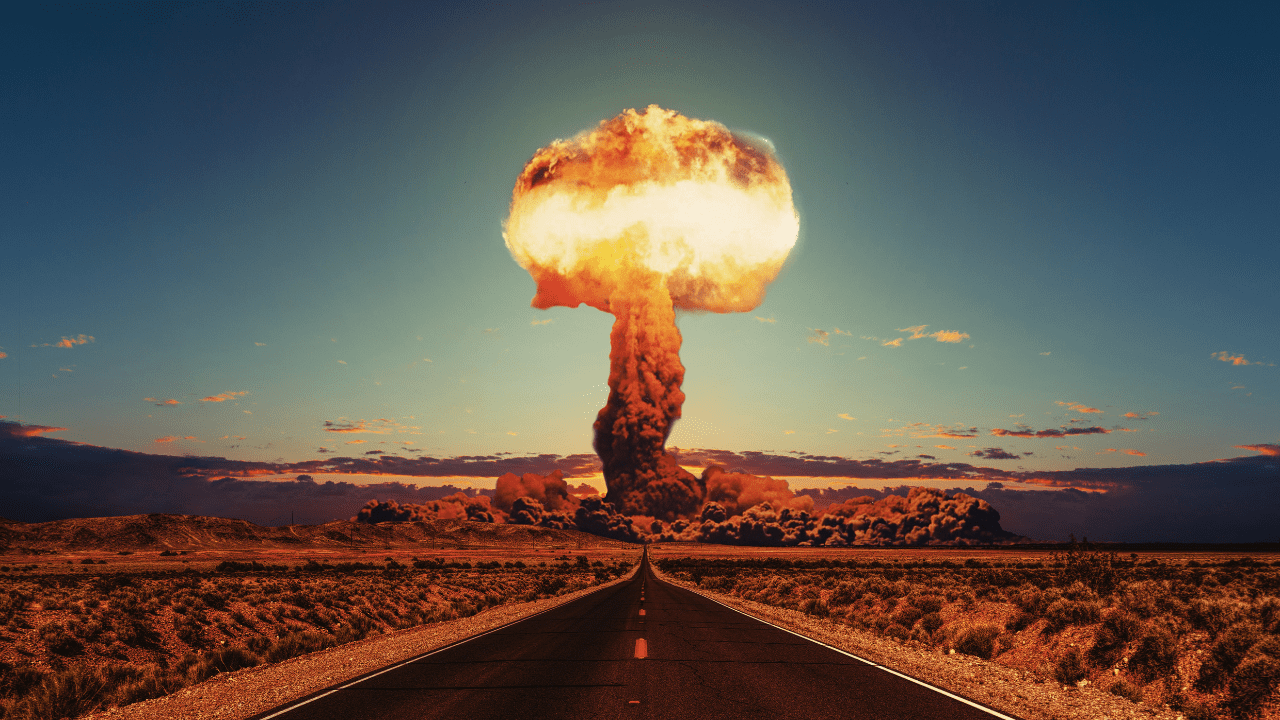
A much talked about threat of “loose nukes” comes from the former Soviet Union. Before its collapse, it had over 27,000 nuclear weapons. Though former Soviet Republics turned in their nuclear warheads to Russia in the 1990s, few countries still have stockpiles of weapons-grade uranium and plutonium. Even within Russia, authorities have admitted that they have had to break up hundreds of nuclear-material smuggling operations. Wherever nuclear materials exist, governments have to continually fight off hostile actors. Pakistan has also provoked much concern, especially considering the powerful role of its military in the government. The acquisition of nuclear technology in Pakistan itself demonstrates how nuclear secrets cannot remain safe. It was disgraced scientist, A.Q. Khan, who introduced the country’s nuclear program. He has been accused of stealing this technology through spies in other countries. Khan also confessed to contributing to the transfer of nuclear technology to Libya, Iran and North Korea. Pakistan’s own stock of nuclear weapons is also under serious threat, particularly now as it is waging a violent war against the Taliban. Unfortunately, the threat to Pakistan’s stockpile could come not only from extremists within the country, but also from the government’s lack of control over its weaponry. A book called “Deception: Pakistan, the United States and the Secret Trade of Nuclear Arms” claimed that, during the Kargil war against India, Pakistan’s nuclear weapons had been deployed to launch sites without the President’s knowledge or approval. Closer to home, the U.S. has demonstrated that even a powerful government cannot secure a full-proof grip over its weapons. For instance, in 2006 the U.S. military accidentally shipped nuclear material to Taiwan. In 2008, it was revealed that the U.S. Air Force did not know the locations of several nuclear missile components and other nuclear parts. One official said that more than 1,000 components were missing. We have all heard enough stories and seen enough pictures from Chernobyl, Hiroshima and Nagasaki to imagine the kind of damage that nuclear material in the wrong hands can cause. Can this ever be worth the risk? 10/23/2009 - 5:36pmWaxman-Markey VS Kerry-Boxer: Are either steps good enough?Posted by Komal Hiranandani
The House passed its version of climate legislation, the Waxman Markey Bill, in June, despite being criticized alternately for not doing enough and for doing too much to stop climate change. The Senate finally released its own version, the Kerry-Boxer Bill, last month, and now the same debates have started again. A few differences between the bills are notable. The House bill sought to cut emissions by 17% of 2005 levels by 2020, while Senate bill aims to raise this to 20% of 2005 levels by 2020. However, the long-term targets of both bills are the same at this time: 42% by 2030 and 83% by 2050. The Senate Bill preserves the Environmental Protection Agency's authority to regulate greenhouse gas emissions, a provision lauded by environmentalists. Both bills cap carbon offsets at 2 billion tons per year, but the Senate bill seems to go further in making sure that the offsets are credible and effective. Also, nuclear energy is dealt with more in the Senate bill by devoting a section to promote the deployments of nuclear power plants. Senators Kerry and Boxer have described their legislation as a "first step," as they wish to add and change many provisions in their attempts to secure votes for the legislation's passage. But the draft legislation is not the only first step to be taken. Passing climate legislation in the U.S. itself is just one step. Of course, neither of the bills are going to solve the But we have to start somewhere. The Kerry-Boxer bill creates the foundation for stronger environmental action in the future by setting up systems and offices to deal with climate change mitigation. Moreover, Senators Boxer and Kerry said that the implementation of the bill would lead to the creation of 1.9 million jobs in the U.S., all without adding a single penny to the deficit. Senator Kerry has also noted that the energy market is a 6 trillion dollar market with about 4.5 billion eligible users. Transitioning to a clean energy economy not only takes the urgently needed step of combating climate change, it also represents opportunities for the future. It is time for Senators on both sides of the isle to unite in the fight against climate change, one step at a time. Tags:
10/16/2009 - 4:48pmSenators Kerry and Graham Show Bipartisan Support for Climate ChangePosted by Komal Hiranandani
"We refuse to accept the argument that the United States cannot lead the world in addressing global climate change." This is the kind of support that the climate debate needed from members of Congress as the Kerry-Boxer bill introduced in the Senate battles for time on the heavy legislative agenda. Giving momentum to climate legislation once again, Senator John Kerry (D-MAS) and Senator Lindsey Graham (R- SC) published an op-ed in the New York Times making a strong statement in favor of the U.S. assuming a leadership role in climate change mitigation. Though they come from opposite sides of the aisle, Senators Kerry and Graham found much common ground as they called for bipartisan support for climate change. They said: "climate change is real and threatens our economy and national security. That is why we are advocating aggressive reductions in our emissions of the carbon gases that cause climate change... We are confident that a legitimate bipartisan effort can put America back in the lead again and can empower our negotiators to sit down at the table in Copenhagen in December and insist that the rest of the world join us in producing a new international agreement on global warming. That way, we will pass on to future generations a strong economy, a clean environment and an energy-independent nation." The innumerable harmful effects of climate change do not respect borders or political ideologies- they affect us all. This is why we all have to come together in search of a solution. Act NOW to support strengthened climate legislation in the U.S.! Tags:
09/14/2009 - 9:57amU.S. Circulates Non-Proliferation Treaty for the U.N. Security CouncilPosted by Komal Hiranandani
Among other measures, the draft resolution calls for signatories of the Non-Proliferation Treaty (NPT) to negotiate nuclear arms reduction, deplores aggressive proliferation that threatens international security (implying North Korea and Iran), encourages other countries to join the NPT, welcomes steps taken to create nuclear-weapon-free zones as those championed by some Arab states (which would require Israel to dispose of all the nuclear weapons they may possess- Israel neither confirms nor denies having a nuclear stockpile), urges countries to join the Comprehensive Test Ban Treaty (CTBT), and supports the International Atomic Energy Agency (IAEA)- the nuclear watchdog in Vienna. The democratic platform for the 2008 presidential election comprised a strong agenda for nuclear arms control including U.S. ratification of the CTBT, strengthening the IAEA, and adhering to the NPT. It is encouraging that the Obama adminstration is acting on these promises. The onus is now on U.N. Security Council members to adopt this resolution, thereby taking concrete steps to make our world peaceful and more secure. Read more here
418 7th Street SE, Washington, DC 20003-2796
Phone: (202) 546-3950 Fax: (202) 546-3749 Privacy Policy |
||||||||||
|
|
|||||||||||