This site makes extensive use of JavaScript, for the best browsing experience we recommend you enable JavaScript in your browser.
The Global Citizen: July 2012
The Arms Trade Treaty (ATT) will not pass this year and sources suggest the United States was central to its failure. The US showed little dissatisfaction throughout the month-long conference, but raised major concerns in the final hours of negotiations that ultimately killed the treaty.
The potential treaty would have been a historic advancement for international peace and security. It sought tougher regulation of the international sale of arms and the transfer of arms to perpetrators and potential perpetrators of atrocities.
GlobalSolutions.org remains committed to passing a meaningful arms treaty. We highlighted the broad significance of the treaty by sending the names of over 5,000 supporters to Secretary Clinton and other top diplomats. The Control Arms coalition also presented negotiators with several hundred thousand petition signatures supporting more regulation.
For the past two and a half years, a big part of my job at Global Solutions has involved managing the work of our political action committee, Global Solutions PAC. I've met with congressional candidates from around the country, listened to their views on foreign policy, recommended endorsements and contributions to their campaigns, and attended fundraisers to show our support. It's been a great experience, and one that has taught me quite a lot.
Now, as I prepare to leave Global Solutions and embrace new opportunities, I look back on my time here and have a few thoughts and memories I'd like to share with you.
It doesn't take a genius or political pundit to know that most Americans are not primarily focused on foreign policy this year as they decide which candidates they want to send to the White House, Senate, and House of Representatives. Most voters, understandably, are more focused on jobs and the economy. However, there is plenty of evidence that voters do want to see a U.S. foreign policy that remains engaged outside our borders and works with allies and international institutions to build a better world. For example, according to a recent survey by the Better World Campaign:
"Bringing that dark chapter into light helps clarify and sharpen what we mean when we say never again. But despite all we have learned and accomplished in the last 70 years, never again remains an unmet, urgent goal."
Addressing a crowd of 200 onlookers at the US Holocaust Memorial Museum, Secretary of State Hillary Clinton discussed the legacy of the Holocaust at a forum entitled "Imagining the Unimaginable: Ending Genocide in the 21st Century." The pledge that never again should the world stand by while millions are killed in genocide was a central theme to her keynote speech. To remember our history and learn from past mistakes is the best way to prevent and put an end to genocide in the 21st Century. Human nature did not dramatically change when the Holocaust ended, she noted, therefore, our history continues to show that putting an end to mass atrocities must still be a priority for the international community.
But how can the international community end genocide? Clinton praised the new emphasis on prevention-worldwide education efforts and Foreign Service officers sent to at-risk countries are now being trained to watch for the warning signs. Genocide does not just erupt and explode in a single moment; over time an environment is created where "hatred is not only acceptable, it is encouraged." This "license to hate, turns into the license to kill," Clinton said.
Saudi Arabian Women Athletes
Saudi Arabia is notorious for its troublesome human rights record and most especially for denying women an assortment of basic liberties. However, in a brief moment of openness, the Saudi government announced it will allow two women athletes to compete in this year’s London Olympics. It will be the first time that women are allowed to compete on behalf of the Islamic monarchy. This represents a dramatic shift in policy given that women are not allowed to participate in physical education classes or attend a gym. Their participation means that all competing countries at the Olympics will have women athletes after Brunei and Qatar relented this year.
The two athletes are named Wodjan Ali Seraj Abdulrahim Shahrkhani (competing in Judo) and Sarah Attar (competing in the 800-meter race). The women will not be allowed to interact with men, must wear “suitable” clothing, and must be accompanied at all times. While it is an encouraging development, it is unclear whether the announcement will have ripple effects for nearly fifteen million Saudi women.
Ambassador Stephen J. Rapp, U.S. Ambassador for Global Criminal Justice, spoke on July 4th in Delft at "A Grotian Moment: The International Criminal Court, The U.S. and The Hague Tradition."
It’s exciting to hear Ambassador Rapp speaking about the U.S. and the ICC at such an event. I hope this signals good things to come for the relationship between the U.S. and the Court and our country’s continued engagement with the ICC.
Watch Ambassador Rapp's speech below:
It's hardly surprising at the point, but no less sad and infuriating. Once again, Russia and China have used their permanent veto-wielding power on the U.N. Security Council to protect Syrian President Bashar al-Assad rather than the citizens his regime continues to butcher.
In another double-veto today, Russia and China voted against a Security Council resolution which would have threatened the Syrian regime with sanctions in an effort to end the bloodshed there which has gone on for more than a year and killed at least 14,000 civilians. It's not the first time Russia and China have vetoed efforts to stop Syria's crimes against its people; they've been standing in staunch opposition to any such action by the international community for months now. And whether it's the result of Russia's ties to the Assad regime, a belief that the U.N.-approved campaign in Libya last year overreached its mandate, or the fear of what message international efforts in Syria might send to their own restive populations at home, ultimately means very little.
What matters is that the Syrian peace process continues to fail, and two-fifths of the Security Council continues to shield a tyrant and international pariah who happens to be a head of state.
This morning the US Senate Committee on Foreign Relations held a hearing on The Next Ten Years in the Fight Against Human Trafficking: Attacking the Problem with the Right Tools. Holly Burkhalter of International Justice Mission, David Abramowitz of Humanity United, and Jada Pinket Smith of Don't Sell Bodies testified, citing the enormity of the issue on a global scale.
While keeping myself from diving over the row of chairs separating me from Will Smith and his daughter Willow, I was shocked to hear that worldwide, there are 27 million women, children, and men being held in modern-day slavery. I am already convinced on how urgent this issue of sex trafficking and forced prostitution is; for it is a topic I am passionate about. Yet to others, what could have been the most convincing element of the testimonies to bring greater awareness, action, and prevention of human slavery were the stories of three women that Ms. Pinkett Smith brought to sit in the hearing. These three women had been either abducted as children, abused by her own parents, or kicked out of foster care-and all had suffered as victims of sexual slavery.
Social media is now a part of everyday life for millions of people across the world and even more so for young people. Organizers behind the 2012 Olympic Games in London aim to capture this momentum by integrating services like Facebook and Twitter into this summer's games. There are already four official Twitter accounts associated with the event, a Youtube channel, Facebook page, Flickr slideshow, iPhone app, the list goes on and on.
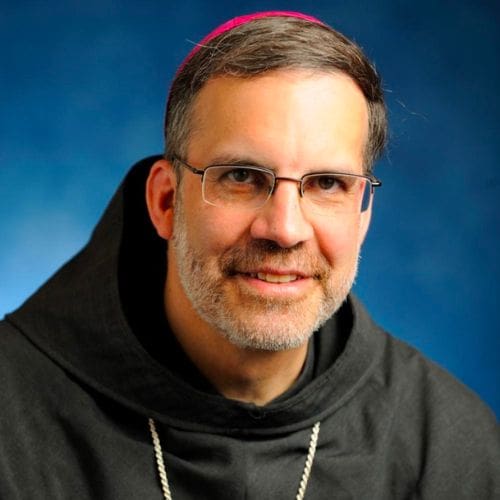
In a development sure to spark renewed tensions between the Chinese government and the Vatican, a Catholic bishop has reportedly been detained by Chinese authorities after announcing his resignation from the state-sponsored Chinese Patriotic Catholic Association (CPCA).
The bishop, Thaddeus Ma Daqin (pictured above), is reportedly being held in a seminary near Shanghai, where he is barred from contact with the outside world. During his Saturday ordination ceremony, Ma announced that he was resigning from the CPCA, declaring that "once you assume your pastoral job...your body and heart should be completely focused on pastoral things and evangelization." This resignation was apparently perceived as a threat to the authority of the Chinese government, which exercises official supervision over China's Catholic population through the CPCA.
We're excited to announce a unique opportunity to join our exclusive webinar, "A Giant Step Towards 'Never Again:' 10 Years of International Justice." The webinar will be held this Saturday at 1:00 PM EST and feature a discussion on the International Criminal Court as it celebrates the 10th anniversary since its creation. The webinar will feature esteemed speakers Luis Moreno Ocampo, former Chief Prosecutor of the ICC, and Ben Ferencz, professor and former Nuremberg Prosecutor.
The International Criminal Court (ICC) is the first permanent international judicial body capable of trying individuals for genocide, crimes against humanity and war crimes when national courts are unable or unwilling to do so. Its founding treaty, the Rome Statute, entered into force on July 1, 2002 thereby creating the Court and its ability to prosecute war criminals.
As of April 2012, 121 states are parties to the Statue of the Court and thirty-two others, including the United States, have signed but not ratified the Rome Statute. There have been 28 indictments, 20 warrants of arrest, 15 cases brought to the Court, six of which are currently on trial, and 9 successful summonses. The court celebrated a landmark moment when it completed its first trial in March 2012, convicting Thomas Lubanga of the Democratic Republic of the Congo of using child soldiers.
Pages
Topics
- Arms Control (22)
- Become a Member (3)
- Become a Member (1)
- Capitol Hill (164)
- CGS Political Action Committee (PAC) (17)
- Chapters (4)
- Civilian Protection (133)
- Climate Change (94)
- Comprehensive Test-Ban Treaty (CTBT) (2)
- Congressional Report Card (7)
- Current Campaigns (8)
- Election News & Analysis (101)
- Fellows (2)
- Gender Based Violence (26)
- Genocide Prevention (113)
- Get Involved (68)
- Home (12)
- Human Rights (223)
- Human Rights Council (31)
- International Criminal Court (167)
- International Criminal Justice (51)
- Law & Justice (211)
- Law of the Sea Treaty (55)
- Nuclear Disarmament (81)
- Nuclear Non-Proliferation Treaty (NPT) (2)
- Other (33)
- PAC: 2010 Election Endorsements (3)
- Partners for Global Change (2)
- Peacekeeping (104)
- Prevent War (181)
- Rights of the Child Treaty (10)
- Strategic Arms Reduction Treaty (START) (19)
- Support Us (14)
- Take Action (24)
- Tax Deductible Giving (2)
- UN Funding (71)
- UN Reform & Revitalization (43)
- United Nations (321)
- usaforicc.org (1)
- WFI (5)
- Women's Rights Treaty (CEDAW) (47)
Archive
- May 2013 (5)
- April 2013 (10)
- March 2013 (6)
- February 2013 (16)
- January 2013 (12)
- December 2012 (4)
- November 2012 (11)
- October 2012 (11)
- September 2012 (7)
- August 2012 (3)
- July 2012 (17)
- June 2012 (23)