This site makes extensive use of JavaScript, for the best browsing experience we recommend you enable JavaScript in your browser.
The Global Citizen: ICC
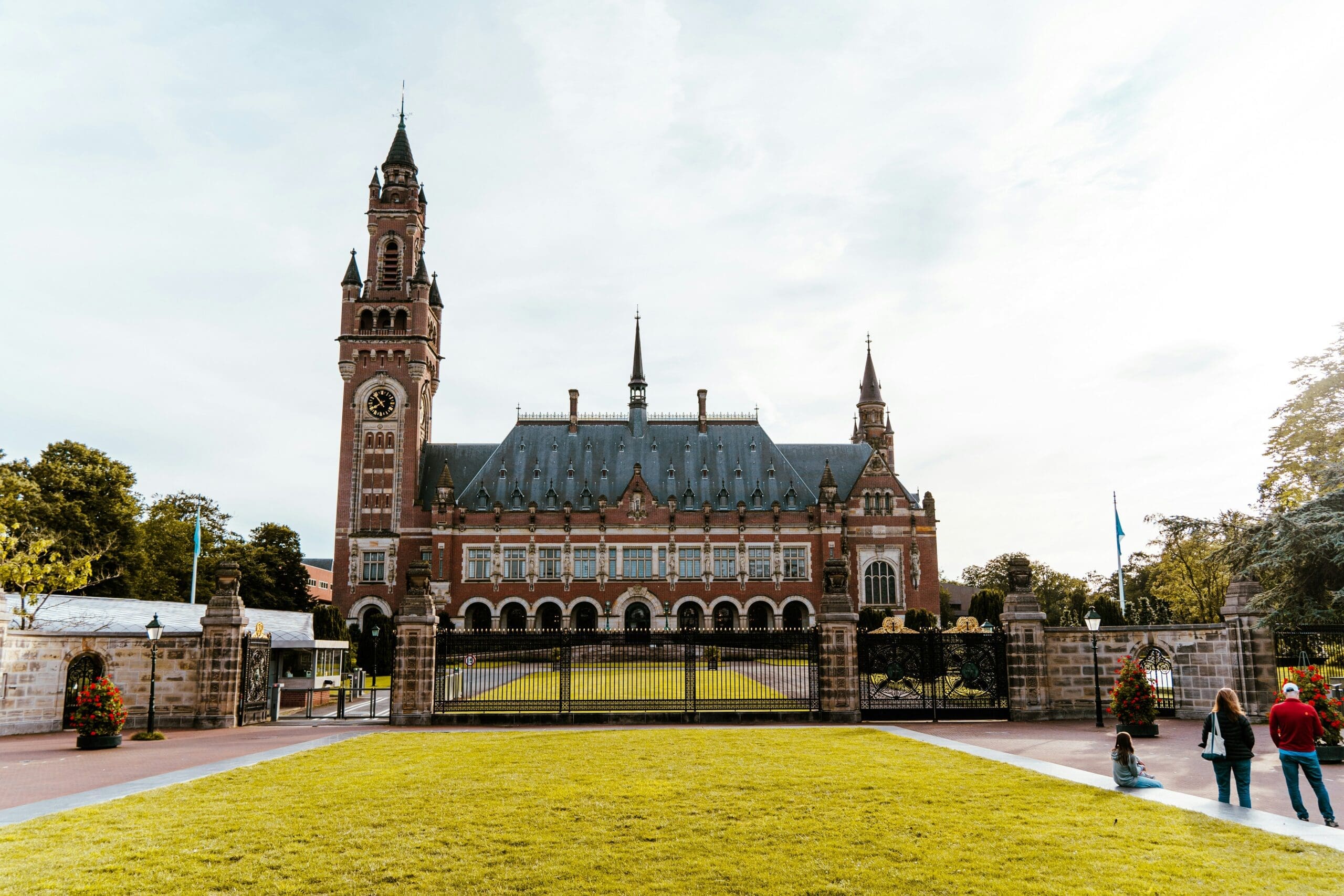
Ambassador Stephen J. Rapp, U.S. Ambassador for Global Criminal Justice, spoke on July 4th in Delft at "A Grotian Moment: The International Criminal Court, The U.S. and The Hague Tradition."
It’s exciting to hear Ambassador Rapp speaking about the U.S. and the ICC at such an event. I hope this signals good things to come for the relationship between the U.S. and the Court and our country’s continued engagement with the ICC.
Watch Ambassador Rapp's speech below:
Today, the International Criminal Court's (ICC) first trial was completed with the sentencing of Thomas Lubanga Dyilo to fourteen years in prison. Lubanga, of the Democratic Republic of Congo, was found guilty by the Court in March of conscripting child soldiers for use in battle.
This first sentencing is certainly a landmark moment for the ICC. It's good to see the Court complete a trial and ensure that a vicious warlord will be put away, though it's a bit disheartening to see the length of the sentence is shorter than what the ICC Prosecutor had recommended. The prosecution had asked for Lubanga to serve 30 years for his crimes. His sentence is further reduced because the six years he's been in custody will count toward his incarceration, so he will only serve an additional eight years (with the possibility of getting out even sooner due to good behavior).
With all that said, I'm still happy to see some measure of justice done in today's sentencing of Lubanga. I'm proud to see the ICC reach this milestone moment, and I hope this sentence brings some measure of peace to Lubanga's victims and their families. I look forward to a future in which the Court succeeds in putting many other war criminals behind bars where they belong.
For those of us who are passionate about international justice, yesterday marked an extraordinary milestone. The International Criminal Court (ICC), the world's first permanent international court, celebrated its 10th anniversary. However, its roots go back much further than a mere decade.
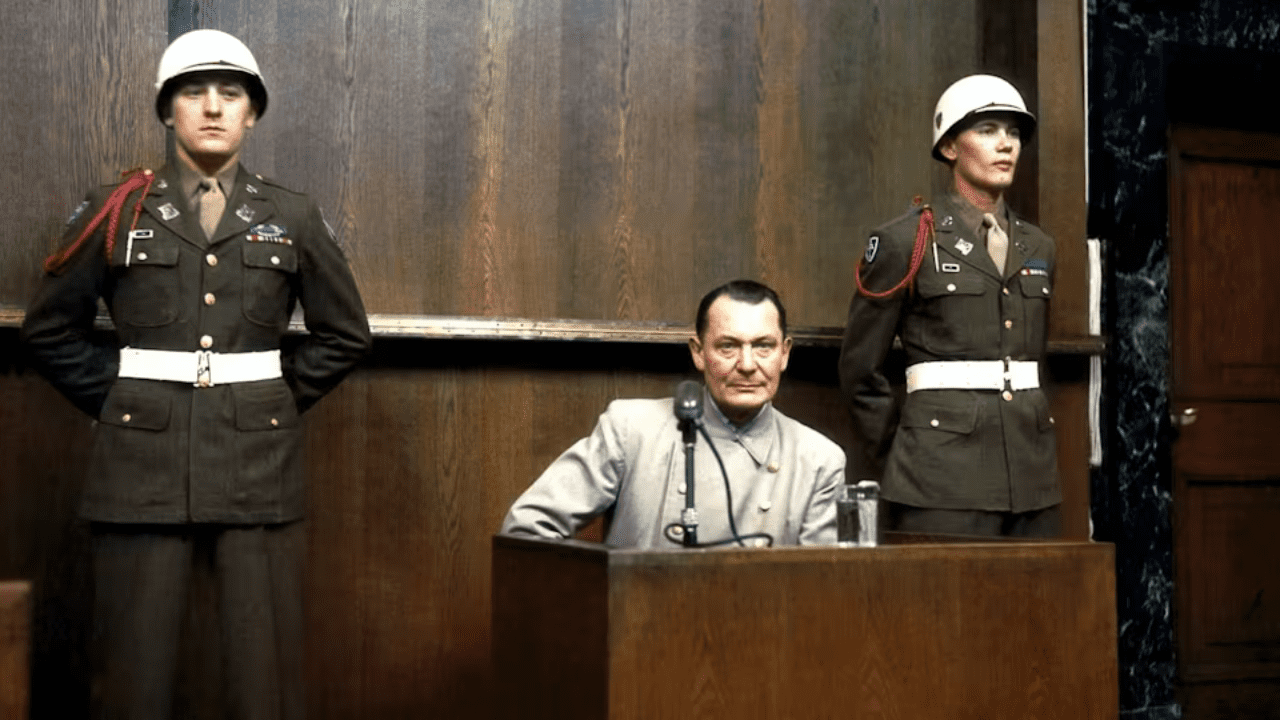
The ICC traces its heritage in part back to the Nuremberg trials after World War Two, in which the U.S. played a leading role. Nazi war criminals were put on trial and brought to justice for horrific crimes against humanity committed during the war, and the international community vowed "never again" to allow such atrocities to happen on its watch. Tragically, this promise remained unfulfilled as the 20th century continued to witness genocides in places as diverse as Rwanda, the former Yugoslavia, and Sudan. The need for a permanent international body to bring war criminals to justice remained glaring.
In 1998, representatives from around the world met in Rome, Italy to firm up plans for such an international court. The result was the Rome Statute and the creation of the ICC. The Court officially came into being on July 1, 2002.
Today, Fatou Bensouda was sworn in as the new Prosecutor of the International Criminal Court (ICC), replacing the Court's first Prosecutor, Luis Moreno-Ocampo. Bensouda is the first woman and African to hold this position.
Bensouda, who is from Gambia, previously served as ICC Deputy Prosecutor, working closely with Ocampo, so it seems the first Prosecutor-to-Prosecutor transfer of power in the Court's history should go smoothly. Her experience is impressive, and additionally, the fact that she is an African woman will likely help to blunt the perception on the part of some critics that the ICC is targeting Africa unfairly in its investigations.
I was fortunate to have the opportunity to hear Prosecutor Bensouda speak at an event at the Assembly of States Parties meeting last December. She made compelling reference to the need for the Court to focus its attention on gender-based violence and bring perpetrators of these crimes to justice. I was impressed by Bensouda, and I look forward to seeing what her next steps as Prosecutor will be as the Court nears its milestone 10th anniversary in July.
Congratulations, Prosecutor Bensouda! And thank you to former Prosecutor Ocampo for all of your efforts to establish the Court's role in bringing about international justice.
Four staffers of the International Criminal Court (ICC) were detained in Libya over the weekend after meeting with Saif Gaddafi, son of the deposed dictator, who has been indicted by the Court. An ICC team is currently working to secure their release.
ICC President Song has called for the release of the staffers, noting that "These four international civil servants have immunity when on an official ICC mission."
Australian ICC lawyer Melinda Taylor was found carrying documents for Gaddafi that were considered "suspicious" by the Libyan authorities. She and her fellow ICC staff were put under house arrest in the town of Zintan and have been ordered to be held in detention for 45 days.
This latest drama comes as the ICC and Libya remain engaged in a broader tug-of-war over where the younger Gaddafi should be tried. The Libya situation was referred to the ICC last spring by the U.N. Security Council, and the ICC has issued an arrest warrant for Gaddafi. The new Libyan government has expressed a strong desire to try Gaddafi in the country, but it is unclear that they have a sufficient judicial system set up to ensure a fair trial.
We will keep you updated as more news becomes available.
If you're like me, there's nothing quite as much fun as making a list. And listing "winners and losers" on a weekly, monthly, or yearly basis is something of a D.C. tradition. So I'm going to start a regular blog series on "Heroes and Zeros" around the globe-commending those leaders, governments, or ordinary people who did something great that positively impacts the global issues that Globalsolutions.org cares about, and calling out those whose actions have hurt the cause of creating a better world.
Here's the first edition-and feel free to let me know what you think and provide feedback!
Hero of the Week: The Nation of Malawi
As someone who follows the work of the International Criminal Court (ICC) closely, I feel that all too often I'm writing about how some new nation has flouted ICC arrest warrants by inviting a convicted war criminal for a visit. But happily, this week indicates the tide may be starting to turn on this loathsome practice, as illustrated by Malawi's refusal to host Sudanese president--and ICC indictee--Omar al-Bashir. Malawi was scheduled to hold an African Union summit, but got into a dispute with the AU because it refused to allow Bashir to attend. Despite protests from the AU, Malawi held firm to its no-Bashir stance, and the summit was moved to another country.
Outgoing International Criminal Court Prosecutor Luis Moreno-Ocampo called on the United Nations Security Council to expedite the arrest of Sudanese president Omar al-Bashir yesterday. The United Nations does not have an independent body capable of making the arrest, but they can pressure neighboring states to arrest Bashir if given the opportunity. Bashir currently faces two arrest warrants for crimes against humanity, war crimes, and genocide in the Darfur conflict that killed an estimated 300,000 people. His role in the conflict is nearly undeniable, but ICC member states are reluctant to make an arrest because of economic and military geopolitics.
The chief prosecutor's call to action obviously did not sit well with the Sudan's representative to the United Nations Daffa-Alla Elhag Ali Osman. He claims that Moreno-Ocampo is "ignoring the U.N. Charter" by pursuing the arrest warrant against Bashir and other Sudanese officials. At the end of the Security Council session, he went further by calling the chief prosecutor's plea the "statement of a terrorist." However, Moreno-Ocampo countered by saying that the representative's unwillingness to cooperate could implicate him in the crimes as well.
Today, ICC Prosecutor Luis Moreno-Ocampo announced he would seek new charges against Bosco Ntaganda of the Democratic Republic of Congo (DRC).
Ntaganda was already charged by the ICC in 2006 for the use of child soldiers in battle. Prosecutor Ocampo is now seeking to add charges of crimes against humanity for murder, ethnic persecution, rape and sexual slavery, as well as war crimes charges for "intentional attacks" against civilians leading to murder, rape, sexual slavery and pillaging. These alleged crimes were committed in the DRC between 2002-2003.
Lubanga also asked for an arrest warrant against the DRC's Sylvestre Mudacumura, who he said has "launched a campaign of attacks against the civilian populations in the Kivus." He is charged with charged with five counts of crimes against humanity: murder, inhumane acts, rape, torture and persecution, and nine counts of war crimes: attack against a civilian population, murder or willful killing, mutilation, cruel treatment, rape, torture, destruction of property, pillaging and outrage upon personal dignity.
Speaking about Ntaganda, who is known as "The Terminator" and currently on the run, Lubanga states that,
Luis Moreno-Ocampo, chief prosecutor of the International Court (ICC), met yesterday with Libyan officials who reiterated their refusal to hand over Saif Gaddafi to the ICC.
Saif, along with his late father Muammar Gaddafi and Gaddafi's former intelligence chief Abdullah al-Senoussi, have been charged by the Court with crimes against humanity following an investigation last spring after the U.N. Security Council referred the situation in Libya to the ICC. The new Libyan government had previously pledged to work with the ICC and hand over the indictees so they could face trial in The Hague. Since then, however, Libya had pushed to keep Saif in Libya and try him there, while the ICC had insisted he be turned over to the Court.
But Prosecutor Ocampo sounded a different note yesterday after meeting with Libyan leaders, stating ""They believe they can do it, it's not my call. The decision here is for the judges, not for me." Despite the fact that the ICC should have jurisdiction in the Saif Gaddafi case due to the Security Council referral, Ocampo added that "The legal system here is okay... The fact that we are discussing how to do justice - if the Libyans do it or the ICC does it - shows that the case is moving. One year ago it was a mess, today we are discussing legal issues, we are organizing, everything is different."
We'll continue to keep you updated on the Saif Gaddafi situation as events unfold.
The Libyan government has appealed an order by the International Criminal Court (ICC) to hand over Saif al-Islam Gadhafi, son of late Libyan dictator Muammar Gaddafi, for trial. Libya insists it can provide a fair trial for Gaddafi, who was indicted by the ICC.
The problem is, the United Nations already referred the situation in Libya to the ICC last spring. The Court then issued arrest warrants for Saif, his father, and Gaddafi's former intelligence chief Abdullah al-Senoussi for crimes against humanity stemming from their involvement in the violent crackdown on civilians which took place in Libya for several months last year. Because the UN Security Council referred the situation in Libya to the ICC, the Court has jurisdiction over the case, even though Libya is not an ICC state party. Several months ago, ICC Prosecutor Luis Moreno-Ocampo had said Libya's National Transitional Council (NTC) agreed to work with the ICC and hand over the indictees.
Pages
Topics
- Arms Control (22)
- Become a Member (3)
- Become a Member (1)
- Capitol Hill (164)
- CGS Political Action Committee (PAC) (17)
- Chapters (4)
- Civilian Protection (133)
- Climate Change (94)
- Comprehensive Test-Ban Treaty (CTBT) (2)
- Congressional Report Card (7)
- Current Campaigns (8)
- Election News & Analysis (101)
- Fellows (2)
- Gender Based Violence (26)
- Genocide Prevention (113)
- Get Involved (68)
- Home (12)
- Human Rights (223)
- Human Rights Council (31)
- International Criminal Court (167)
- International Criminal Justice (51)
- Law & Justice (211)
- Law of the Sea Treaty (55)
- Nuclear Disarmament (81)
- Nuclear Non-Proliferation Treaty (NPT) (2)
- Other (33)
- PAC: 2010 Election Endorsements (3)
- Partners for Global Change (2)
- Peacekeeping (104)
- Prevent War (181)
- Rights of the Child Treaty (10)
- Strategic Arms Reduction Treaty (START) (19)
- Support Us (14)
- Take Action (24)
- Tax Deductible Giving (2)
- UN Funding (71)
- UN Reform & Revitalization (43)
- United Nations (321)
- usaforicc.org (1)
- WFI (5)
- Women's Rights Treaty (CEDAW) (47)
Archive
- May 2013 (5)
- April 2013 (10)
- March 2013 (6)
- February 2013 (16)
- January 2013 (12)
- December 2012 (4)
- November 2012 (11)
- October 2012 (11)
- September 2012 (7)
- August 2012 (3)
- July 2012 (17)
- June 2012 (23)