Subscribe!

Email:
Zip:

10/30/2009 - 5:13pm

Can Nukes Ever be Safe?

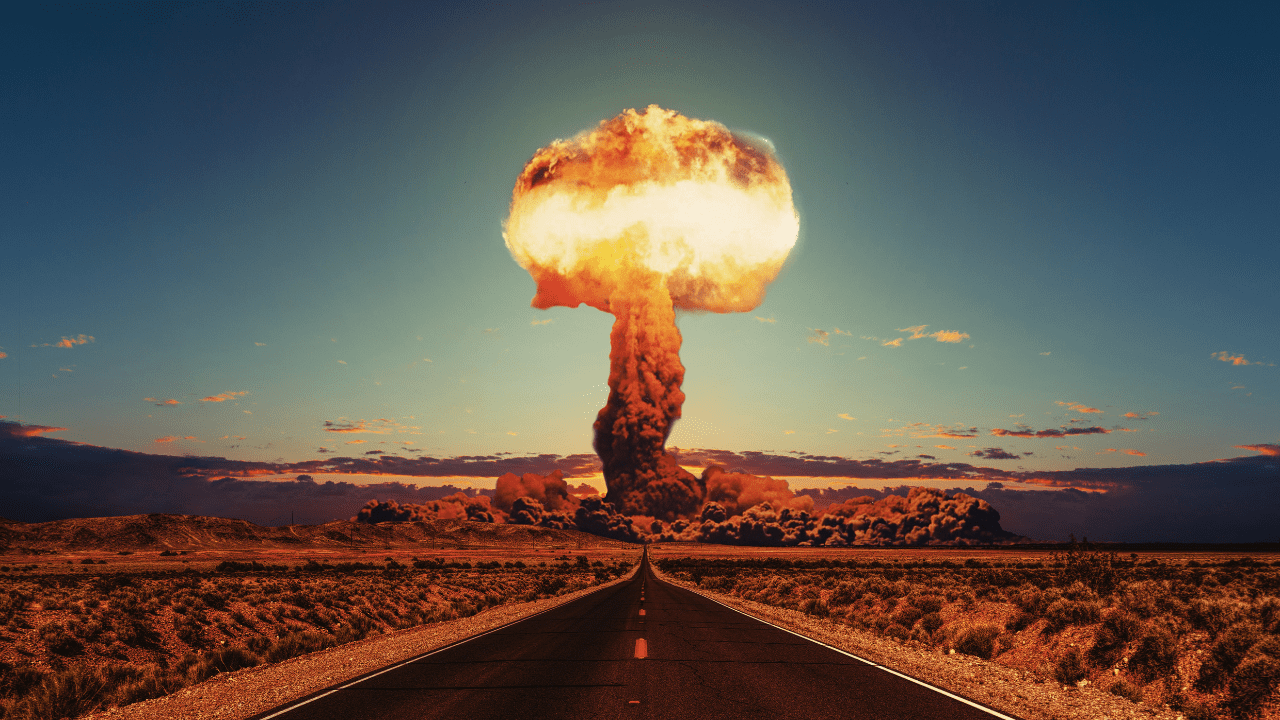
Academics often cite “security dilemma” explanations to demonstrate how nuclear proliferation spreads. When one country has it, others will follow suit in case the country decides to attack. Many proponents of nuclear weapons believe that the world is safer precisely because of nuclear weapons and the threat of mutually assured destruction if any country uses such violence against its enemies. The biggest flaw in this logic is that assumes that states with nuclear weapons have full control over them. The alternative is truly frightening to consider, but sometimes we need to remind ourselves about the threat of nuclear technology going into the wrong hands.

A much talked about threat of “loose nukes” comes from the former Soviet Union. Before its collapse, it had over 27,000 nuclear weapons. Though former Soviet Republics turned in their nuclear warheads to Russia in the 1990s, few countries still have stockpiles of weapons-grade uranium and plutonium. Even within Russia, authorities have admitted that they have had to break up hundreds of nuclear-material smuggling operations. Wherever nuclear materials exist, governments have to continually fight off hostile actors.

Pakistan has also provoked much concern, especially considering the powerful role of its military in the government. The acquisition of nuclear technology in Pakistan itself demonstrates how nuclear secrets cannot remain safe. It was disgraced scientist, A.Q. Khan, who introduced the country’s nuclear program. He has been accused of stealing this technology through spies in other countries. Khan also confessed to contributing to the transfer of nuclear technology to Libya, Iran and North Korea. Pakistan’s own stock of nuclear weapons is also under serious threat, particularly now as it is waging a violent war against the Taliban. Unfortunately, the threat to Pakistan’s stockpile could come not only from extremists within the country, but also from the government’s lack of control over its weaponry. A book called “Deception: Pakistan, the United States and the Secret Trade of Nuclear Arms” claimed that, during the Kargil war against India, Pakistan’s nuclear weapons had been deployed to launch sites without the President’s knowledge or approval.

Closer to home, the U.S. has demonstrated that even a powerful government cannot secure a full-proof grip over its weapons.  For instance, in 2006 the U.S. military accidentally shipped nuclear material to Taiwan. In 2008, it was revealed that the U.S. Air Force did not know the locations of several nuclear missile components and other nuclear parts. One official said that more than 1,000 components were missing.

We have all heard enough stories and seen enough pictures from Chernobyl, Hiroshima and Nagasaki to imagine the kind of damage that nuclear material in the wrong hands can cause. Can this ever be worth the risk?

10/29/2009 - 5:23pm

Nuclear activism for a new generation

I remember watching President Obama’s speech on nuclear non-proliferation in Prague. Like so many of the President’s speeches, it was deeply moving; evoking the historical context and projecting a bold new vision of the future.


Yet something felt missing from his speech. I realized it was nothing he actually said or failed to say, but it was my own reaction: the issue, nuclear weapons, simply did not move me in the way that other issues he has addressed, such as peace in the Middle East or improving the United Nations.


I consider this strange, because I am trained in international law. If anyone should care about non-proliferation, it should be me. Yet I realized that growing up, I and my entire generation, simply don’t have the same appreciation of the issue as generations past. Horrific images from Hiroshima and Nagasaki have been relegated to the history books, we were not taught to duck and cover in school, we did not live through the fear of Mutually Assured Destruction, nor were subjected to the infamous Daisy ad. All of these things added to the public consciousness, and nuclear non-proliferation was an issue that mattered to all on an emotional level. While intellectually I don’t think that North Korea and Iran should have the bomb, on a deeper level, it does not particularly perturb me if they do. I believe this is the feeling which many people in my generation would have, if they thought about this honestly. Our generation, in many respects, has ‘emotionally forgotten’ this issue.


What does this mean, in practice? Ultimately, our congressional representatives do our best to represent us – it keeps them getting re-elected. So when we lack passion on a subject, chances are, they do too. I look around and see very limited activism on nuclear issues, and even less attention to them by our Congress. The President may be displaying great leadership on the issue, but it will ultimately be pointless if we don’t follow and push Congress to take action on it, such as ratifying the Comprehensive Test Ban Treaty. Worse still, it is far from certain that future Presidents will take as strong an approach as Obama on an issue which simply does not make a blip on the electoral radar.


Obviously this is a massive, complicated issue that can’t be solved easily. Getting people to care enough about an issue to take action is the art of the social movement, and countless books have been written on that. But there is one very important step that can, and must, be taken for this issue to remain prominent over time.


While our generation might be oblivious to the threat of nuclear weapons, we are far from disengaged on foreign policy. Thanks to globalization, the internet, etc. there are millions of young people across America who would proudly consider themselves citizens of the world. The passion is there, but it is not for a particular issue, but towards a more generalized loyalty to humanity as a whole. It comes not from a fear of nuclear war, or terrorism, or even climate change, but from the vision of a better future – without knowing the details of what it might look like, we aspire to build a more beautiful world. At the moment, this is a sentiment that foreign policy activists are, for the most part, failing to tap into.


Thus the time has come to assemble a grand foreign policy coalition in this country, pinned together on this sentiment. It would encompass groups dealing with climate change, peace and conflict, UN Reform, human rights, poverty, international financial institution reform, etc. Nuclear issues would fit squarely within it – it is not the trendy issue of the hour, but it would capitalize on the fire of this broad coalition. A coalition like this, which respected the different issues but harnessed their commonalities, would have a profound impact on this country’s foreign policy.


I am deeply optimistic that this will happen. Over my months here as an intern at Citizens for Global Solutions, I’ve come to see that this, ultimately, is what this organization is working towards. Other organizations are working towards this as well. Yet it is a process which is only just beginning. I would encourage all activists on international issues, and people who are simply sympathetic to a particular cause, to look beyond their individual issue, and realize that not only could we achieve more if we worked under a single banner, but that ultimately, we are all fighting for the same thing.

10/28/2009 - 1:38pm

Is the United States Treating Iranian Nuclear Threats as a Multilateral Challenge?

It is obvious that the majority of the world wants to live without the threat of nuclear war. Even those who have the nuclear capabilities that could cause war would most likely not want to use those weapons. However, whose responsibility is it to prevent other countries from using nuclear weapons, let alone prevent them from building capabilities? In recent years, the United States has often been referred to as a world policeman, telling countries what they can and cannot do.  It has especially been a point of contention when it comes to other countries developing nuclear capabilities since the U.S. has them itself. Iran is one country that is in the international spotlight for its nuclear activities, and the United States would like to have more control over those activities.

The rumors have been swirling for years that the Iranians are building up their capabilities to create atomic weapons at their nuclear power sites. Tensions have headed up in recent years leading the U.S. to firm statements condemning Iran for any efforts to create nuclear weapons. However, the Obama administration knows that it cannot win this fight alone. At the United Nations General Assembly in September, President Obama led a meeting on nuclear nonproliferation and disarmament. He made it clear that he was looking for multilateral support and cooperation to handle these elaborate challenges to global security.


In recent weeks, U.S. diplomats have pushed with its international partners to nudge Iran into agreeing to not use its nuclear facilities to build atomic weapons. Just last week, the U.S., Russia, France and the International Atomic Energy Agency (IAEA) gave Tehran until last Friday to accept a negotiated offer. The deal would mean that Iran would convert low-enriched uranium into fuel to run its Tehran Research Reactor, which Iran might otherwise enrich further to make a bomb. Friday came and went without an official Iranian response. White House officials indicated they would wait a bit longer to see if Iran would accept the offer.


The United States seems to be more of a team player when it comes to Iran these days despite Secretary of State Hillary Rodham Clinton’s mention of a “defense umbrella” in July. A defense umbrella or extended deterrence is meant to protect U.S. friends and allies in the Middle East and Europe, similar to the security umbrella the United States provided to Germany during the Cold War.


Overall, friendly countries with less power and capabilities are willing to give the United States the power to protect them from Iranian nuclear threats. More prominent countries want the United States to work multilaterally in order to sanction and pressure Iran. Knowing the United States, our administration is likely to try and walk a thin line between international cooperation while also serving its own interests and those of its allies quite openly. We’ll have to wait and see how long it takes before the international community starts calling the United States a global policeman again.

10/27/2009 - 4:48pm

Nuclear Nonproliferation or Disarmament?

In light of growing threats from Iran and North Korea, the prospect of nuclear non-proliferation is on everyone’s minds.  But, is it even possible?  If so, what would it entail?  President Obama led a session at the UN in the end of September which addressed these issues, concluding that a stronger nuclear nonproliferation strategy is necessary to achieve “a world without nuclear weapons.”

Yet, nonproliferation does not imply a world without nuclear weapons.  Instead, it implies a world without any more nuclear weapons.  For a world truly devoid of nuclear weapons, disarmament, not nonproliferation, must be the goal.   Nonproliferation is in itself a strong objective as it will bring an end to the spread of nuclear weapons, but this alone is not enough.

The international community has taken steps towards nonproliferation through a series of treaties.  The first, the Non-Proliferation Treaty (NPT) of 1970 requires that nuclear-states to disarm completely and non-nuclear states to halt all development of the weapons.  However, until recently, even the United States wasn’t making an effort at reducing nuclear arms.  The 2002 Nuclear Posture Review reported the US’ plans to maintain large amounts of nuclear weapons.  Fortunately, the new administration under President Obama, is much more wiling to cooperate with the tenants of the NPT.

A second nuclear treaty was a bilateral agreement between the US and the USSR. The Strategic Arms Reduction Treaty I (START I) limited each signatory to 1,600 Strategic Nuclear Delivery Vehicles and 6,000 Accountable Warhead.  This treaty will expire in December and it is crucial that its successor goes beyond solely limitation and calls for the complete disarmament of nuclear weapons.    

Both of the above treaties are solid steps in the right direction.  Yet, it is crucial that all involved parties are aware that non-proliferation is a means to an end.  And the end is disarmament.  Then, we truly will have “a world without nuclear weapons.”  

10/26/2009 - 4:47pm

Proliferation and Instability

Nuclear proliferation equates to regional instability and insecurity. We have seen destabilizing situations. Pakistan- India, Iran-Middle East, and the fear of loose fissile material. It’s about time the U.S. change its rhetoric in regard to nuclear proliferation. Unlike the past administration, this administration does not shun the International Atomic Energy Agency (IAEA). The IAEA has just arrived in Iran to conduct inspections, and the U.S. is finally holding high level talks with Iran on their nuclear program. These talks are being conducted through a multilateral approach --with the support of the Permanent-Five members of the United Nations.  

It is not surprising that Iran and North Korea’s attempts to process nuclear material have led to regional uncertainty and tension. States in those regions feel threatened and often feel the need to counter any shifts in regional power. During the Bush administration, Israel drew up plans to attack a few of Iran’s nuclear sites. Iran has also threatened Israel should it attack any Iranian territory. China, Japan, South Korea, Russia, and other powers around the Korean Peninsula feel uneasy. These tensions only fuel our stance that nuclear proliferation is of no benefit to anyone. We still have enough nuclear weapons to destroy the world many times over.

It is time for the U.S. to set an example. We have taken some steps with Russia to reduce our stockpile, but it is time to do more. We must ratify the Comprehensive Nuclear Test Ban Treaty, fulfill our obligations under the Non-proliferation Treaty, and must strengthen the IAEA.

10/23/2009 - 5:36pm

Waxman-Markey VS Kerry-Boxer: Are either steps good enough?

The House passed its version of climate legislation, the Waxman Markey Bill, in June, despite being criticized alternately for not doing enough and for doing too much to stop climate change. The Senate finally released its own version, the Kerry-Boxer Bill, last month, and now the same debates have started again.

A few differences between the bills are notable. The House bill sought to cut emissions by 17% of 2005 levels by 2020, while Senate bill aims to raise this to 20% of 2005 levels by 2020. However, the long-term targets of both bills are the same at this time: 42% by 2030 and 83% by 2050. The Senate Bill preserves the Environmental Protection Agency's authority to regulate greenhouse gas emissions, a provision lauded by environmentalists. Both bills cap carbon offsets at 2 billion tons per year, but the Senate bill seems to go further in making sure that the offsets are credible and effective. Also, nuclear energy is dealt with more in the Senate bill by devoting a section to promote the deployments of nuclear power plants.

Senators Kerry and Boxer have described their legislation as a "first step," as they wish to add and change many provisions in their attempts to secure votes for the legislation's passage. But the draft legislation is not the only first step to be taken. Passing climate legislation in the U.S. itself is just one step. Of course, neither of the bills are going to solve the problem. The Intergovernmental Panel on Climate Change has estimated that emissions need to be reduced to 25%-40% below 1990 levels by 2020 in order to revert the worst effects of climate change, which is already responsible for over 300,000 deaths a year according to the Global Humanitarian Forum. The Senate bill only reduces emissions to 7% of 1990 levels by 2020.

But we have to start somewhere. The Kerry-Boxer bill creates the foundation for stronger environmental action in the future by setting up systems and offices to deal with climate change mitigation. Moreover, Senators Boxer and Kerry said that the implementation of the bill would lead to the creation of 1.9 million jobs in the U.S., all without adding a single penny to the deficit. Senator Kerry has also noted that the energy market is a 6 trillion dollar market with about 4.5 billion eligible users. Transitioning to a clean energy economy not only takes the urgently needed step of combating climate change, it also represents opportunities for the future. It is time for Senators on both sides of the isle to unite in the fight against climate change, one step at a time.

10/22/2009 - 2:00pm

The United States and the U.N. Climate Conference in Copenhagen

The United Nations Climate Conference in Copenhagen is set for December 7th through December 18th 2009. The main goal of this conference is to create an international treaty that establishes a global climate agreement to replace the Kyoto Protocol which expires in 2012. The target of the Kyoto Protocol was to reduce greenhouse gas emissions by an average of 5.2% of 1990 levels by 2010.

The Kyoto Protocol was important because it set international standards and commitments for greenhouse gas emissions which demonstrated an international effort to protect the environment. It is crucial that the U.N. Climate Conference in Copenhagen ends with a treaty because the work that has been started to combat global warming is not yet over. Without a comprehensive and binding treaty, it cannot be possible to expect countries to commit to long-term emission reductions.

The United States has an especially important role in the Copenhagen conference. The U.S. has the chance to be a leader at this conference. However, the legitimacy of this leadership is heavily tied to domestic policy in America. It is important for the U.S. to pass domestic legislation that sets targets for emission reductions before Copenhagen. However, any legislation passed should show a serious dedication to cutting emissions. The American Clean Energy and Security Act, passed in May 2009, aims to reduce emissions by 4% of 1990 levels, and the Boxer-Kerry bill has proposed to cut emissions by 7% of 1990 levels. But, the scientific community has asserted that a 40% reduction of 1990 levels is necessary to really make a difference. While it is important to see the U.S. taking steps to reduce greenhouse gas emissions, the proposed reductions are a very small margin of what is actually needed to effect global climate change. For the United States to take a real leadership role in the battle against climate change, higher emissions reduction commitments are absolutely necessary.

The United States is one of the highest emitters of carbon dioxide in the world; however the effects of climate change are ever-present in developing countries that have very small emissions. The upcoming conference in Copenhagen will hopefully yield positive results, but it is critical for the U.S. to ratify and enforce any new treaty that is created. It is time for the United States to take responsibility for the damage it has done and commit to more significant reductions in emissions.

10/21/2009 - 2:41pm

"Cap-and-Trade:" A Historical Analysis

A key component of the Boxer-Kerry Bill is a policy called “cap-and-trade.”  “Cap-and-trade” is a method that provides an economic incentive for the greenhouse-gas-emitting entities to reduce their emissions.  More specifically, the policy identifies the entities and gives them a set allowance for their emissions.  The sum of all the greenhouse gas emitted by all the entities equals the national cap. In return, the entities are allowed to trade their allowance credits amongst themselves for a profit. 
 
While the Boxer-Kerry Bill includes this policy, it shies away from the term “cap-and-trade,” referring to it instead as the “pollution reduction and investment” program.  Why did they change the wording of the policy? A historical analogy of the policy to the Slave Trade Act of 1807 may provide a clue.  This act abolished the Atlantic slave trade, yet did not abolish the act of slavery itself.  Thus, no more slaves could enter America, but the preexisting slaves could be traded amongst the plantation owners as much as they pleased. Sounds very similar to a “cap-and-trade” policy.  This allows a possible comparison between the two, as they could be viewed as easy ways to deal with external pressure while really ignoring the larger issues at hand.  This analogy may explain why the Boxer-Kerry Bill has avoided the term “cap-and-trade.”  Avoiding the term may mean avoiding the comparison.  And they don’t want to be viewed as taking the easy way out. Smart move.
 
Yet, despite the negative associations with the term “cap-and-trade,” it is important to note that the policy has the potential for success. There are several historical examples of successful “cap-and-trade” policies, including the Clear Air Act Amendments.  These were passed in 1990 by George H.W. Bush in an effort to reduce sulfur emission as the effects of acid rain were brought to the public’s attention.  Just like in the Boxer-Kerry Bill, each sulfur producing entity was assigned a cap, but they were allowed to trade or sell unused allowances for a profit. This program was extremely success. It received 100 percent compliance in reducing sulfur dioxide emissions and by 2002, sulfur emissions were 41% lower than in 1980.
 
Thus, the “cap-and-trade” policy of the Boxer-Kerry Bill has great potential for success.  Past “cap-and-trade” policies on the environment have been very successful, despite certain negative historical associations with the term.  It is important to look past the term and see the policy in all its potential.  Yet, the bill faces strong opposition that does not need more fuel for its fire.  Using the term “pollution reduction and investment” rather than “cap-and-trade” definitely won’t hurt.  After all, no bill wants to be compared to a slave law.

10/21/2009 - 1:00pm

Compromise Isn't Always Moral

The global community has a moral obligation to reduce its greenhouse gases. Climate change talks in Copenhagen are set to begin in slightly over 46 days. And yet the United States is far from passing any legislation that would truly curb our greenhouse gas emissions below the scientific recommendations of 25-40 percent of 1990 levels. The House passed the American Clean Energy and Security Act of 2009. This bill, also known as the Waxman-Markey bill, proposes to reduce greenhouse gas emissions by only 17 percent of 2005 levels, or in other words: 4 percent of 1990 levels. Additionally, the Boxer-Kerry bill in the U.S. Senate has requested a reduction of 15-20 percent of 2005 levels, only 7% of 1990 levels. Both of these goals, according to the legislation, would be reached via a cap-and-trade program; thus using the all glorious (see: sarcasm) market forces to regulate greenhouse gas emissions. However, those opposed to the bill are now referring to this as "crap-and-trade" Good for them, using the same language as a five year old. This really furthers the debate in our country.

There is a moral imperative to stop the search for bi-partisanship if it does not advance the U.S.'s responsibility to reduce our carbon footprint. In an op-ed written by Senators Graham and Kerry they announced their efforts to find bi-partisan support for climate change legislations. Sen. Lindsey Graham suggested that republicans would be willing to sign a bill if it included drilling, "clean coal" technology, nuclear power, and carbon capture and sequestration. While I personally support nuclear power, there are many things that do not make sense. There have been attempts to find any excuse to drill for oil, and here is another one. How does this advance our carbon reduction and environmental protection? Carbon capture and sequestration is a science that is not completely understood. The earth has a well developed system for regulating itself and converting pollutants, thus we do not know what will happen to our system if we start burying pollutants underground. They have to go somewhere, just because you can't see them doesn't make it go away. Additionally, "clean coal" is a minimalist effort and gives the green light to coal-fired plants.

Although some jobs, in particular sectors and constituencies- may be lost, it does not negate our greater responsibility to our general citizenry, and the global environment. The Atlantic Slave trade employed thousands of people, from ship builders, sailors, capturers, traders, auctioneers, and more. However, the United States eventually decided to end slavery because our sense of justice and morality outweighed the fear of job loss. However, we were grossly behind Britain and other European nations in abolishing slavery. Now we look back on our participation and we are ashamed, particularly because we were not the first to abolish the slave trade. I am afraid the same thing will happen here. I am not equating those working in the coal industry-particularly the hard working blue-collar Americans-with slave drivers. I use this example only to illustrate that the time has come for the United States to take a principled stance. We are already grossly behind Europe once again, and just a few generations from now they will look back and ask "what were they thinking? Didn't they see their own hypocrisy?" We claim to be a world leader yet are continually following in shadows. Everyone's lives are in danger with as climate change is accelerated. We DO have a moral obligation. The idea that our children will have a better future than we had will not come to fruition if we ignore our environment. They will not have the same bio-diversity, their air will be dirty, their water polluted, their rivers dried, and their cities flooded.


10/19/2009 - 3:58pm

Comprehensive Peace in Sudan

The United States has named three Strategic Objectives for Sudan:

1) A definitive end to conflict, gross human rights abuses, and genocide in Darfur.

2) Implementation of the North-South Comprehensive Peace Agreement (CPA) that results in a peaceful post-2011 Sudan, or an orderly path toward two separate and viable states at peace with each other.

3) Ensure that Sudan does not provide a safe haven for international terrorists.

The genocide in Darfur has been ongoing for six years. It was initiated by the National Congress Party (NCP) and a government supported militia called the Janjaweed. The Darfur region in Western Sudan has been targeted causing at least 300,000 deaths, 2.7 displaced individuals, and 250,000 refugees. The severity of the violence in the region has lessened since 2005, but people still live in insecurity and the genocide is still occurring. Sudan is at a critical juncture where the right action could lead to stability and peace. The press release called for the U.S. to act with a sense of urgency and purpose in Sudan.  A U.S. Department of State press release stated:

"Without an active peace process, a commitment to addressing accountability for crimes committed against civilians, a fully deployed, equipped, and performing United Nations (U.N.)-African Union (AU) peacekeeping force, and serious planning for regional recovery, the situation in Darfur will continue to fester, destabilizing the country and the region."

The U.S. has taken multilateral action to help the peace process in Sudan. The press release said that the U.S will work to strengthen the United Nations Hybrid Operation in Darfur (UNAMID) by providing funding for equipment, and diplomatic support. The Special Envoy to Darfur will create and uphold a dialogue with armed movements in Darfur to promote peace. The U.S has also vowed to work to support the implementation of a U.N. Security Council Resolution that will fight sexual and gender based violence. Furthermore, the U.S. will work to support accountability by promoting international and national efforts to make the individuals responsible for the genocide face justice. These are just a few of the ways that the United States has agreed to work multilaterally to create peace in Sudan. The U.S. will also support elections and legislative processes in Sudan.

Tags:
418 7th Street SE, Washington, DC 20003-2796
Phone: (202) 546-3950 Fax: (202) 546-3749
Privacy Policy