|
|||||||||||
Blog TagsBlog Archive
Subscribe!Search This Site: |
07/30/2009 - 4:15pmSpecial Envoy to Sudan Speaks to Senate Foreign Relations CommitteePosted by Nora Conklin
U.S. special envoy to Sudan Scott Gration spoke before the Senate Foreign Relations Committee on Thursday, July 30. He criticized Sudan's inclusion on the U.S. terrorism blacklist, saying that there was no evidence to back it up and calling it "a political decision." He also said that it prompted economic sanctions that hindered development. "At some point we're going to have to unwind some of these sanctions so that we can do the very things we need to do," Gration said, citing bans on road-building equipment and computer equipment useful for education purposes as "actually hurting the very development" needed to help South Sudan. Many activist groups responded by saying that the Khartoum government would need to do more before earning such concessions. "We need to get more before we give more," said Jerry Fowler, President of the Save Darfur Coalition. John Norris, Executive Director of the Enough Project, agreed, saying, "I don't think we we have seen behavior that deserves such a reward." These sentiments have been echoed by representatives of South Sudan, said Sam Bell, Executive Director of the Genocide Intervention Network, adding that "there's a huge disconnect." Gration assured that President Obama's strategy "includes both incentives and pressures," and said that full policy details would be revealed "within the next few weeks." Gration had also recently caused a stir by saying that the situtation in Darfur was no longer a "genocide," but rather reflected "the remnants of a genocide." He did not reverse these statements on Thursday, saying that "there's a significant difference between what happened in 2004 and 2003, which we characterized as genocide, and what is happening today." The U.S. is trying to help Sudan fully apply a peace accord negotiated in 2005 that will end a 22-year-long civil conflict between the north and the south. The treaty will face a crucial test with the Sudanese national elections in February and a subsequent referendum on South Sudan's self-determination. "Our timeline is so very short," Gration said, noting that he was hopeful but calling the efforts "almost mission impossible." For the full transcript and testimonies of the hearing, click here. 07/30/2009 - 1:49pmKenya May Turn to ICC in Addressing Domestic ViolencePosted by Nora Conklin
On Thursday, July 30, Kenyan cabinet members decided to keep all options open after discussing whether to form a local tribunal or to allow an international trial for those behind last year's post-election violence. After incumbent President Mwai Kibaki was re-elected in December 2007, supporters of his opponent, Raila Odinga of the Orange Democratic Movement, erupted in violence over the allegedly rigged election. Riots, mass looting, protests, and ethnic violence continued for months, with an estimated 1,500 people killed and more than 300,000 displaced.
While both Kibaki and Odinga support a local court, the majority of Kenyans would prefer the ICC take the case, believing that a domestic tribunal would simply absolve the wrongdoers of blame. Another Kenya article from 07/31/2009 07/30/2009 - 9:41amAmbassador Rice Addresses House Foreign Affairs Committee on PeacekeepingPosted by David Greenberg
Following the Committee hearing, two panels discussed the challenges of peacekeeping. The first panel included Bret Schaefer, writer for the conservative think tank The Heritage Foundation. Mr. Schaefer noted the importance of peacekeeping in the world, stating that it is vital that these operations get the resources they need to effectively accomplish their missions. Ms. Erin Weir of Refugees International participated in the second panel. She spoke at length of the important new concept that has been the focus of much discussion at the United Nations, The Responsibility to Protect. This norm, which every U.N. member has endorsed, professes that countries have a right and a duty to intervene in foreign instances of genocide, war crimes, ethnic cleansing, and crimes against humanity. What was most encouraging was that the focus of the day was not whether the U.N. should engage in peacekeeping operations at all, but how these essential missions can be improved.
Tags:
07/27/2009 - 10:52amResponsibility to Protect versus "Humanitarian Imperialism" in the U.N. DebatePosted by Nora Conklin
The United Nations General Assembly's debate on the Responsibility to Protect [R2P], held on July 23, showed conflicting beliefs about the role of nations intervening in cases of genocide, war crimes, and mass atrocities. A week before the debate, Nicaraguan Reverend Miguel D'Escoto Brockmann, who is president of the UN General Assembly as well as a Catholic priest, issued a panel discussion and presented a position paper suggesting that R2P was essentially colonialism in disguise. "Recent and painful memories related to the legacy of colonialism give developing countries strong reasons to fear that laudable motives can end up being misused, once more, to justify arbitrary and selective interventions against weak states," he said. "We must take into account the prevailing lack of trust from most of the developing countries when it comes to the use of force for humanitarian reasons." Panelist Noam Chomsky reiterated this, saying that "virtually every use of force in international affairs has been justified in humanitarian terms, even the worst monsters." According to Reverend D'Escoto, the true means to end genocide and mass atrocities involve world finanical reform, Security Council reform, and following a lesson from Jesus - he said in his note that "Jesus' emphasis on the redistribution of wealth to the poor and on nonviolence reinforces the right perspective on responsibility to protect." While Revered D'Escoto's remarks elicited both support and shock from the Assembly, Secretary General Ban Ki-moon and his special adviser on R2P, Edward Luck, addressed the issues raised during his panel discussion. "The responsbility to protect does not alter the legal obligation of member states to refrain from the use of force except in conformity with the Charter. Rather it reinforces this obligation," Luck quoted Ban as saying. Furthermore, in a speech he delivered on Tuesday before the debate, Ban urged member states to "resist those who try to change the subject or turn our common effort to curb the worst atrocities in human history into a struggle over ideology, geography, and economics." 07/24/2009 - 1:56pmU.N. General Assembly Debates Responsibility to ProtectPosted by Nora Conklin
On Thursday, July 23, the United Nations General Assembly gathered to debate the responsibility to protect, or R2P, which states that nations have an obligation to protect citizens from mass atrocities if their own government is unable or unwilling to do so. Although R2P was unanimously supported at the 2005 World Summit and the Security Council affirmed their agreement with R2P in 2006 by signing U.N. Security Council Resolution 1674, it remains a disputed issue.
To read the remarks made at the debate by Ambassador Rosemary DiCarlo, U.S. Alternate Representative for Special Political Affairs, click here. 07/24/2009 - 11:03amObama Signs Disability Rights ConventionPosted by Abigail Long
On Friday, July 24, 2009, President Obama will sign the United Nations Convention on the Rights o Now that Obama has signed the Convention on the Rights of Persons with Disabilities, it will be interesting to see what U.N. Convention he will move forward on next. 07/23/2009 - 3:01pmPope Calls for U.N. Reform- how and how much?Posted by Komal Hiranandani
This month, Pope Benedict XVI released an encyclical letter, Caritas in Veritate, to bring Catholic social teaching up to date on ethical responsibilities. Among the gamut of issues he covered, he talked about the United Nations and the need for reform within it. Calling on the UN to pur "There is a strongly felt need... for a reform of the United Nations Organisation... so that the concept of the family of nations can acquire real teeth." Many have been caught up by this declaration, construing it to be a call for a single world government. In fact, the Pope clarifies that he promotes "dispersed political authority," and wants development activities to be rooted Christian principles. Yet, his framework for such a global body reflects many noteworthy principles. "Such an authority would need to... observe consistently the principles of... solidarity, to seek to establish the common good, and to make a commitment to securing authentic integral human development inspired by the values of charity in truth. Furthermore, such an authority would need to be... vested with the effective power to ensure security for all, regard for justice, and respect for rights... Without this, despite the great progress accomplished in various sectors, international law would risk being conditioned by the balance of power among the strongest nations." The message to give a voice to the smaller, suppressed people and nations of the world resounds strongly in his letter- a message we would all do good to learn from. Tags:
07/23/2009 - 1:15pmCitizens for Global Solutions and Senator Dodd Host Panel on the International Criminal CourtPosted by Komal Hiranandani
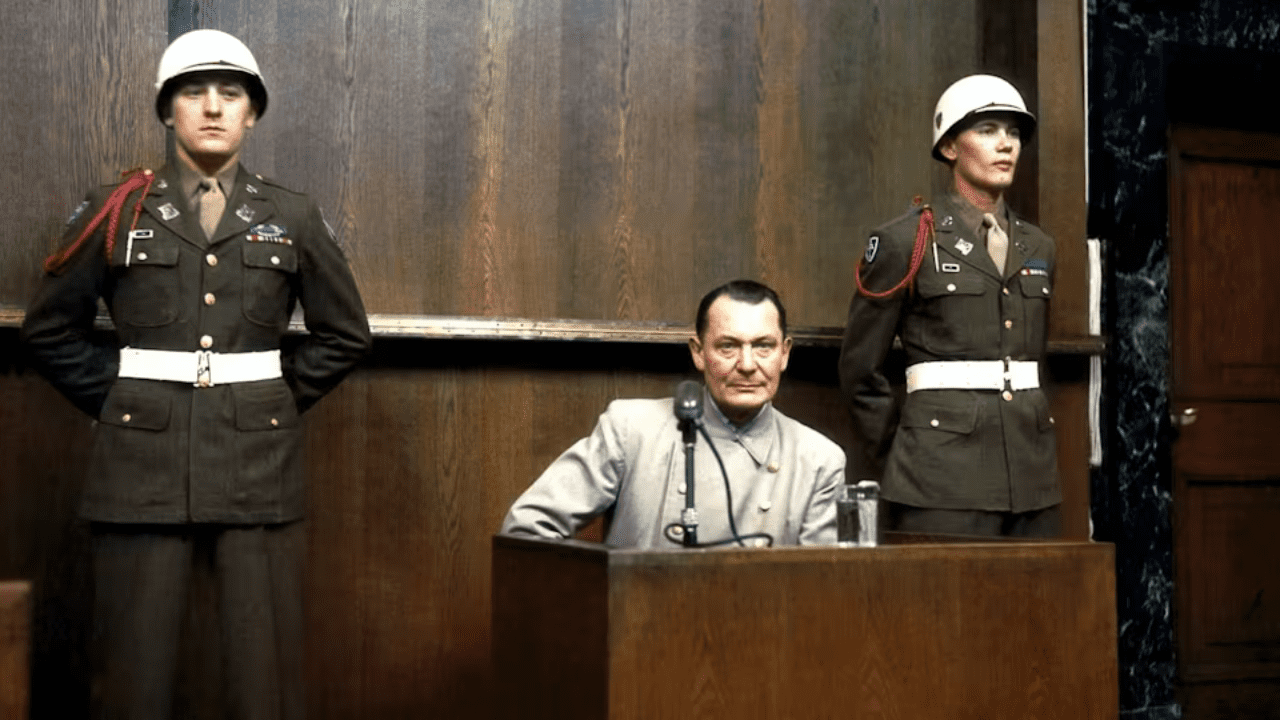
On July 17, International Justice Day, Citizens for Global Solutions and Senator Dodd (D-CT) co-sponsored a panel entitled, "A Seven Year Assessment of the International Criminal Court: Accomplishments, Next Steps, and U.S. Priorities." A lstanding room only crowd came in to see the Honorable Patricia Wald, Chair of the American Society of International Law task force on the ICC; Tod Lindberg, autho The distinguished speakers agreed that the U.S. has a vested interest in supporting the ICC and joining its system, which 110 countries have already done. U.S. credibility is at stake when it does not support the only permanent international court capable of trying individuals for heinous crimes, like the genocide committed under the Sudanese President in Darfur. Because the ICC serves as a complement to existing national courts and does not seek to replace them, the U.S. does not compromise its judicial system by strengthening this important international organ. The U.S. played a big role in the court's formation, and many of its principles and ideals are in line with those of the U.S. It is unfortunate that given these circumstances, the U.S. has still not ratified the Amongst the valuable information and suggestions provided by our panelists, it was truly inspiring to have someone as experienced as Benjamin Ferencz speaking about the issue, who witnessed the horrors of war first-hand when he fought to bring the Nazi leadership to justice after World War II. Let's hope we won't have to wait until more people are exposed to such violence and injustice before the merits of the ICC are fully appreciated. Click here for more information and to view the video 07/23/2009 - 11:30amWhat's Happening in Kosovo?Posted by Komal Hiranandani
On July 22, the Atlantic Council hosted a roundtable discussion on the U.N. Mission to Kosovo (UNMIK), and the future of the U.N. in the region. A distinguished group of people, representing an array of positions, were present, including UNMIK Chief of Staff, Robert Sorenson; First Counselor from the Embassy of Serbia, Djerdj Matkovic; and Executive Director of the National Albanian American Council, Avni Since Kosovo declared independence from Serbia last year, the region has continued to face problems of corruption, poor social and economic indicators, and low investment due to its disputed status. 62 countries (including the U.S.) have recognized Kosovo's independence. Mistrust between communities and manipulation by political forces have hampered development in the region and its national movement. At the request of Serbia, the International Court of Justice is to look into the legality of Kosovo's declaration of independence. Many actions taken by political actors revolve around this pending investigation. Though Serbia does not recognize Kosovo's independence, the representative from the Serbian embassy explained that it desired the welfare of the people in the region. It was also acknowledged that mismanagement of Serbian funds in the region had to be addressed, as resources have been working their way to Serb radicals. Corruption has to be more aggressively countered, and action needs to be taken against individuals and corporations whose illicit activities have already been proved. The poor economic conditions require attention- 60% of the region's people under 30 years of age are unemployed. A robust civil society is still a long way in the making. UNMIK, EULEX, and all the other organizations in Kosovo have a long road ahead of them, and international support for this volatile area is encouraging and essential. Tags:
07/21/2009 - 12:30pmCzech Republic Becomes 110th Nation to Ratify the Rome StatutePosted by Nora Conklin
On July 8, 2009, Czech President Václav Klaus ratified the Rome Statute of the International Criminal Court [ICC], making the Czech Republic the 110th nation to do so since the Court's establishment in 2002. Although the Czech Republic signed the Rome Statute in April of 1999, it was the only European Union member state that had not ratified and given formal sanction to the treaty. After several failed attempts to ratify the Rome Statute, the Senate finally approved the treaty and an overwhelming majority of the Czech "With the Czech Republic and Chile recently joining the Court, all of the European Union and all governments in South America have ratified the Rome Statute," said William Pace, convenor of the Coalition for the International Criminal Court. "The goal of universal ratification and ending impunity for the worst crimes in international law has taken another important step forward."
418 7th Street SE, Washington, DC 20003-2796
Phone: (202) 546-3950 Fax: (202) 546-3749 Privacy Policy |
||||||||||
|
|
|||||||||||